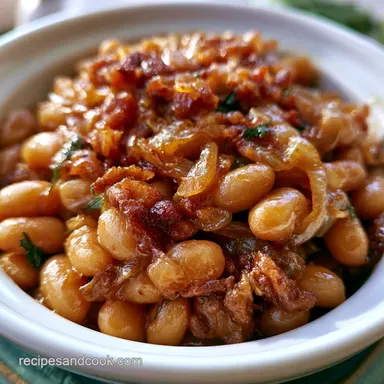
Baked Beans: Slow-Baked Mahogany Glaze
- Time:2 hours 15 mins active + 3 hours cooking = Total 5 hours 15 mins
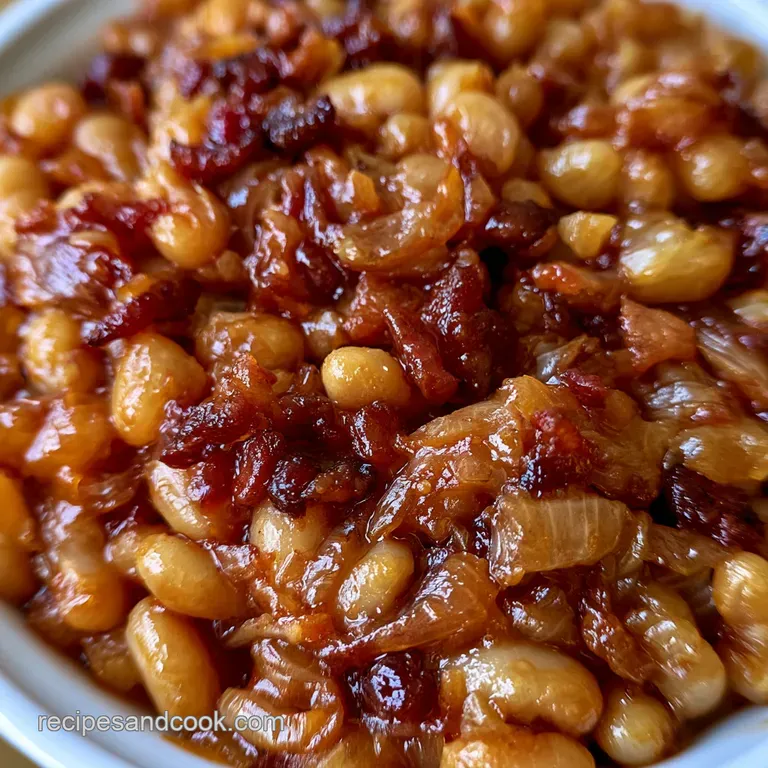
- Flavor/Texture Hook: Sticky, mahogany glaze with a shatter crisp top crust
- Perfect for: Family reunions, Sunday feasts, or cozy winter comfort
- Baked Beans
- Secret to the Texture
- The Component Analysis
- The Flavor Foundation
- Tools for the Job
- The Step-by-Step Flow
- Fixing Common Bean Blunders
- Troubleshooting Common Issues
- Swaps and Flavor Tweaks
- Adjusting the Batch Size
- Busting Bean Myths
- Storage Guidelines
- The Best Way to Serve
- High in Sodium
- Recipe FAQs
- 📝 Recipe Card
The scent of simmering molasses and smoked pork is something that just sticks with you. For me, it's the smell of my grandmother's kitchen on a rainy October afternoon, where a heavy cast iron pot would sit in the oven for hours, filling the entire house with a warm, sweet, and salty aroma.
It wasn't just food; it was a signal that the family was coming over and everything was going to be just fine.
In New England, this kind of dish is almost a cultural rite of passage. We grew up with the tradition of slow cooked legumes sweetened with dark syrups, a legacy of the molasses trade that shaped the region. It's a humble dish, but when it's done right, it transforms simple dried beans into something velvety and rich.
You can expect a result that isn't runny or bland. These Baked Beans have a deep, complex sweetness that's cut through by a sharp hit of vinegar, making them the kind of side dish that people actually fight over at the table. Trust me, once you move away from the can, there's no going back.
Baked Beans
The secret to this recipe is the patience. We aren't rushing through a quick simmer; we're letting the heat slowly break down the starches while the sugars caramelize into a dark, bubbling crust. It's all about that slow transition from a liquidy pot to a thick, jammy consistency.
I remember one time I tried to rush this by cranking the heat to 400°F, thinking I'd finish an hour early. I ended up with burnt edges and beans that were still hard in the middle. It was a total disaster.
That's when I learned that the low and slow approach isn't just a suggestion, it's the only way to get that signature texture.
If you're looking for other comfort classics to round out your meal, you might like my Joanna Gaines Chili recipe, which shares that same hearty, home cooked vibe. Right then, let's get into what actually makes this work.
Secret to the Texture
Rather than getting into a textbook, let's just look at why these specific steps matter for the final result.
- The Slow Soak
- Soaking the beans hydrates the interior, which ensures they cook evenly without the skins bursting or the centers staying grainy.
- Fat Rendering
- Starting with bacon and salt pork creates a flavor base of rendered fat, which carries the molasses and spices deeper into the beans.
- The Acid Balance
- Apple cider vinegar breaks down the toughness of the bean skins and prevents the brown sugar from feeling cloying.
- The Open Lid Finish
- Removing the lid for the last 30 minutes allows water to evaporate, concentrating the sugars into a sticky glaze.
| Method | Time | Texture | Best For |
|---|---|---|---|
| Oven Bake | 3 hours | Thick, crusty top | Traditional feasts |
| Stovetop | 2 hours | More liquidy/saucy | Weeknight sides |
| Slow Cooker | 8 hours | Very soft, uniform | Set and forget |
The Component Analysis
Every ingredient here has a specific job to do. If you remove one, you change the whole balance of the dish.
| Ingredient | Science Role | Pro Secret |
|---|---|---|
| Navy Beans | Starch Base | Rinse until water is clear for better digestion |
| Molasses | Deep Sweetness | Use "unsulphured" for a cleaner, traditional taste |
| Salt Pork | Pure Fat/Umami | Dice very small so it melts into the sauce |
| AC Vinegar | Flavor Brightener | Adds the "tang" that prevents sugar overload |
The Flavor Foundation
For the bean base, we're using navy beans because they hold their shape better than pinto beans but get creamier than kidney beans. Make sure you sort through them first to remove any little pebbles.
- 1 lb dried navy beans, sorted and rinsed Why this? Best texture for traditional New England style
- 6 cups water Why this? Standard ratio for a full soak
- 1 tsp kosher salt Why this? Seasoning the bean from the inside out
- 6 oz thick cut bacon, diced Why this? Adds smoke and saltiness
- 4 oz salt pork, diced Why this? Essential for that old-fashioned richness
- 1 large yellow onion, finely diced Why this? Adds a subtle aromatic sweetness
- 3 cloves garlic, minced Why this? Depth of flavor
- 1/2 cup molasses Why this? The soul of the dish; provides mahogany color
- 1/2 cup packed brown sugar Why this? Adds a caramel note
- 1/4 cup apple cider vinegar Why this? Cuts the richness
- 1/4 cup ketchup Why this? Adds tomato acidity and thickness
- 1 tbsp Dijon mustard Why this? Subtle tang and emulsification
- 1 tsp smoked paprika Why this? Enhances the bacony flavor
- 1/2 tsp black pepper Why this? Basic warmth
If you can't find salt pork, don't stress. You can just add another 4 oz of bacon, though you'll lose a bit of that specific velvety fat profile. According to Serious Eats, the type of fat used significantly impacts the mouthfeel of legumes.
Tools for the Job
You'll need a heavy bottomed Dutch oven. I prefer a 5 quart cast iron one because it distributes heat evenly and can go from the stove straight into the oven without a hitch. If you don't have one, a heavy oven safe pot with a tight fitting lid will work.
I also recommend a sturdy wooden spoon. You'll be stirring a thick, sticky mixture, and a silicone spatula sometimes just slides over the top instead of getting into the corners of the pot. A fine mesh strainer is also a must for rinsing the beans thoroughly after their soak.
The step-by-step Flow
Let's crack on with the actual cooking. Follow these steps for the best results.
- Place rinsed navy beans in a large bowl, cover with 6 cups of water and salt, and soak for at least 2 hours (or overnight). Note: This softens the outer skin.
- Drain and rinse the beans thoroughly under cold water.
- Preheat your oven to 325°F (160°C).
- In your Dutch oven over medium heat, sauté the diced bacon and salt pork until the fat has rendered and the meat is golden brown.
- Add the diced onions to the pot and cook until they are translucent and fragrant, then stir in the minced garlic for just 1 minute.
- Stir in the soaked beans along with the molasses, brown sugar, apple cider vinegar, ketchup, Dijon mustard, smoked paprika, and black pepper. Mix until every single bean is coated in the dark glaze.
- Bring the mixture to a simmer on the stove over medium heat.
- Cover the pot with a lid and transfer it to the oven.
- Bake for 2.5 to 3 hours. Check at the 2.5 hour mark to see if beans are tender.
- Remove the lid for the final 30 minutes until the sauce thickens and forms a dark, bubbling crust.
Chef's Note: If you see the sauce getting too thick too early, splash in a bit of warm water. You want it jammy, not a burnt brick.
Fixing Common Bean Blunders
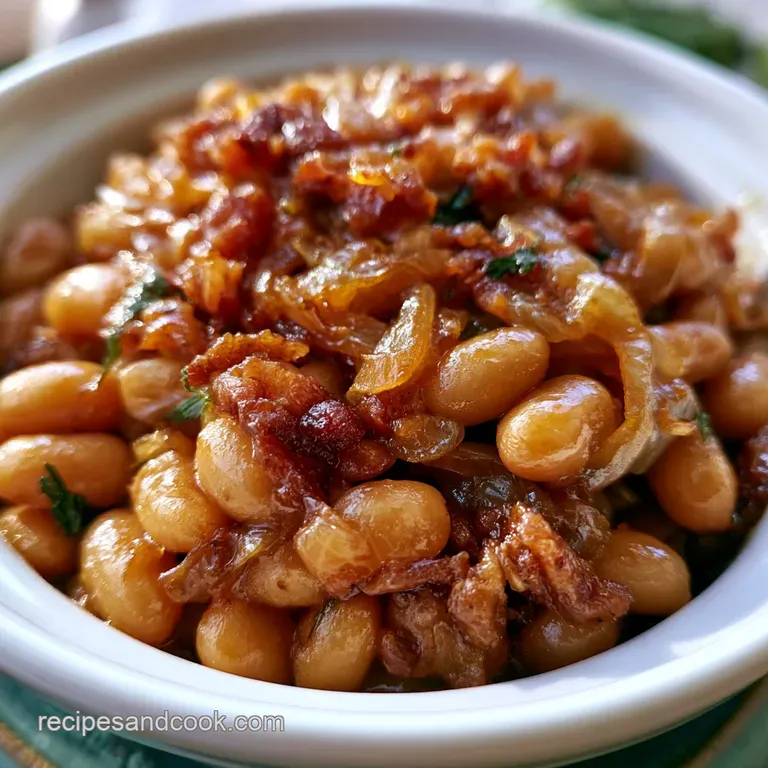
Even for experienced cooks, these Baked Beans can be tricky. The most common issue is usually the texture of the bean itself.
Troubleshooting Common Issues
| Issue | Solution |
|---|---|
| Why Your Beans Stay Hard | This usually happens if you add the acid (vinegar and molasses) too early or if the beans are very old. Acid can tighten the skins and prevent the centers from softening. Make sure you soak them prope |
| Why Your Sauce is Too Thin | If the sauce is runny, you likely didn't leave the lid off long enough at the end. The final 30 minutes of uncovered baking is where the magic happens. |
| Why Your Beans are Too Sweet | If the molasses is overpowering, you've likely lost the balance of acid. A tiny bit more apple cider vinegar stirred in at the end can wake the dish back up. |
Common Mistakes Checklist
- ✓ Always rinse beans until the water runs clear to remove excess starch.
- ✓ Don't skip the salt pork; the rendered fat is key to the velvety texture.
- ✓ Avoid high oven temperatures, which burn the sugars before the beans soften.
- ✓ Ensure the lid is tight during the first 2.5 hours to trap steam.
- ✓ Use a heavy pot to prevent hot spots and burning.
Swaps and Flavor Tweaks
Depending on what's in your pantry, you can easily adjust this baked beans recipe.
| Original Ingredient | Substitute | Why It Works |
|---|---|---|
| Molasses (1/2 cup) | Maple Syrup (1/2 cup) | Similar viscosity. Note: Lighter, more "foresty" flavor |
| Navy Beans (1 lb) | Cannellini Beans (1 lb) | Similar size and creaminess. Note: Slightly milder taste |
| Salt Pork (4 oz) | Smoked Pancetta (4 oz) | High fat content. Note: Adds a more intense cured flavor |
| Apple Cider Vinegar | White Wine Vinegar | Similar acidity. Note: A bit sharper and less fruity |
If you want to try a more modern version, you can make slow cooker baked beans. Just sauté the aromatics on the stove first, then throw everything into the crockpot on LOW for 8 hours. You'll lose the crusty top, though, unless you finish them in the oven for 30 minutes.
For those who want a pork free option, substitute the bacon and salt pork with a tablespoon of smoked paprika and a bit of olive oil. It won't be as rich, but the smokiness still comes through beautifully. If you're in a real rush, using canned beans is the ultimate shortcut.
Just drain, rinse, and reduce the oven time to about 1 hour, as the beans are already cooked.
Adjusting the Batch Size
When you're cooking for a crowd or just for yourself, you can't always just multiply everything.
Scaling Down (1/2 or 1/4 batch): If you're making a smaller portion, use a smaller pot to ensure the beans are submerged in the sauce. Reduce the bake time by about 20%, as a smaller mass of food heats through faster.
If a recipe calls for a fraction of an egg (not in this one, but for others), beat the egg first and then measure it out.
Scaling Up (2x to 4x batch): When doubling or tripling these Baked Beans, be careful with the salt and smoked paprika. Increase these to 1.5x instead of 2x, as these flavors can become overwhelming in large volumes. Reduce the total liquids by about 10% because larger pots trap more steam.
I highly recommend working in batches or using two separate Dutch ovens rather than one massive pot, which often leads to uneven cooking.
| Feature | Small Batch (1/2) | Large Batch (2x) |
|---|---|---|
| Pot Size | 3 Quart | 8-10 Quart |
| Bake Time | ~2 hours 15 mins | ~3 hours 15 mins |
| Salt/Spice | Exact Half | 1.5x Original |
Busting Bean Myths
There are a few things people get wrong about cooking legumes.
Myth: Salt prevents beans from softening. This is a total lie. In fact, salting the soaking water helps the beans soften more evenly by breaking down the pectin in the skins. It actually makes them better.
Myth: You must soak beans for 12 hours. While overnight is convenient, a 2 hour soak in very hot water (or a "quick soak" method) works just fine for navy beans. The goal is hydration, not a specific clock time.
Myth: Canned beans are just "pre soaked" dried beans. Not quite. Canned beans are processed and cooked in a different environment. While they save time, they lack the structural integrity and the ability to absorb the sauce as deeply as dried beans.
Storage Guidelines
These Baked Beans actually taste better the next day because the flavors have more time to meld together.
Fridge: Keep them in an airtight container for up to 5 days. The sauce will thicken significantly in the fridge, which is normal.
Freezer: You can freeze these for up to 3 months. Let them cool completely before freezing. When you're ready to eat them, thaw them in the fridge overnight.
Zero Waste: Don't throw away the leftover sauce in the bottom of the pot! Use it as a glaze for grilled chicken or stir it into a pot of rice for an instant flavor boost. If you have leftover beans, they make a great addition to a breakfast hash with eggs and potatoes.
The Best Way to Serve
Since these are so rich and sweet, you need sides that provide a contrast. I love serving them alongside something grilled and salty. A platter of smoked ribs or a juicy brisket is the gold standard here.
For something lighter, a crisp coleslaw with a vinegar based dressing cuts through the heaviness of the beans. If you're looking for a crunchy accompaniment, my Homemade Cheddar Crackers are a brilliant pairing, providing a salty, cheesy snap that complements the sweetness of the molasses.
Another timeless option is a simple piece of buttered cornbread. The crumbly texture of the bread is the perfect vehicle for scooping up every last drop of that mahogany glaze. Just make sure the cornbread isn't too sweet, or the whole meal will feel like a dessert.
Trust me, keep the sides savory to let the beans be the star of the show.
High in Sodium
840 mg 840 mg of sodium per serving (37% 37% of daily value)
The American Heart Association recommends a daily sodium limit of 2,300mg to help manage blood pressure and heart health.
Tips to Reduce Sodium
-
Remove Salt Pork-30%
Eliminate the salt pork entirely and replace it with a small amount of unsalted pancetta or liquid smoke for that savory depth.
-
Switch to Low-Sodium Bacon-25%
Use low-sodium bacon or reduce the amount of thick-cut bacon to significantly lower the salt contribution from processed meats.
-
Omit Added Salt-20%
Remove the kosher salt from the recipe; the cured meats already provide enough sodium to season the beans.
-
Low-Sodium Condiments-15%
Replace regular ketchup with a low-sodium version and swap Dijon mustard for a splash of extra apple cider vinegar.
-
Boost Bold Flavors
Increase the amount of black pepper and smoked paprika to add complexity and heat without adding any sodium.
Recipe FAQs
Are baked beans high in fiber?
Yes. Navy beans are naturally packed with dietary fiber, which helps with digestion and keeps you feeling full longer.
Are baked beans good for diabetics?
Generally no. The molasses and brown sugar in this recipe create a high sugar content that can cause significant blood glucose spikes.
Can a Ckd patient eat baked beans?
Consult a physician first. Navy beans and salt pork contain high levels of potassium and sodium, which are typically restricted in chronic kidney disease diets.
Are baked beans actually healthy?
They are a balanced treat. While the beans provide plant-based protein, the sugars and cured meats make this a rich side dish. Pair them with a fresh Cobb salad to add nutrient-dense greens to the meal.
How to fix a sauce that is too thin?
Bake uncovered for the final 30 minutes. This critical step allows the liquid to evaporate and the glaze to thicken into a dark, bubbling crust.
Why are my beans still hard after cooking?
The acid was likely added too early or the beans were too old. Vinegar and molasses can tighten the skins, preventing the centers from softening during the 325°F bake.
How to store leftovers?
Keep them in an airtight container in the fridge for up to 5 days. The sauce will thicken further during storage, and the flavors will meld and improve overnight.
Baked Beans with Dried Navy Beans