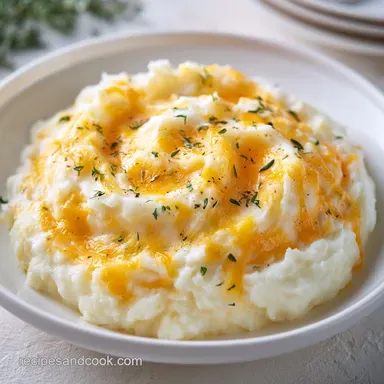
Cheesy Garlic Mashed Potatoes: Velvety Smooth

- Time: 10 min active + 20 min cook = Total 30 minutes
- Flavor/Texture Hook: Velvety smooth with a sharp, gooey cheese pull
- Perfect for: Sunday family dinners or holiday side dishes
- The Best Cheesy Mashed Potatoes
- The Texture Secret
- Quick Specs and Time
- The Core Ingredient Breakdown
- Essential Kitchen Tools
- Making the Mash Step-by-Step
- Fixing Common Mash Problems
- Troubleshooting Common Issues
- Switching Up Your Ingredients
- Storing and Warming Your Mash
- Plating and Serving Ideas
- Recipe FAQs
- 📝 Recipe Card
That scent of garlic sizzling in butter is honestly the best part of any rainy Sunday. I remember one particular November dinner where I tried to be too fancy with a single type of potato, and the result was a total disaster.
I ended up with something that felt more like glue than a side dish, and my brother actually asked if I'd mashed up some wallpaper paste. It was a low point in my kitchen history, but it taught me a lesson I'll never forget about potato chemistry.
I spent a few months tinkering with different ratios and methods to find that sweet spot. I wanted something that had the light, airy feel of a cloud but the rich, velvety depth of a restaurant dish. That's how I landed on the mix of Russets and Yukon Golds. This combination is the real winner for anyone wanting the best cheesy mashed potatoes without spending hours over a stove.
You can expect a dish that is incredibly rich but not overly heavy. It's the kind of comfort food that brings everyone to the table early. We're going to use a few smart shortcuts to keep the cost down while making sure the flavor is bold and timeless.
Trust me, once you try this blend, you'll never go back to just one type of potato.
The Best Cheesy Mashed Potatoes
The real trick here is how we handle the fats. Instead of just throwing cold butter into a pot of hot potatoes, we infuse the butter with garlic first. This creates a flavor base that permeates every single bite. If you're looking for other cheesy additions to your menu, you might love my Homemade Cheddar Crackers recipe, which uses a similar flavor profile.
Most people make the mistake of overworking the potatoes, which releases too much starch and makes them gummy. By using a ricer or folding the ingredients gently, we keep the texture light. It's all about being gentle with the mash.
Honestly, don't even bother with low-fat cheese here, as it won't melt smoothly and will leave you with a grainy texture.
Right then, let's look at why this specific combination of ingredients and methods actually works to give you that professional result at home.
The Texture Secret
Instead of a textbook explanation, let's just look at what's happening in the pot.
- The Starch Balance: Russets provide the fluff, while Yukon Golds add a naturally buttery, creamy vibe.
- Fat Integration: Warming the cream and butter before adding them prevents the potatoes from cooling down too fast, which helps the cheese melt evenly.
- Starch Control: Ricing or gentle mashing prevents the starch cells from bursting, which is what keeps them from becoming "gluey".
- Cheese Binding: Adding the cheese at the very end with the heat off prevents the oils from separating, keeping the mixture silky.
The way we incorporate the dairy is key. For a truly rich experience, I always suggest using a high fat cream, but you can see how to boost your own dairy options in my guide on homemade heavy cream.
| Method | Prep Time | Texture | Best For |
|---|---|---|---|
| Classic Mash | 30 minutes | Thick and Hearty | Traditional Holidays |
| Fast Track | 15 minutes | Lighter, Airier | Weeknight Dinners |
| Ricer Method | 40 minutes | Velvety Smooth | Special Occasions |
Quick Specs and Time
This recipe is designed to be straightforward. You don't need any fancy equipment, though a ricer is a nice touch if you have one. The total time is a brisk 30 minutes, making it a great choice when you're juggling a main protein and other sides.
For those tracking their budget, the bulk of the cost comes from the cheese. However, using a sharp cheddar means you can use less of it while still getting a punchy flavor. It's a smart way to keep the cost per serving low without sacrificing the "wow" factor.
The Core Ingredient Breakdown
Not all potatoes are created equal. According to the USDA FoodData Central, different potato varieties have varying starch levels, which directly affects the final mouthfeel of your mash.
| Ingredient | Science Role | Pro Secret |
|---|---|---|
| Russet Potatoes | Volume & Fluff | Peel deeply to avoid "eyes" in the mash |
| Yukon Gold | Creaminess | Leave a bit of the skin for a rustic look |
| Sharp Cheddar | Flavor & Bind | Grate your own cheese to avoid anti caking agents |
| Heavy Cream | Moisture | Warm it first to keep the mash hot |
The balance of these components is what makes a simple cheesy mashed potatoes recipe move from "okay" to "unforgettable". Using a mix of two potatoes ensures you get the best of both worlds.
Essential Kitchen Tools
You don't need a professional kitchen to pull this off. A large pot and a colander are the non negotiables. If you want that perfectly smooth, restaurant style texture, a potato ricer is my top recommendation. It pushes the potato through small holes, ensuring there are zero lumps without over mixing.
If you don't have a ricer, a standard hand masher works just fine. Just be careful not to keep mashing once the lumps are gone. If you're in a real pinch, a sturdy fork can work, but it takes a lot more elbow grease.
I've also found that using a silicone spatula for the final folding step helps keep the air in the potatoes, making them feel lighter.
Making the Mash step-by-step

Let's crack on with the actual cooking. Follow these steps closely to ensure the texture stays silky.
- Place the cubed Russet and Yukon Gold potatoes in a large pot and cover with cold water by at least an inch. Add the kosher salt and bring to a rolling boil over high heat. Note: Starting with cold water ensures the potatoes cook evenly from the outside in.
- Reduce heat to a simmer and cook for 15-20 minutes until the potatoes are fork tender and slide off the fork easily. Drain thoroughly in a colander.
- Return the empty pot to low heat. Melt the unsalted butter and add the minced garlic, sautéing for 1-2 minutes until fragrant but not browned.
- Stir in the heavy cream and black pepper, warming the mixture until it begins to steam slightly.
- Pass the drained potatoes through a ricer into the warm cream mixture, or mash them directly in the pot using a hand masher.
- Gently fold the potatoes into the liquid using a spatula until just combined.
- Turn off the heat and stir in the sharp cheddar and parmesan cheese. Fold until the cheese is fully melted and glossy.
- Garnish with chopped fresh chives before serving.
Chef's Tip: If you want a deeper flavor, try adding a tiny pinch of nutmeg or a teaspoon of Dijon mustard to the cream mixture. It doesn't make it taste like mustard, but it makes the cheese taste "cheesier".
Fixing Common Mash Problems
Even the best of us hit a snag occasionally. The most common issue is texture, usually caused by over mixing or temperature gaps.
Troubleshooting Common Issues
| Issue | Solution |
|---|---|
| Why Your Mash is Gummy | This usually happens because of over working the potatoes. When you mash too aggressively, you break the starch granules, which then act like glue. Use a ricer or stop mashing as soon as the lumps are |
| Why the Cheese is Grainy | If the cheese isn't melting smoothly, it's often because you used pre shredded cheese. Those bags are coated in potato starch or cellulose to prevent clumping, but that same coating prevents a velvety |
| Why the Taste is Flat | If your cheesy mashed potatoes taste bland, you likely under salted the boiling water. Potatoes absorb salt as they cook; adding salt only at the end just makes them taste "salty" rather than "seasone |
Common Mistakes Checklist
- ✓ Did you start with cold water?
- ✓ Is the cheese freshly grated from a block?
- ✓ Did you warm the cream and butter before adding potatoes?
- ✓ Did you stop mashing as soon as the lumps disappeared?
- ✓ Did you salt the boiling water generously?
Switching Up Your Ingredients
Depending on what's in your fridge, you might need to swap a few things. Because this is a budget smart recipe, there are plenty of ways to adapt it without losing the soul of the dish.
| Original Ingredient | Substitute | Why It Works |
|---|---|---|
| Heavy Cream (1/2 cup) | Whole Milk + 1 tbsp butter | Similar fat content. Note: Slightly less velvety finish |
| Sharp Cheddar | Gruyere or Monterey Jack | Both melt well. Note: Gruyere is nuttier; Jack is milder |
| Fresh Garlic | Garlic Powder (1 tsp) | Consistent flavor. Note: Lacks the aromatic "sizzle" of fresh |
| Fresh Chives | Green Onions | Similar oniony bite. Note: Slightly stronger flavor than chives |
If you're looking for a lower calorie version, you can swap half of the butter for a splash of the potato cooking water. It maintains the moisture but cuts down on the heavy fats. For a dairy-free version, a combination of vegan butter and coconut cream works surprisingly well, though the flavor will lean more tropical.
Storing and Warming Your Mash
Leftovers are a blessing, but reheating potatoes can be tricky since they tend to soak up all the moisture and become dry.
Storage Guidelines Store your leftovers in an airtight container in the fridge for up to 4 days. Avoid leaving them out on the counter, as dairy heavy dishes can spoil quickly. If you need them to last longer, they can be frozen for up to 2 months, though the texture may change slightly upon thawing.
Reheating Tips The best way to reheat is on the stovetop over low heat. Add a splash of milk or a small knob of butter to bring back that velvety consistency. If you use a microwave, heat in 30 second bursts, stirring in between, and add a teaspoon of water to prevent them from drying out.
Zero Waste Ideas Don't throw away those potato peels! Toss them in a bit of oil and salt and roast them at 200°C for 10-15 minutes for a crunchy snack.
If you have a small amount of mash left that's too small for a side, use it as a base for a shepherd's pie or a topping for a baked fish dish.
Plating and Serving Ideas
Presentation makes a huge difference, even for a humble side dish. For a "Restaurant Swirl", scoop the mash onto a plate and use the back of a spoon to create a deep spiral. Fill that spiral with a small pat of melted butter or a drizzle of olive oil.
For a more rustic look, serve them in a cast iron skillet straight from the oven. If you want to turn these into baked cheesy mashed potatoes, transfer the finished mash to a baking dish, top with extra cheddar, and broil for 3-5 minutes until the top is bubbling and brown.
These pair exceptionally well with hearty meats. I highly recommend serving them alongside a creamy beef stroganoff, as the mash soaks up that rich gravy perfectly. For a lighter pairing, some roasted asparagus or a crisp green salad helps cut through the richness of the cheese. Finish the plate with an extra sprinkle of fresh chives for a pop of color that makes the whole meal feel put together.
Recipe FAQs
What is the best cheese to put in mashed potatoes?
Sharp cheddar and parmesan. This combination provides a bold, tangy flavor and a salty, smooth finish that complements the potatoes.
How to make the best cheesy mashed potato?
Boil Russet and Yukon Gold potatoes until fork-tender. Drain them and fold into a warm mixture of butter, sautéed garlic, and heavy cream before stirring in the cheese.
Are mashed potatoes good for diabetics?
Generally no, they are high in carbohydrates. The starch in potatoes can cause significant blood sugar spikes, making portion control essential.
What does Gordon Ramsay put in his mashed potatoes?
Butter, cream, and garlic. These rich fats and aromatics create the professional, velvety texture and depth of flavor found in high-end kitchens.
Why are my mashed potatoes gummy?
Avoid over-working the potatoes. Mashing too aggressively breaks starch granules, which then act like glue; use a ricer for the smoothest result.
Is it true that pre-shredded cheese melts as well as freshly grated?
No, this is a common misconception. Pre-shredded cheese is coated in potato starch to prevent clumping, which often results in a grainy texture.
How should I store and reheat leftover mashed potatoes?
Store in an airtight container for up to 4 days. Reheat on the stovetop over low heat with a knob of butter, or try a microwave cooked potato for a faster alternative.
Cheesy Mashed Potatoes in 30 Minutes