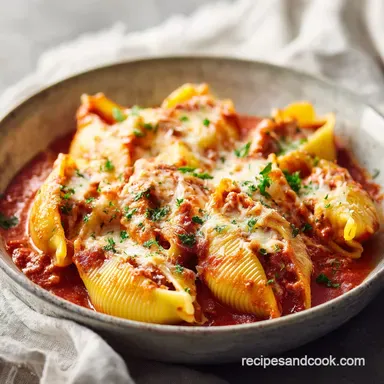
Baked Stuffed Shells: Rich Meat Sauce

- Time: 30 min active + 45 min bake = Total 1 hour 15 mins
- Flavor/Texture Hook: Golden, bubbly mozzarella crust with a creamy, savory center
- Perfect for: Family Sunday dinners, cozy potlucks, or beginner friendly comfort food
- Baked Stuffed Shells
- Why Most Recipes Fail
- The Essential Components
- Ingredients and Substitutes
- Step By Step Method
- Fixing Common Mistakes
- Troubleshooting Common Issues
- Ways To Customize
- Freezing And Reheating
- Truths About Pasta Bakes
- Storage Guidelines
- Serving Tips And Ideas
- High in Sodium
- Recipe FAQs
- 📝 Recipe Card
Baked Stuffed Shells
The smell of garlic hitting hot olive oil is, for me, the official scent of Sunday afternoon. I remember sitting in my grandmother's kitchen, watching her move with a kind of muscle memory that only comes from decades of feeding a crowd.
The air was thick with the aroma of simmering tomatoes and the sharp, salty tang of Parmesan. It was the one dish that could quiet the entire house, turning a chaotic family gathering into a focused, hungry silence the moment the pan hit the table.
But for a long time, I struggled with the texture. I'd follow a recipe, and I'd end up with shells that were either hard as rocks or, more often, completely disintegrated into a cheesy pasta soup.
It took a few ruined dinners and a lot of trial and error to realize that the secret isn't in the cheese or the sauce, it's in how you handle the pasta before it ever sees the oven.
Once I figured out the timing, everything changed. Now, these Baked Stuffed Shells are my go to when I need something that feels special but doesn't require me to be a professional chef. It's a timeless comfort dish that uses a few reliable shortcuts to save time without sacrificing that home cooked soul.
Trust me on this, once you see those bubbly, golden edges, you'll never go back to the "standard" way of doing it.
Why Most Recipes Fail
Most people treat the pasta like they're making a bowl of spaghetti, boiling it until it's tender. But these shells have to cook twice, once on the stove and once in the oven. If you boil them fully, the second round of heat just destroys the starch, leaving you with something soggy.
By stopping the boil early, the pasta absorbs the moisture from the ricotta and the sauce during the bake, which keeps them firm and satisfying.
The filling is another common pitfall. Many recipes just use ricotta and cheese, but without a binder, the filling tends to leak out or separate into a grainy mess. Adding a single egg creates a custard like structure that holds the cheese together, ensuring every bite is velvety rather than runny.
And then there's the sauce. A thin sauce will pool at the bottom of the pan, making the bottom shells swim in liquid. You need a thickened meat sauce that acts as a bed for the shells and a blanket on top, locking in the heat and moisture.
Pasta Hydration: Undercooking prevents the shells from absorbing too much water initially, leaving room for the sauce to soak in later.
Egg Protein Bind: Beaten eggs coagulate during baking, which prevents the ricotta from leaking out of the shell.
Fat Distribution: Using 80/20 beef provides enough fat to carry the flavor of the oregano and garlic throughout the dish.
Steam Trapping: Covering the dish with foil creates a mini oven effect, ensuring the center is hot before the cheese browns.
| Method | Prep Time | Texture | Best For |
|---|---|---|---|
| Fast/Quick | 20 mins | Softer pasta | Weeknight rush |
| Classic | 30 mins | Al dente bite | Family dinners |
| Slow Simmer | 60 mins | Richer sauce | Special occasions |
I've found that sticking to the classic approach is usually best. It gives you that reliable structure that makes the dish feel substantial.
The Essential Components
Understanding what each ingredient actually does helps you adjust the recipe on the fly. For instance, the sugar isn't there to make the sauce sweet, it's there to balance the acidity of the crushed tomatoes.
| Ingredient | Science Role | Pro Secret |
|---|---|---|
| Jumbo Shells | Structural Base | Rinse with cold water to stop cooking immediately |
| Ricotta Cheese | Creamy Core | Use whole milk for a more velvety mouthfeel |
| Egg | Stabilizer | Beat it well to ensure an even blend in the cheese |
| Tomato Paste | Thickener | Sauté it briefly with the garlic to deepen the color |
When choosing your beef, the lean to fat ratio matters more than you'd think. According to the USDA FoodData, different cuts of beef vary significantly in saturated fats, and for this recipe, that 80/20 blend is the sweet spot for flavor.
Ingredients and Substitutes
Here is everything you'll need. I've kept the tools minimal so you don't spend the whole night washing dishes.
For the Pasta & Sauce:
- 12 oz jumbo pasta shellsWhy this? Large capacity for the cheese filling
- 1 tbsp olive oil (for boiling)
- 1 lb ground beef (80/20 lean to fat ratio)Why this? Balanced flavor and moisture
- 1 tbsp olive oil (for sautéing)
- 1 medium yellow onion, finely diced
- 3 cloves garlic, minced
- 28 oz crushed tomatoes
- 2 tbsp tomato pasteWhy this? Concentrates the tomato flavor
- 1 tsp dried oregano
- 1/2 tsp salt
- 1/4 tsp black pepper
- 1 tsp sugarWhy this? Cuts the metallic tang of canned tomatoes
For the Filling & Topping:
- 15 oz whole milk ricotta cheeseWhy this? Richer and more stable than part skim
- 1 large egg, lightly beaten
- 1/2 cup grated Parmesan cheese
- 2 cups shredded mozzarella cheeseWhy this? Best melt and stretch quality
- 1 tsp dried parsley
- 1/2 tsp salt
- 1/4 tsp black pepper
| Original Ingredient | Substitute | Why It Works |
|---|---|---|
| Ground Beef | Ground Italian Sausage | Similar fat content. Note: Adds fennel and spice notes |
| Ricotta Cheese | Small Curd Cottage Cheese | Similar creamy texture. Note: More watery, might need more Parmesan |
| Mozzarella | Provolone | Melts well. Note: Sharper flavor, less "stretch" |
| Whole Milk Ricotta | Almond Ricotta | Plant based alternative. Note: Lighter taste, less structural stability |
Honestly, don't even bother with low-fat cheese here. You lose the velvety texture and the flavor becomes bland. If you're looking for more variety in your dinner rotation, you might enjoy my Joanna Gaines Chili recipe for another night of hearty comfort.
Step by step Method
Let's crack on. I recommend prepping your filling and sauce before you start the pasta, so the shells don't sit and get sticky while you're chopping onions.
Phase 1: Preparing the Foundation
- Bring a large pot of salted water to a boil. Add the jumbo shells and 1 tbsp of olive oil. Boil for exactly 3 minutes less than the package directions. Note: This prevents the shells from breaking during the bake.
- Drain the pasta and immediately rinse with cold water. Wait until the shells feel cool to the touch before stuffing them.
- In a skillet over medium high heat, brown the ground beef until no longer pink. Drain excess fat to avoid a greasy sauce.
Phase 2: Crafting the Heart
- Stir in the diced onion and garlic, sautéing for 3-4 minutes until the onion is translucent.
- Stir in tomato paste, crushed tomatoes, oregano, salt, pepper, and sugar. Simmer on low for 15 minutes until the sauce has thickened and smells rich.
- In a large mixing bowl, combine the ricotta, beaten egg, Parmesan, 1 cup of mozzarella, parsley, salt, and pepper. Stir until the mixture is smooth and velvety.
Phase 3: Assembly and Bake
- Spread about 1 cup of the meat sauce across the bottom of a 9x13 inch baking dish. Note: This creates a barrier so the shells don't stick or burn.
- Using a spoon or piping bag, fill the undercooked shells with the ricotta mixture and arrange them in the baking dish.
- Top the shells with the remaining meat sauce and the remaining 1 cup of mozzarella cheese.
- Cover the dish with foil and bake at 375°F (190°C) for 20 mins to steam heat the interior, then uncover and bake for another 25 mins until the cheese is golden brown and bubbly.
Chef's Note: If you have a piping bag or even a Ziploc bag with the corner cut off, use it to fill the shells. It's much faster than a spoon and keeps the edges of the shells cleaner.
Fixing Common Mistakes
Even with a plan, things can go sideways in the kitchen. Most issues with Baked Stuffed Shells come down to moisture management.
Troubleshooting Common Issues

| Issue | Solution |
|---|---|
| Why Your Pasta Turned Mushy | This usually happens because the shells were boiled for too long or weren't rinsed. When you don't rinse them, the residual heat keeps cooking the starch, and the leftover surface starch makes them st |
| Why the Filling Leaked | If your cheese mixture feels like it's sliding out of the shells, you might have skipped the egg or used a ricotta that was too watery. Make sure to stir the mixture until it's cohesive and thick. |
| Why the Top Burnt Early | This is common if the oven is too hot or if you uncover the dish too soon. The foil is critical for the first 20 minutes because it traps the steam, heating the pasta and filling without drying out th |
Common Mistakes Checklist:
- ✓ Did you stop the pasta 3 mins early?
- ✓ Did you rinse the shells in cold water?
- ✓ Is there a layer of sauce on the bottom of the pan?
- ✓ Did you cover the pan with foil for the first 20 mins?
- ✓ Did you drain the beef fat before adding the tomatoes?
Ways To Customize
Once you've nailed the basic version, you can start playing with the flavors. I often change the protein based on what's in the freezer.
If you want a vegetarian version, swap the beef for a mix of sautéed spinach and mushrooms. Just make sure to sauté them until all the water has evaporated, otherwise, your shells will get soggy. For a "white" version, skip the red sauce entirely and use a homemade Alfredo or a garlic butter cream sauce.
If you prefer a different protein, ground turkey works well, though it needs a bit more salt and perhaps a pinch of red pepper flakes to make up for the lack of fat. For a bit of extra crunch on the side, I love serving these with some homemade cheddar crackers.
Decision Shortcut:
- If you want more tang, add 1 tbsp of lemon zest to the ricotta filling.
- If you want a spicy kick, stir in 1 tsp of red chili flakes to the meat sauce.
- If you want a richer crust, mix the mozzarella with a bit of Pecorino Romano.
Freezing And Reheating
These are actually better for meal prep than almost any other pasta dish because the shells hold their shape so well.
How to Freeze
Assemble the shells in the baking dish as usual, but do not bake them. Let the assembled dish cool completely in the fridge for 2 hours before covering it tightly with plastic wrap and then a layer of heavy duty aluminum foil. This prevents freezer burn. They'll stay good for up to 3 months.
How to Reheat
For the best results, thaw the dish in the fridge overnight. If you're in a rush, you can bake from frozen, but you'll need to add about 20 minutes to the covered baking time.
Bake at 350°F (175°C) until the center is hot, then uncover for the last 10 minutes to crisp up the cheese.
When reheating individual portions, a splash of water or a teaspoon of marinara helps restore the moisture that the microwave tends to strip away.
Truths About Pasta Bakes
There are a few things people say about Italian cooking that just aren't true. Let's set the record straight.
First, some people claim that you should never rinse pasta. While that's true for a sauce that needs to cling to the noodles (like carbonara), it's a mistake for stuffed pasta. Rinsing removes the excess starch that causes shells to glue themselves together, making them much easier to stuff.
Second, there's a myth that adding oil to the pasta water stops it from sticking. Oil doesn't actually prevent sticking; it just creates a slick surface that can actually prevent the sauce from adhering to the pasta.
I still use it in this recipe because it helps the shells slide apart during the rinsing phase, but it's not for the "science" of the boil.
Storage Guidelines
If you have leftovers, store them in an airtight container in the fridge for up to 4 days. I find that the flavors actually meld together better on day two.
For zero waste, don't throw away the leftover bits of ricotta or Parmesan. If you have a small amount of ricotta left, stir it into your morning scrambled eggs for a creamy texture.
Any leftover meat sauce can be frozen in ice cube trays and popped into a pan for a quick base for a different pasta dish later in the week.
Serving Tips And Ideas
To really make these Baked Stuffed Shells shine, you need a bit of contrast on the plate. The dish is very rich and creamy, so something bright and acidic is the perfect partner.
A simple arugula salad with a lemon vinaigrette or some roasted broccolini with garlic and red pepper flakes cuts through the heaviness of the cheese. If you're feeling fancy, garnish the finished pan with fresh basil leaves and a drizzle of extra virgin olive oil right before serving.
Since this is a heavy main, avoid serving it with other creamy sides. Keep it simple. A piece of toasted sourdough or a light side of sautéed spinach is all you need to round out the meal. For another night of comfort, you can always look back at that Joanna Gaines Chili recipe when you want something with a different kind of warmth.
High in Sodium
1120 mg 1120 mg of sodium per serving (49% 49% of daily value)
The American Heart Association recommends a limit of 2,300mg of sodium per day for most adults to reduce the risk of hypertension and heart disease.
Tips to Reduce Sodium
-
Eliminate Added Salt-25%
Remove the 1 teaspoon of salt called for in both the sauce and the cheese mixture entirely.
-
Low-Sodium Canned Goods-20%
Substitute the crushed tomatoes and tomato paste with 'no salt added' versions to significantly lower processed sodium.
-
Swap the Parmesan-15%
Replace the grated Parmesan with nutritional yeast or reduce the amount by half to lower the salt contribution from aged cheese.
-
Choose Low-Sodium Ricotta-10%
Look for a low-sodium or part-skim ricotta cheese to reduce the baseline sodium in the filling.
-
Enhance with Herbs
Increase the amount of dried oregano and parsley, or add fresh basil to provide a flavor punch without adding sodium.
Recipe FAQs
How long do stuffed shells need to be in the oven?
Bake for 60 minutes. Cover the dish with foil to steam-heat the interior, then uncover to bake until the cheese is golden-brown and bubbly.
What are some common mistakes when making stuffed shells?
Overboiling the pasta and skipping the egg. Boiling shells too long makes them mushy, while omitting the egg prevents the ricotta filling from setting properly.
Can I stuff the shells and bake them in sauce instead of boiling them?
No, they must be pre-boiled. Boiling shells for 3 minutes less than package directions ensures they are pliable enough to stuff without tearing.
Are you supposed to cover stuffed shells when baking?
Yes, initially. Covering the dish with foil prevents the top from burning while the interior heats through; uncover it for the final stage to brown the mozzarella.
Why did my shells turn out mushy?
You likely boiled them too long or skipped the cold rinse. Without rinsing, residual heat and surface starch continue to cook the pasta, destroying the texture.
Why is my filling leaking out of the shells?
The mixture lacked a proper binder. Ensure you stir in the beaten egg and use a thick ricotta to keep the cheese cohesive during the baking process.
Can I use a different cheese for the filling?
Yes, as long as it is firm. Similar to how we manage moisture in our apple pie, using a low-moisture cheese prevents the filling from becoming runny.
Baked Stuffed Shells with Ground Beef