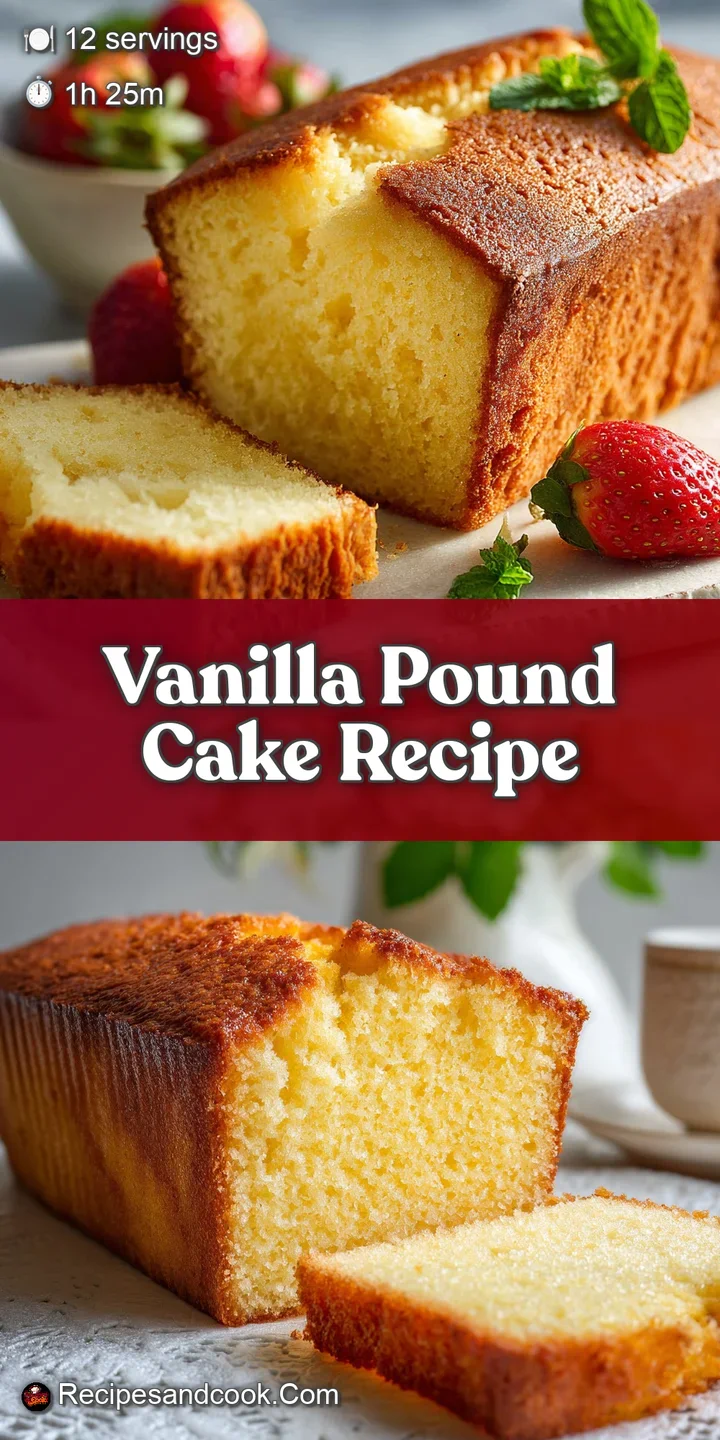
Vanilla Pound Cake Recipe
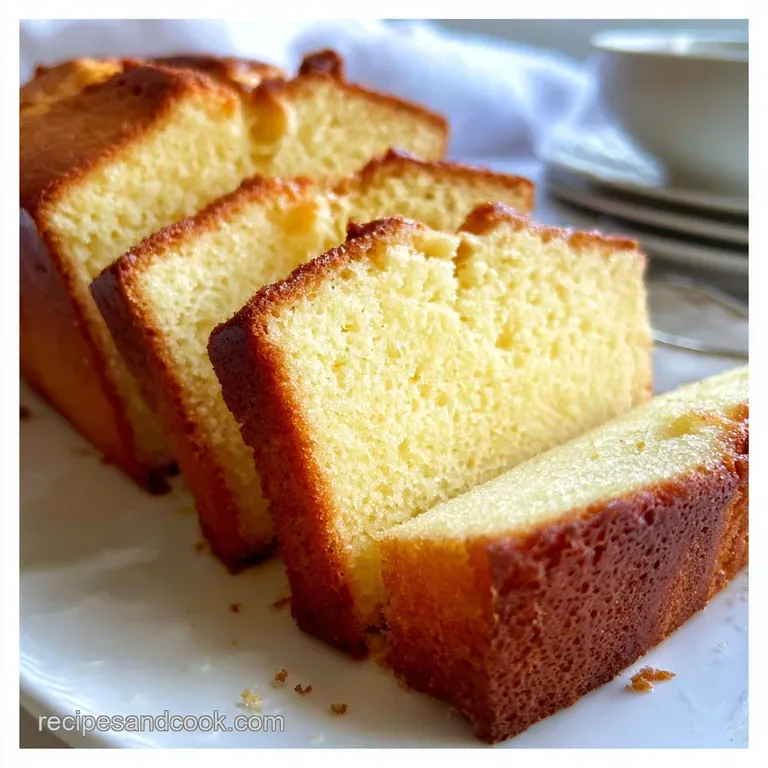
- Time: Active 20 minutes, Passive 1 hour 5 minutes, Total 1 hour 25 minutes
- Flavor/Texture Hook: Deeply buttery with a velvety, tight crumb and a crisp, sugary crust.
- Perfect for: Family gatherings, afternoon tea, or a reliable base for decadent fruit trifles.
- Science Behind the Velvet Crumb
- Component Analysis
- Essentials for Your Pantry
- Tools for Professional Results
- Mastering the Mixing Process
- Solving Common Baking Hurdles
- Adjusting the Yield
- Flavor and Texture Myths
- Tips for Proper Storage
- Ways to Serve Your Cake
- Vanilla Pound Cake Recipe FAQs
- 📝 Recipe Card
Science Behind the Velvet Crumb
- Fat Aeration: Beating the butter and sugar creates tiny air pockets that expand in the oven, providing the primary lift for this dense cake.
- Emulsion Stability: Adding eggs one-by-one allows the lecithin in the yolks to bond the fats and liquids, preventing the batter from splitting.
- Protein Denaturation: The acidity in the 120g of whole milk Greek yogurt tenderizes the flour’s gluten, resulting in a soft, non rubbery bite.
- Starch Gelatinization: As the cake reaches 200°F internally, the flour starches absorb moisture and set the final structure of the crumb.
| Method | Cook Time | Texture | Best For |
|---|---|---|---|
| Standard Bundt Pan | 1 hour 5 minutes | Even, crisp exterior | Large gatherings/Visuals |
| Two Loaf Pans | 45 minutes | Softer sides, high rise | Gifting or freezing half |
| Muffin Tin | 25 minutes | Individual portions | Quick snacks/Lunchboxes |
Using a Bundt pan is the traditional choice for a vanilla pound cake recipe because the center tube allows heat to reach the middle of the dense batter quickly. If you switch to a loaf pan, keep an eye on the center, as it takes longer for the heat to penetrate that thick core without over browning the edges.
Regardless of the pan you choose, the goal is always a golden brown finish and a crumb that feels tight but tender. If you find yourself wanting to serve this with something extra special, it pairs beautifully with a dollop of my Bavarian Cream Recipe which adds a silken contrast to the cake's density.
Component Analysis
| Ingredient | Science Role | Pro Secret |
|---|---|---|
| Unsalted Butter (225g) | Provides flavor and structure through aeration. | Aim for 65°F; it should dent with a finger but not look greasy. |
| Large Eggs (5) | Acts as the binder and provides the "rise." | Submerge cold eggs in warm water for 5 minutes to reach room temp fast. |
| Greek Yogurt (120g) | Adds moisture and acidity to break down gluten. | Use full fat for the best mouthfeel; low-fat makes the cake slightly tougher. |
Essentials for Your Pantry
- Unsalted Butter (225g): Softened to 65°F. Why this? Allows for maximum air incorporation during the initial creaming stage.
- Substitute: Salted butter (reduce added sea salt to 1g).
- Granulated Sugar (300g): White sugar. Why this? The crystals cut into the butter to create those essential air pockets.
- Substitute: Caster sugar for an even finer, tighter crumb.
- Large Eggs (5): Room temperature. Why this? Cold eggs will seize the butter, causing the batter to break and curdle.
- Substitute: 250ml of liquid egg whites (note: cake will be less rich).
- Vanilla Bean Paste (15ml): Or high-quality extract. Why this? Paste provides those beautiful black flecks and a more intense, floral aroma.
- Substitute: Vanilla extract (use 20ml for similar punch).
- All purpose Flour (375g): Leveled and sifted. Why this? Provides enough structure to support the heavy fat content without being chewy.
- Substitute: Cake flour (gives a more delicate, fragile crumb).
- Baking Powder (5g): Fresh. Why this? Gives a consistent, chemical lift to ensure the cake isn't a solid block.
- Substitute: 1.5g Baking soda + 5g extra yogurt (acidity required).
- Fine Sea Salt (3g): To balance sweetness. Why this? Enhances the buttery notes and prevents the vanilla from tasting one dimensional.
- Substitute: Table salt (use 2g as it is denser).
- Whole Milk Greek Yogurt (120g): Room temperature. Why this? Adds fat and moisture without thinning the batter too much.
- Substitute: Sour cream (same fat content and acidity).
- Powdered Sugar (120g): For the glaze. Why this? Dissolves instantly into the milk for a smooth, opaque finish.
- Substitute: Blend granulated sugar until fine (texture may be slightly gritty).
- Whole Milk (30ml): To thin the glaze. Why this? Provides enough liquid to create a pourable consistency.
- Substitute: Heavy cream for a thicker, richer glaze.
Tools for Professional Results
You don't need a high end kitchen, but a few specific items make the vanilla pound cake recipe much easier. A stand mixer is the hero here because creaming butter and sugar for 5 minutes by hand is an Olympic level workout.
If you're using a hand mixer, just be prepared to add a couple of extra minutes to that initial step to ensure enough air is trapped.
A 10 cup Bundt pan is the standard, but make sure it’s a non stick version that’s been well maintained. Even with non stick, I always recommend the "grease and flour" method. Use a pastry brush to get butter into every single crevice of the design.
If you miss a spot, the cake will tear, and that’s a heartbreak we want to avoid. Finally, an instant read thermometer is your best friend. It takes the guesswork out of the "is it done yet?" dilemma.
Mastering the Mixing Process
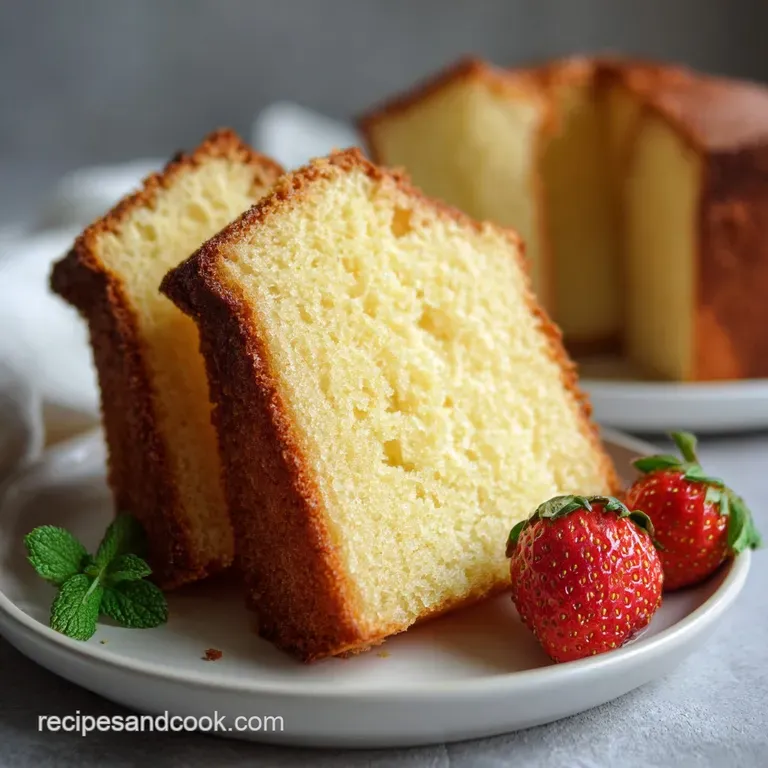
- Preheat your oven to 325°F (165°C). > Chef's Note: A lower temperature prevents the outside from burning before the dense middle is fully baked.
- Cream the 225g butter and 300g sugar together for 5 minutes until pale and fluffy.
- Incorporate the 15ml vanilla bean paste. Note: Adding vanilla to the fat helps carry the flavor through the entire cake.
- Add the 5 eggs one at a time, beating for 30 seconds after each until the batter looks like smooth silk.
- Whisk the 375g flour, 5g baking powder, and 3g salt in a separate bowl.
- Alternate adding the dry ingredients and the 120g Greek yogurt into the mixer. Start and end with the flour.
- Transfer the batter into your prepared pan, smoothing the top with a spatula.
- Bake for 1 hour 5 minutes until a skewer comes out with just a few moist crumbs.
- Cool in the pan for 10 minutes until the edges slightly pull away from the sides.
- Whisk the 120g powdered sugar, 30ml milk, and 2ml vanilla until a thick, white ribbon forms, then pour over the cooled cake.
Solving Common Baking Hurdles
Preventing the Gluey Streak
If you find a dark, dense line near the bottom of your cake, it’s usually due to over mixing after the flour is added. When you add the flour, the gluten starts to develop. If you overwork it, the air pockets collapse, and the heavy batter sinks, creating that "gluey" layer.
Mix just until the white streaks of flour disappear.
Fixing Cake Stuck in Pan
We've all been there. If your cake won't budge, don't force it with a knife. Instead, place a hot, damp towel over the bottom of the inverted pan for 5 minutes. The steam helps release the butter that might have cooled and stuck to the sides. It usually slides right out after a little "steam bath."
| Problem | Root Cause | Solution |
|---|---|---|
| Sunken Center | Underbaked or opened oven too early | Bake until internal temp is 200°F; don't peek before 45 mins. |
| Dry, Crumbly Texture | Too much flour or overbaked | Use a scale for flour; check doneness 5 mins early. |
| Tough, Rubbery Bite | Over mixed flour | Stop mixing as soon as dry ingredients are incorporated. |
Common Mistakes Checklist
- ✓ Always use room temperature eggs and yogurt to prevent the batter from curdling.
- ✓ Cream the butter and sugar for the full 5 minutes; don't cut this short.
- ✓ Grease the Bundt pan with butter and a dusting of flour, even if it's non stick.
- ✓ Let the cake cool for exactly 10-15 minutes in the pan before flipping.
- ✓ Don't over mix once the flour hits the wet ingredients.
Adjusting the Yield
For a Smaller Batch
If you want to cut this in half, use a standard 9x5 loaf pan. Since the recipe calls for 5 eggs, whisk one egg in a bowl and use half of it to get your 2.5 eggs. Reduce the baking time by about 15 to 20 minutes, but start checking with a skewer at the 40 minute mark.
Scaling for a Crowd
To double the recipe, you’ll need two 10 cup Bundt pans. Avoid trying to bake one massive cake in a larger pan as the center will likely remain raw while the outside chars. When doubling, keep the spices and salt at 1.5x the original amount to avoid an overpowering flavor, then adjust to taste.
| Size | Pan Type | Temp | Time |
|---|---|---|---|
| Full Recipe | 10 cup Bundt | 325°F | 1 hour 5 minutes |
| Half Recipe | 9x5 Loaf Pan | 325°F | 45-50 minutes |
| Mini Bundts | 6 count Tin | 325°F | 25-30 minutes |
Flavor and Texture Myths
A common misconception is that "searing" the top of the cake by starting at a high temperature locks in moisture. In reality, pound cakes need a steady, moderate heat to allow the dense middle to rise before the crust sets. A high start usually leads to a cake that is burnt on the outside and liquid in the middle.
Another myth is that you must use cake flour for a "real" vanilla pound cake recipe. While cake flour makes it softer, all purpose flour provides the classic, sturdy structure that defines a traditional pound cake. If you want that nostalgic, old-fashioned bite, all purpose is actually the superior choice.
Tips for Proper Storage
This cake is a dream for meal prepping because the flavors actually deepen by the second day. Store it under a glass cloche or in an airtight container at room temperature for up to 4 days.
If your kitchen is particularly warm, the fridge is fine, but let the slice sit out for 20 minutes before eating to let the butter soften back up.
For long term storage, this cake freezes beautifully. I like to slice it first, wrap each piece in plastic wrap, and then tuck them into a freezer bag. They'll stay fresh for up to 3 months. When you're ready for a treat, you can even pop a frozen slice directly into the toaster for a "grilled" pound cake experience that is absolutely divine. If you have leftover scraps or a cake that didn't come out perfectly, they make the best base for my Starbucks Cake Pop Recipe!
Ways to Serve Your Cake
While a plain slice is a masterpiece on its own, I love serving this warm with a massive scoop of KitchenAid Ice Cream recipe vanilla. The cold cream melting into the dense, warm cake is the height of comfort. If you're feeling fancy, macerate some strawberries in a little sugar and balsamic vinegar for a topping that cuts through the richness of the butter.
For a morning twist, try thick slicing the cake and browning it in a pan with a little extra butter. It caramelizes the edges and makes for the most decadent French toast you've ever had. You could even use it as the "bread" for a dessert sandwich with a layer of chocolate ganache and raspberries.
The possibilities are endless when you have a solid, reliable cake base like this one.
Vanilla Pound Cake Recipe FAQs
What is the secret to a good pound cake?
Accurate ingredient temperatures and proper creaming. Ensure your butter and eggs are at room temperature for maximum aeration and a stable emulsion. This foundational step creates the tender, dense crumb characteristic of a great pound cake.
What is the secret to a good vanilla cake?
Balance of moisture, fat, and leavening. A good vanilla cake needs enough fat for richness, liquids for moisture, and leavening agents to achieve a light, airy crumb. Using high-quality vanilla extract or paste is also key for that signature flavor.
What is the difference between vanilla cake and pound cake?
Density and fat content. Traditional pound cake uses a pound each of butter, sugar, eggs, and flour, resulting in a denser, richer cake. Vanilla cake, while it can be dense, often has a lighter crumb and a less dominant butter flavor, focusing more on the vanilla essence.
What are some common pound cake mistakes?
Overmixing after flour addition and incorrect ingredient temperatures. Overmixing develops gluten, leading to a tough cake, while cold ingredients can cause the batter to curdle. Always ensure butter and eggs are at room temperature, and mix dry ingredients in just until combined.
How do I prevent my pound cake from sinking in the middle?
Bake at the correct temperature and for the right duration. Ensure your oven is accurately preheated, and avoid opening the oven door too early in the baking process. The cake is done when an internal temperature of 200°F is reached.
Can I use oil instead of butter in my pound cake recipe?
No, it will change the texture significantly. Butter is crucial for pound cake's characteristic dense, yet tender crumb due to its fat and creaming properties. Oil would result in a lighter, more cake like texture, losing the dense, buttery essence of a true pound cake.
How long should I cool my pound cake before frosting?
Cool in the pan for 10-15 minutes, then on a wire rack until completely cool. This initial cooling period allows the cake to set slightly before being inverted. Frosting a warm cake will cause the frosting to melt and slide off, so complete cooling is essential for a clean finish.
Vanilla Pound Cake Recipe
Ingredients:
Instructions:
Nutrition Facts:
| Calories | 425 kcal |
|---|---|
| Protein | 7g |
| Fat | 18g |
| Carbs | 59g |
| Fiber | 1g |
| Sugar | 36g |
| Sodium | 125mg |
