Surf and Turf: Pan-Seared Fillet Mignon and Lobster with Garlic Butter
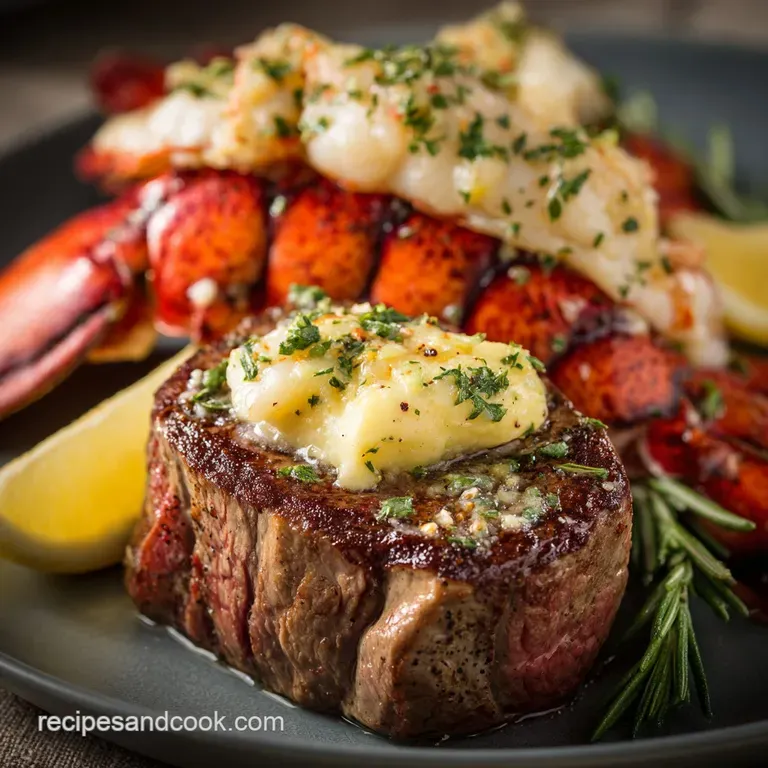
- The Ultimate Surf and Turf: A Guide to Elevated Pan-Searing
- Required Components: Fillet Mignon, Lobster, and Flavor Builders
- The Method: Step-by-Step Instructions for Your Showstopper Dish
- Mastering Precision: The Science Behind Perfect Surf and Turf
- Troubleshooting and Expert Secrets for Pan-Seared Success
- Post-Service Guide: Storing and Reheating Leftovers
- Elevate the Experience: Recommended Pairings and Sides
- Recipe FAQs
- 📝 Recipe Card
The Ultimate Surf and Turf: A Guide to Elevated Pan-Searing
The sizzle, the aroma, that first incredible bite. Can anything truly beat the moment you bring a plate of perfectly cooked Surf and Turf to the table? That deep, crusty sear on the tender fillet coupled with the sweet, buttery lobster makes every single nerve ending pay attention.
It’s pure decadence, guaranteed to impress every single time.
Look, fancy restaurants charge a bomb for this kind of plate, but it is surprisingly straightforward to master at home. We skip the hours of slow roasting and complicated sauces here, relying instead on quick, over high heat pan searing and one brilliant, simple compound butter to deliver maximum flavour efficiency.
We are treating high-quality ingredients with respect.
I promise you, once you learn the timing trick how to get the turf and the surf done simultaneously you’ll become a dinner party legend. Are you ready to dive into the best [Surf and Turf] recipe that focuses solely on flawless technique and incredible flavour? Let’s crack on!
Defining the Dish: Why This Combination Endures
This isn't just a recipe; it's a dual component engineering task that highlights contrast: the richness of the turf against the sweetness of the surf. The secret weapon here is precision temperature control and a mandatory resting period for the thickest piece of meat.
We focus on dry-searing the fillet mignon first, creating a gorgeous dark crust that seals in all those incredible juices and provides deep, earthy flavour notes.
Why We Skip the Béarnaise: Introducing the Compound Butter
Traditional Surf and Turf often involves tricky egg-yolk emulsifications, and frankly, who has the time to watch hollandaise break right before guests arrive? I certainly don't! Instead, we introduce a vibrant Garlic and Chive Compound Butter that melts slowly and beautifully over the hot components.
This method infuses immediate, robust flavour into both the rich turf and the delicate surf without needing the fuss of a separate sauce.
Prep Checklist: Getting Organized for Seamless Cooking
Honestly, the difference between kitchen chaos and quiet confidence is often just prep work. Before you turn on the heat, you must make sure the butter is rolled and chilled, the fillet is tempered, and the lobster tails are butterflied and ready to go.
A well organized cook is a happy cook, especially when tackling two different proteins that require two different cook times simultaneously.
Required Components: Fillet Mignon, Lobster, and Flavor Builders
Selecting Prime Turf: Cuts and Quality Notes for Fillet Mignon
Fillet Mignon is the classic turf choice because it's incredibly tender, even though it's leaner than other cuts. Look for steaks that are at least 1.5 inches (4 cm) thick; anything thinner makes achieving a medium rare center nearly impossible before the crust burns to a crisp. We want that perfect pink center, right?
| Ingredient | Why We Use It | Quick Substitute |
|---|---|---|
| Fillet Mignon | Extremely tender, mild flavour. | Thick cut, well marbled Sirloin Steak (adjust cook time slightly). |
| High Smoke Point Oil | Allows pan to get screaming hot without smoking. | Clarified Butter (Ghee) works perfectly, adding a nutty flavour. |
Sourcing the Surf: Choosing Quality Lobster Tails
We are specifically using cold water lobster tails here because the meat tends to be firmer and sweeter than warm water varieties. If you're using frozen tails, make sure they are fully thawed slowly in the refrigerator overnight never rush the thawing process!
We butterfly these to allow maximum surface area exposure to the pan drippings and let the compound butter really sink in at the end.
| Ingredient | Why We Use It | Quick Substitute |
|---|---|---|
| Lobster Tails | Sweet, delicate, and quick cooking. | high-quality, large King Prawns or firm Scallops. |
| Cayenne Pepper | Provides a gentle, non-overpowering warmth. | A pinch of Paprika for color, or white pepper for mild heat. |
The Secret Weapon: Crafting the Garlic and Chive Compound Butter
This compound butter is non-negotiable; it acts as our finishing sauce, flavour booster, and presentation star all at once. The garlic provides depth, and the fresh chives give it a wonderful, gentle onion note. The little pinch of lemon zest cuts through the richness beautifully, trust me on this.
If you don't have fresh chives, a fantastic substitute is the green parts of scallions, finely diced.
Ingredient Scaling Chart (1x, 2x, 4x servings)
| Component | 1x Serving | 2x Servings (Base Recipe) | 4x Servings |
|---|---|---|---|
| Fillet Mignon | 1 x 7 oz steak | 2 x 7 oz steaks | 4 x 7 oz steaks |
| Lobster Tails | 1 x 4 oz tail | 2 x 4 oz tails | 4 x 4 oz tails |
| Searing Oil | 1 tbsp | 2 tbsp | 4 tbsp |
| Compound Butter | 2 tbsp | 4 tbsp | 8 tbsp |
The Method: step-by-step Instructions for Your Showstopper Dish
Preparing the Fillet: Achieving the Deep Brown Crust (The Sear)
- Temper and Prep: Remove the fillet mignon from the fridge at least 30 minutes before you start cooking; this is absolutely vital. Pat them completely dry using paper towels, then season aggressively on all sides with salt and pepper.
- Heat the Pan: Place your heavy cast iron skillet over high heat until it is smoking hot. Add the high smoke point oil, allowing it to shimmer instantly.
- The Sear: Place the seasoned steaks into the hot oil and do not touch them. Sear for 2 to 3 minutes without moving them until a deep brown crust has formed on the bottom. Flip the steaks over.
Cooking the Surf: Perfecting the Lobster Tails
- Prep the Surf: While the steaks are searing, use sharp kitchen shears to cut down the top centre of the lobster shell, stopping just before the fan tail. Pry the shell open and lift the meat through (the "piggyback" method), brushing it lightly with olive oil and seasoning.
- Baste the Turf: Reduce the heat slightly (to medium high). Add the cubed unsalted butter, thyme sprigs, and smashed garlic to the pan. Tilt the pan and continuously spoon the foaming butter over the steaks for 3– 4 minutes until they reach 125°F (52°C) internal temperature.
- Rest the Turf: Remove the steaks immediately and place them on a warmed cutting board. Cover loosely with foil and allow them to rest undisturbed for 10 minutes.
Finishing Touches: The Butter Baste and Resting Phase
- Cook the Surf in Residual Fat: Keep the pan on medium heat. Remove the thyme and garlic, but keep all that beautiful, flavourful residual fat in the skillet. Place the prepared lobster tails (meat side down) into the fat for 2 minutes to get a light sear.
- Finish Cooking: Flip the tails so the meat is facing up. Spoon the pan drippings over the meat and cook for 3– 5 minutes until the meat is opaque white throughout and firm.
Chef's Note: The internal temperature of the lobster should hit 140°F (60°C). Overcooking lobster is unforgivable, making it rubbery and tough.
- Final Butter Application: Remove the lobster from the heat. Slice two thick coins of the chilled compound butter and place one on top of each lobster tail while the meat is still piping hot, allowing the herbed butter to melt slowly into the meat.
Plating the Duo: Presentation Matters
Slice the rested fillet mignon against the grain into thick medallions, or leave it whole if you prefer. Place the sliced turf and the finished lobster tail side-by-side on two warmed plates.
Spoon any remaining pan juices from the steak’s resting board over the sliced fillet and garnish both components with chopped fresh parsley and a lemon wedge. Done!
Mastering Precision: The Science Behind Perfect Surf and Turf
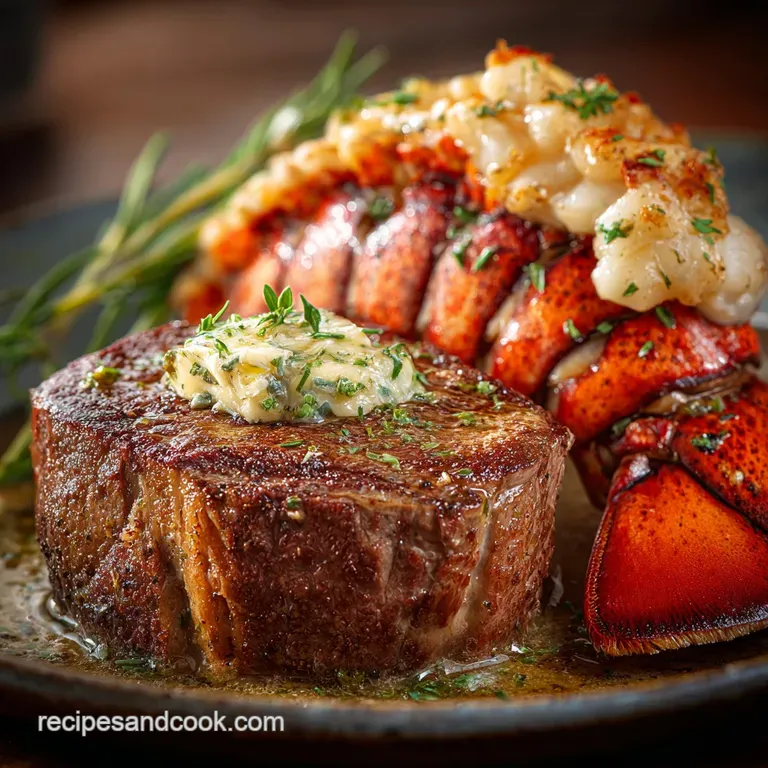
The Reverse Searing Principle for Fillet Mignon
The reverse sear, while often an oven method, informs our quick sear approach. We use this principle to focus on achieving the internal temperature gently before hitting it with high heat.
Here, we add the basting butter only after the initial crust has formed; adding butter too soon only risks scorching the milk solids before the Maillard reaction has begun.
Why Quick Poaching Preserves Lobster Tenderness
Lobster meat is incredibly lean and easily toughened by prolonged, intense heat. By pan-roasting it briefly in the residual clarified pan fat, we are essentially quick poaching the meat gently within its own shell.
This method maintains that signature sweet, tender springiness we are all looking for, preventing that sad, rubbery texture.
Temperature Mapping: Achieving Ideal Doneness for Both Components
You absolutely need a digital meat thermometer for this dish. Guessing the internal temperature of a thick fillet is a recipe for disaster. Aim for 125°F (52°C) when you pull the steak, knowing it will coast up to a perfect 130°F (54°C) to 135°F (57°C) (Medium Rare) while resting.
The lobster, being much leaner, needs to hit 140°F (60°C) and no higher.
Troubleshooting and Expert Secrets for Pan-Seared Success
Mistake #1: The Cold Steak Error
People always rush this step, but skipping the tempering phase is a fatal error when cooking thick cuts. Starting with a cold fillet means the outside overcooks into a tough, grey layer before the center even approaches medium rare.
Solution: Always budget 45 minutes for the fillet to warm up to room temperature before you add salt and oil.
Achieving Maximum Flavor Through Clarified Butter or Ghee
I once used plain butter for my sear, and it smoked like a bonfire, triggering all my smoke alarms. Butter burns quickly because of its low smoke point due to the presence of milk solids.
If you really want that pure buttery flavour for over high heat searing not just for basting you absolutely must use clarified butter or ghee. It has a much higher smoke point, allowing you to achieve a deeper, nuttier crust safely.
Ensuring Simultaneous Doneness (Timing the Surf and Turf)
This is the biggest challenge of the showstopper Surf and Turf dinner. The turf takes longer and requires rest, while the surf is ready almost instantly. The trick: Cook the fillet completely, pull it to rest, and then use those perfectly flavoured residual pan juices to cook the lobster while the steak rests.
This ensures everything lands piping hot on the plate at the exact same time.
Post Service Guide: Storing and Reheating Leftovers
If you manage to have leftovers, you are a stronger person than me.
Storage: Store the fillet mignon and the lobster separately in airtight containers in the refrigerator. They will keep safely for up to 3 days.
Freezing: Freezing the fillet mignon is possible, but the texture will suffer slightly upon thawing. I do not recommend freezing cooked lobster, as it becomes rubbery and watery when reheated.
Reheating: This requires patience. For the fillet, slice it thinly, wrap it tightly in foil with a tiny splash of broth or butter, and warm it in a 300°F (150°C) oven for about 10– 12 minutes.
For the lobster, the fastest way is to cut the meat into chunks and quickly warm it in a pan with a small pat of butter for 2 minutes don't cook it again, just warm it through.
Elevate the Experience: Recommended Pairings and Sides
Since the main course is so rich, I usually try to pair it with something decadent but texturally different. For a crowd, I often pair this with my ultra creamy, baked side like the [ChickfilA Mac and Cheese: The Ultra Creamy Copycat Baked Recipe]. That combination is truly unstoppable!
For a lighter side that cuts through the richness, a simple, crisp Watercress and Shallot Salad dressed lightly with a sherry vinaigrette provides the necessary acidic counterpoint.
If you are planning a massive, celebratory menu, start the evening off right with a powerful appetizer. I love serving this dish after a hearty, savory starter like my [Crack dip: The Unbeatable Creamy Bacon and Cheddar Party Recipe] it just sets the indulgent tone perfectly.
Beverage Pairing: A full bodied, fruit forward Cabernet Sauvignon (for the steak) or a crisp, unoaked Chardonnay (for the lobster) works wonders. If it’s a big celebration, reach for a high-quality Champagne (a Blanc de Blancs) to cut through the richness beautifully.
Recipe FAQs
Why is my filet mignon tough or dry even though I hit the right internal temperature?
This common issue is nearly always due to skipping the crucial resting phase after cooking. When the steak is immediately cut after searing, the tightly bound muscle fibers release all their concentrated juices onto the plate, resulting in a dry texture.
Always allow the filet to rest tented with foil for 5-10 minutes, enabling the juices to properly redistribute back into the meat.
My lobster tails turned out rubbery. What did I do wrong?
Rubbery or chewy seafood is a definitive sign of overcooking, which happens quickly with delicate lobster meat. Ensure you are removing the tails from the heat once they reach an internal temperature of 140 145°F (60 63°C).
The meat should be fully opaque white and firm, but if it begins to look shrunken or stiff, it has gone too far.
How do I ensure both the steak and the lobster are hot when serving?
The key to perfect timing is to sequence around the steak’s resting period. Sear the steak first, then remove it from the pan to rest for 10 minutes this is mandatory for juicy results.
Use those 10 minutes to cook the lobster tails and finish your compound butter melt, ensuring all components are finished and ready to plate at peak temperature simultaneously.
Can I use a different cut of steak instead of Filet Mignon?
Yes, while the Filet Mignon is traditional for its supreme tenderness, you can easily substitute it with a flavorful New York Strip or a well marbled Ribeye steak. Be aware that cuts with more fat, like the Ribeye, may require slightly longer searing to render the fat properly and create a beautiful crust.
Always adjust cooking times based on the steak's thickness and fat content.
What seafood can I use if I don't have lobster tails available?
Excellent alternatives for the "surf" component are large sea scallops or jumbo shrimp (prawns). Both pair beautifully with the pan-searing method and the garlic herb butter. Scallops should be seared for about 2 minutes per side until caramelized, while jumbo shrimp require only 2-3 minutes total cooking time until pink and opaque.
How should I store and reheat leftover Surf and Turf?
Store the leftover steak and lobster separately in airtight containers in the refrigerator for up to two days. Reheating a steak to its original medium rare temperature is challenging, so we suggest thinly slicing the steak and serving it cold over a salad or reheating the slices gently in a pan with a tablespoon of broth.
Reheat the lobster meat very briefly in a 300°F oven for about five minutes to gently warm it through without drying or toughening the meat.
Why use a Compound Butter instead of a traditional sauce like Béarnaise?
Compound butter simplifies the process dramatically, cutting down on time while adding concentrated flavor directly to the dish as it melts. The high fat content in the melting butter also acts as a built-in basting agent, moisturizing both the lean filet mignon and the delicate lobster meat as it’s plated.
This method highlights the quality of the primary ingredients without the complication of emulsified sauces.
Ultimate Surf And Turf Recipe
Ingredients:
Instructions:
Nutrition Facts:
| Calories | 533 kcal |
|---|---|
| Protein | 47.9 g |
| Fat | 28.3 g |
| Carbs | 21.9 g |
