Tuscan Lamb Stew: Slow Simmered
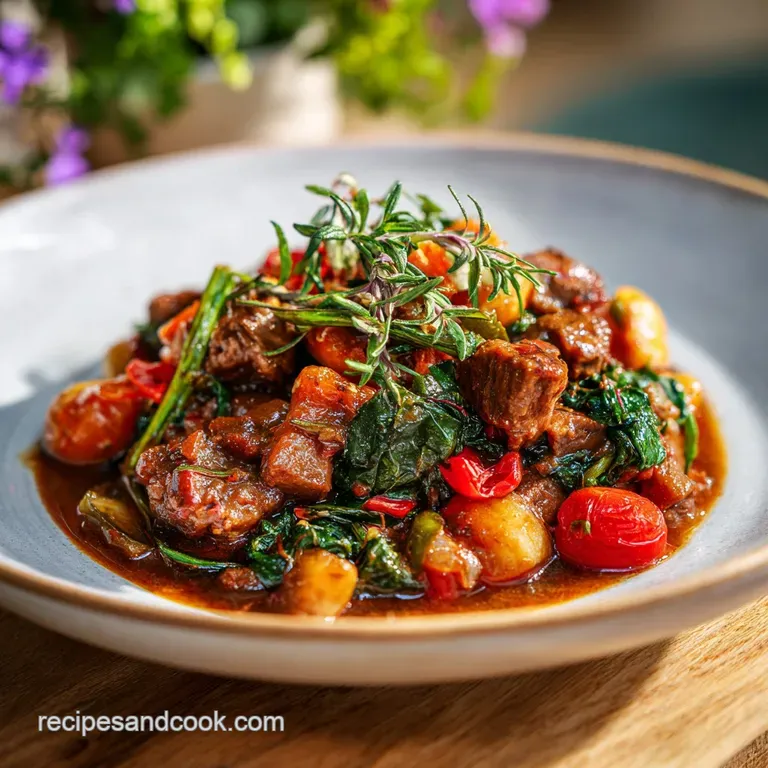
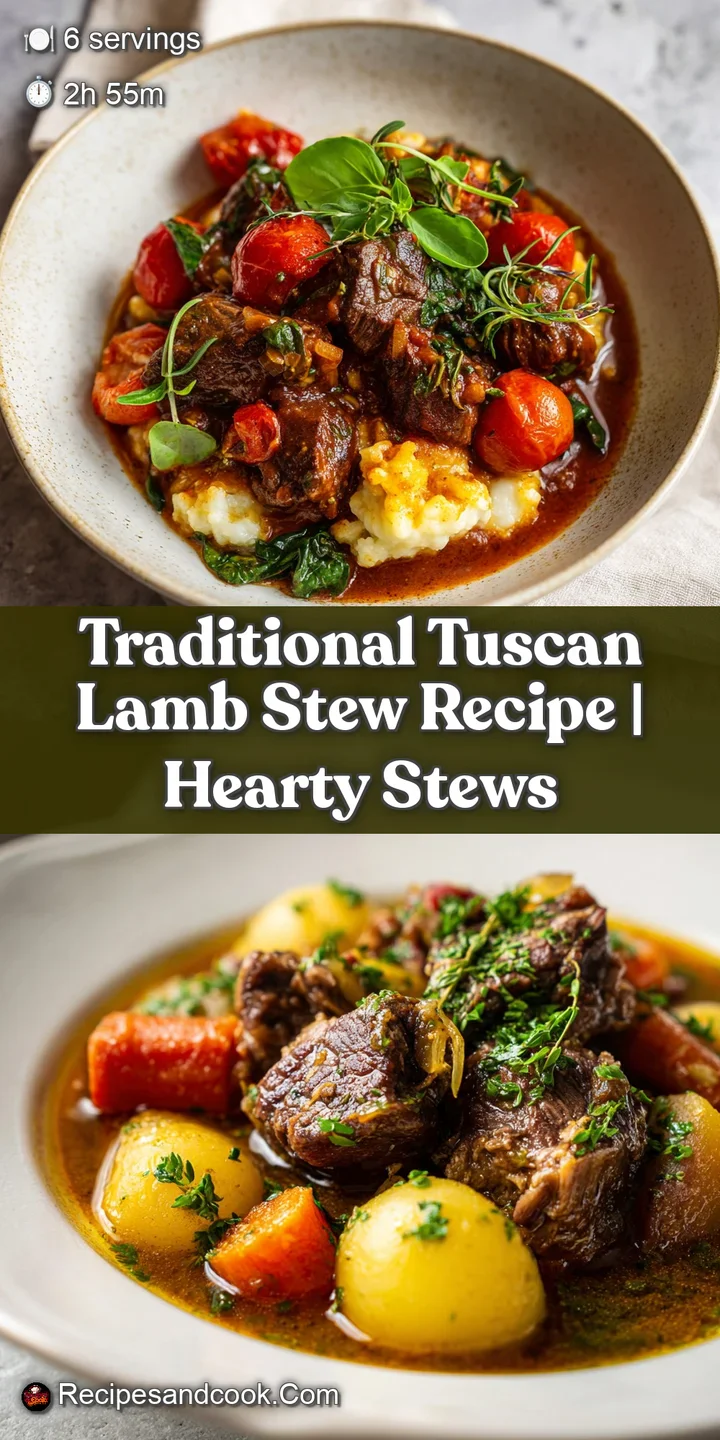
- Time: Active 25 minutes, Passive 2 hours 30 mins, Total 2 hours 55 mins
- Flavor/Texture Hook: Hearty, herb infused lamb with a velvety wine sauce
- Perfect for: Slow Sunday dinners and gathering family around a rustic table
- Master the Hearty Comfort of Tuscan Lamb Stew
- Timelines for This Traditional Dish
- The Science of Succulent Braised Meat
- Component Analysis for a Rich Braise
- Essential Ingredients for a Rich Base
- Best Pots for Even Braising
- Guide to Searing and Simmering Success
- Fixing Texture and Flavor Balance Issues
- Modifying for Specific Dietary Needs
- Storing and Reducing Kitchen Waste
- Plating Ideas for a Beautiful Meal
- High in Sodium (⚠️)
- Recipe FAQs
- 📝 Recipe Card
Master the Hearty Comfort of Tuscan Lamb Stew
The first time I attempted a lamb stew, the kitchen was filled with the sharp, resinous scent of fresh rosemary and the heavy, fruit forward aroma of a Chianti reduction. I remember the rhythmic sound of the wooden spoon scraping the bottom of my heavy Dutch oven, releasing those dark, caramelized bits that hold all the secret flavor.
There is something deeply grounding about watching a humble pile of meat and root vegetables transform into a rich, mahogany hued masterpiece over the course of a rainy afternoon.
We've all had those stews that turn out thin or, worse, where the lamb feels like chewing on a rubber band. I’ve spent years tweaking this method to ensure the meat doesn't just sit in liquid, but actually becomes part of the sauce.
This recipe is my love letter to traditional Italian country cooking honest, unpretentious, and designed to be shared with a big loaf of crusty bread.
You can expect a dish that feels sophisticated but uses simple pantry staples. The wine provides a sophisticated acidity that cuts through the natural fattiness of the lamb, while the potatoes soak up all that goodness until they’re practically creamy.
Trust me on this, once you master the sear and the simmer, you’ll never look at a weeknight meal the same way again.
Timelines for This Traditional Dish
Planning your kitchen flow is the secret to a stress free dinner. While the total time might seem long, most of it is hands off while the pot bubbles away on the stove. You want to give the collagen in the lamb shoulder enough time to melt, which typically happens around the two hour mark.
| Method | Total Time | Texture | Best For |
|---|---|---|---|
| Classic Stovetop | 2 hours 55 mins | Ultra tender, thick sauce | Weekend slow cooking |
| Pressure Cooker | 1 hour 10 mins | Very soft meat, thinner sauce | Busy weeknights |
| Slow Cooker | 6-8 hours | Fall apart tender | Set and forget morning prep |
If you are in a rush, you might be tempted to turn up the heat. Don't. High heat will tighten the protein fibers, making the meat tough rather than tender. If you want a thicker sauce, simply mash one or two of the potatoes against the side of the pot at the very end.
The Science of Succulent Braised Meat
Understanding the "how" helps you adjust the dish on the fly without losing that signature texture.
- Collagen Conversion: At temperatures between 70°C and 80°C, tough connective tissue slowly breaks down into gelatin, which gives the sauce its velvety body.
- Maillard Reaction: Searing the lamb cubes in small batches creates hundreds of new flavor compounds that a simple boil can never replicate.
- Acidic Tenderizing: The red wine and tomato paste contain acids that help weaken the protein bonds, speeding up the tenderizing process while adding depth.
For those who want a variation, this hearty stew is a step up from a standard Caribbean Lamb Stew recipe because it focuses on woody herbs like sage and rosemary rather than tropical spices.
Component Analysis for a Rich Braise
Selecting the right building blocks ensures your stew has the correct mouthfeel and balance.
| Ingredient | Science Role | Pro Secret |
|---|---|---|
| Lamb Shoulder | Provides fat and collagen | Cut into uniform 1.5 inch cubes for even cooking |
| Tomato Paste | Adds umami and natural thickener | Sauté until it turns brick red to remove the raw metallic taste |
| Dry Red Wine | Deglazes the pan and balances fat | Use a wine you’d actually drink; the flavor concentrates as it reduces |
| Yukon Gold Potatoes | Holds shape while releasing starch | These are waxier than Russets, so they won't disintegrate into mush |
A quick tip for the potatoes: keep the chunks relatively large. If they are too small, they will vanish into the sauce before the lamb is fully tender. We want defined bites that have absorbed the wine and stock.
Essential Ingredients for a Rich Base
Gather these items before you start. Having everything chopped and ready (mise en place) makes the searing process much smoother.
- 2 lbs lamb shoulder: Trimmed and cut into 1.5 inch cubes. Why this? Shoulder has the perfect fat to meat ratio for long braising.
- Substitute: Beef chuck roast works if lamb is unavailable.
- 3 tbsp extra virgin olive oil: For the initial sear.
- Substitute: Grapeseed oil for a higher smoke point.
- 0.5 cup all purpose flour: To coat the meat. Why this? It helps with browning and naturally thickens the stew.
- Substitute: Cornstarch (use half the amount) for a gluten-free option.
- 1 large yellow onion: Finely diced.
- Substitute: Two large shallots for a milder flavor.
- 2 medium carrots & 2 celery stalks: The classic soffritto.
- Substitute: Parsnips can replace carrots for an earthier tone.
- 4 cloves garlic: Smashed.
- Substitute: 1 tsp garlic powder in a pinch, but fresh is better.
- 2 tbsp tomato paste: For depth.
- Substitute: 1/4 cup tomato purée reduced down.
- 1.5 cups dry Italian red wine: Such as Chianti.
- Substitute: 1.5 cups beef stock plus 1 tbsp balsamic vinegar.
- 14 oz crushed tomatoes: The base of the sauce.
- Substitute: Diced tomatoes blended slightly.
- 2 cups low sodium beef stock: To provide the liquid.
- Substitute: Chicken stock actually works surprisingly well for a lighter feel.
- 1 lb Yukon Gold potatoes: Peeled and cubed.
- Substitute: Red potatoes also hold their shape well.
- Fresh Herbs: 2 sprigs rosemary, 5 sage leaves, 1 bay leaf.
- Substitute: 1 tsp dried Italian seasoning if fresh herbs are missing.
- 1 tbsp red wine vinegar: Added at the end. Why this? It "wakes up" all the heavy flavors right before serving.
- Substitute: Lemon juice.
Best Pots for Even Braising
To get that shatter crisp sear and even simmer, the right vessel is non negotiable. A heavy bottomed Dutch oven, like one from Lodge or Le Creuset, is the gold standard here. The thick walls hold heat consistently, which prevents the bottom from scorching during the long cook time.
If you don't have a Dutch oven, a heavy stainless steel stockpot will work, but you'll need to be more vigilant about stirring. Avoid thin aluminum pots; they create hot spots that will burn your aromatics before the meat is even close to done.
Guide to Searing and Simmering Success
Chef's Tip: Freeze your lamb for 15 minutes before cutting. It firms up the fat, making it much easier to get those clean, uniform 1.5 inch cubes.
- Dredge the lamb. Toss the lamb cubes in the flour with salt and pepper until lightly coated. Note: Shake off excess flour to prevent it from burning in the oil.
- Sear in batches. Heat the oil in your pot until it ripples. Brown the lamb in 2 or 3 batches until a deep brown crust forms. Note: Overcrowding the pan will cause the meat to steam instead of sear.
- Sauté the aromatics. Remove the lamb and add the onion, carrots, and celery. Cook for 5 minutes until the onions are translucent and soft.
- Toast the paste. Stir in the garlic and tomato paste. Cook for 2 minutes until the paste smells sweet and looks dark.
- Deglaze the pan. Pour in the red wine. Use a wooden spoon to scrape every bit of brown "fond" from the bottom. Wait until the wine reduces by half.
- Build the braise. Return the lamb to the pot. Add the crushed tomatoes, beef stock, rosemary, sage, and bay leaf.
- Simmer gently. Bring to a boil, then reduce heat to the lowest setting. Cover and simmer for 1 hour 30 mins.
- Add the potatoes. Stir in the potato chunks. Cover and continue cooking for 45 minutes to 1 hour until the lamb is fork tender.
- Brighten the sauce. Remove the herb sprigs and bay leaf. Stir in the red wine vinegar.
- Rest and serve. Let the stew sit for 10 minutes off the heat. This allows the fibers to relax and the sauce to thicken slightly.
If you love these Mediterranean flavors but want poultry, my Creamy Tuscan Chicken recipe is a wonderful alternative for a faster weeknight fix.
Fixing Texture and Flavor Balance Issues
Even experienced cooks run into trouble. Most issues with Tuscan Lamb Stew come down to heat management or seasoning timing.
Improving Tough Meat Texture
If your lamb feels like it's fighting back, it simply hasn't been in the pot long enough. Every animal is different, and some cuts need an extra 30 minutes to reach that melting point. Keep the lid on and keep the heat low; more time is almost always the answer.
Balancing Overly Salty Flavors
Because stews reduce, the saltiness intensifies. If you find the sauce too salty, add another peeled potato. It will act like a sponge for the excess salt. Alternatively, a tiny pinch of sugar can help mask the salt without making the dish sweet.
| Problem | Root Cause | Solution |
|---|---|---|
| Greasy Sauce | Fat wasn't trimmed or skimmed | Use a wide spoon to skim the surface, or chill and remove fat later |
| Bland Flavor | Missing acidity or salt | Add another splash of red wine vinegar or a pinch of salt |
| Thin Liquid | Too much stock or no flour | Mash a few potatoes or simmer uncovered for 15 minutes |
Common Mistakes Checklist - ✓ Pat the lamb bone dry with paper towels before flouring (prevents a gummy exterior). - ✓ Never skip the deglazing step; those brown bits are where the soul of the stew lives.
- ✓ Keep the simmer to a "lazy bubble" aggressive boiling toughens the meat. - ✓ Add the fresh herbs in whole sprigs so they are easy to fish out later. - ✓ Taste for salt only after the sauce has reduced, never at the beginning.
Modifying for Specific Dietary Needs
This recipe is quite flexible. If you are cooking for a crowd, you can easily double the ingredients. Just ensure you use a large enough pot so the liquid doesn't overflow.
- Scaling Down: For 2-3 people, halve all ingredients. Use a smaller pot to ensure the meat is mostly submerged in the liquid.
- Scaling Up: Double the meat and vegetables, but only use 1.5x the salt and spices initially. Liquids should be increased by about 80% rather than doubled to prevent it from becoming too watery.
- Paleo/Whole30: Replace the flour with arrowroot powder and swap the white potatoes for turnips or extra carrots. Omit the wine and use extra beef stock with a splash of apple cider vinegar.
| Servings | Lamb Quantity | Pan Size | Cook Time |
|---|---|---|---|
| 2-3 People | 1 lb (450g) | 3 Quart Pot | 2 hours 15 mins |
| 6 People | 2 lbs (900g) | 5 Quart Pot | 2 hours 55 mins |
| 12 People | 4 lbs (1.8kg) | 8 Quart Pot | 3 hours 30 mins |
Decision Shortcut - If you want a richer sauce, stir in 1 tbsp of cold butter at the very end. - If you want a leaner meal, trim every visible piece of white fat from the lamb before searing. - If you want more greens, stir in two handfuls of fresh spinach 5 minutes before serving.
Storing and Reducing Kitchen Waste
Stews are famous for being better the next day. As the dish cools, the flavors continue to meld and the aromatics penetrate deeper into the meat.
- Fridge: Store in an airtight container for up to 4 days.
- Freezer: This freezes beautifully for up to 3 months. Leave about an inch of space at the top of your container for expansion.
- Zero Waste: Save your onion skins, celery ends, and carrot peels in a bag in the freezer. When the bag is full, boil them with water to make your own vegetable scrap stock for the next batch.
There is a common myth that you should only use cheap "cooking wine" for stews. This is false. Heat concentrates the flavors, meaning if the wine tastes bad in a glass, it will taste even worse once it’s reduced in your sauce. You don't need a vintage bottle, but use something you enjoy drinking.
Plating Ideas for a Beautiful Meal
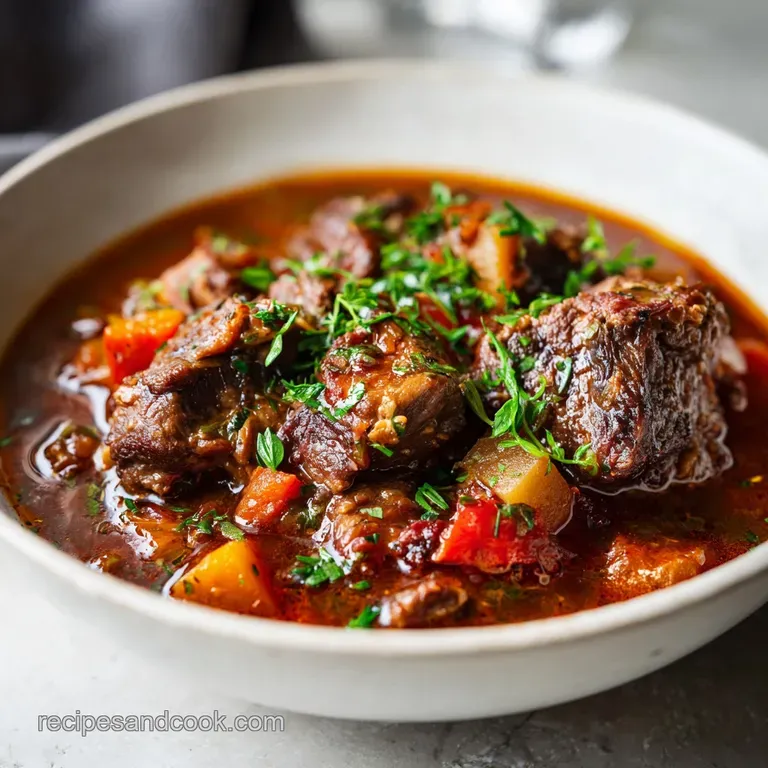
When you are ready to serve this Tuscan Lamb Stew, don't just ladle it into a bowl and call it a day. The dish is visually dark, so it needs a pop of color. A generous sprinkle of freshly chopped flat leaf parsley adds a grassy note that cuts through the richness.
I love serving this in wide, shallow bowls rather than deep ones. It allows you to see the chunks of lamb and potatoes clearly. Serve it alongside a thick slice of sourdough bread toasted with olive oil and a rub of raw garlic.
If you’re feeling extra fancy, a small dollop of gremolata (lemon zest, garlic, and parsley) on top right before it hits the table will make it look like it came straight from a restaurant in Florence. Enjoy every spoonful!
High in Sodium (⚠️)
845 mg mg of sodium per serving (37% % of daily value)
The American Heart Association recommends limiting sodium intake to about 2,300mg per day for most adults.
Tips to Reduce Sodium in Your Lamb Stew
-
Low-Sodium Broth-30%
Use low-sodium or no-salt added beef stock. This simple swap can significantly reduce the sodium content without sacrificing flavor.
-
No-Salt Added Tomatoes-20%
Opt for no-salt added crushed tomatoes. Many canned tomato products contain added sodium, which can quickly increase the overall sodium content of the stew.
-
Reduce Added Salt-25%
Carefully measure and reduce the amount of salt added during cooking. Taste the stew before adding any salt at all.
-
Herb Power
Enhance the flavor with fresh herbs and spices. Rosemary, sage, black pepper, and red wine vinegar contribute depth and complexity without adding sodium.
-
Wine Reduction-5%
Consider reducing the red wine slightly. This can concentrate the wine's flavor, potentially allowing for a small reduction in other sodium containing ingredients.
-
Naturally Sweet
Ensure your diced carrots and diced celery are cut into small pieces, to increase their natural sweetness. This can help offset the lack of salt.
Recipe FAQs
What are common mistakes when making lamb stew?
Not searing the meat properly is the most common error. Overcrowding the pan causes the lamb to steam instead of developing a deep, flavorful brown crust, which is vital for depth.
What is the name of Italian lamb stew?
The Tuscan preparation is often called 'Stufato di Agnello'. This specifically refers to a slow cooked, rustic braise, differing from quicker ragù styles.
What herbs enhance lamb stew flavor?
Rosemary, sage, and bay leaf are essential for the Tuscan profile. These woody herbs stand up well to the rich red wine and the long cooking time.
What is a fancy name for lamb stew?
A refined menu might list it as 'Agnello Brasato al Vino Rosso'. This translates to braised lamb in red wine, emphasizing the cooking method.
Is it true I should only use cheap cooking wine for stew?
No, this is a common misconception. Heat concentrates the flavors, so if the wine tastes bad straight from the bottle, it will taste worse once reduced in your sauce.
How to ensure the lamb shoulder becomes fork tender?
Simmer the meat gently for at least two hours after adding liquid. The collagen needs sustained low heat, typically between 70°C and 80°C, to dissolve into tender gelatin.
What can I add at the end to brighten the stew’s flavor?
Stir in one tablespoon of red wine vinegar just before serving. This touch of acid cuts through the richness of the reduced wine and fat, making the overall taste more vibrant.
Tuscan Lamb Stew Recipe
Ingredients:
Instructions:
Nutrition Facts:
| Calories | 684 kcal |
|---|---|
| Protein | 29.2 g |
| Fat | 31.8 g |
| Carbs | 27.6 g |
| Fiber | 3.9 g |
| Sugar | 5.8 g |
| Sodium | 845 mg |
