Creole Chicken: Tender and Zesty
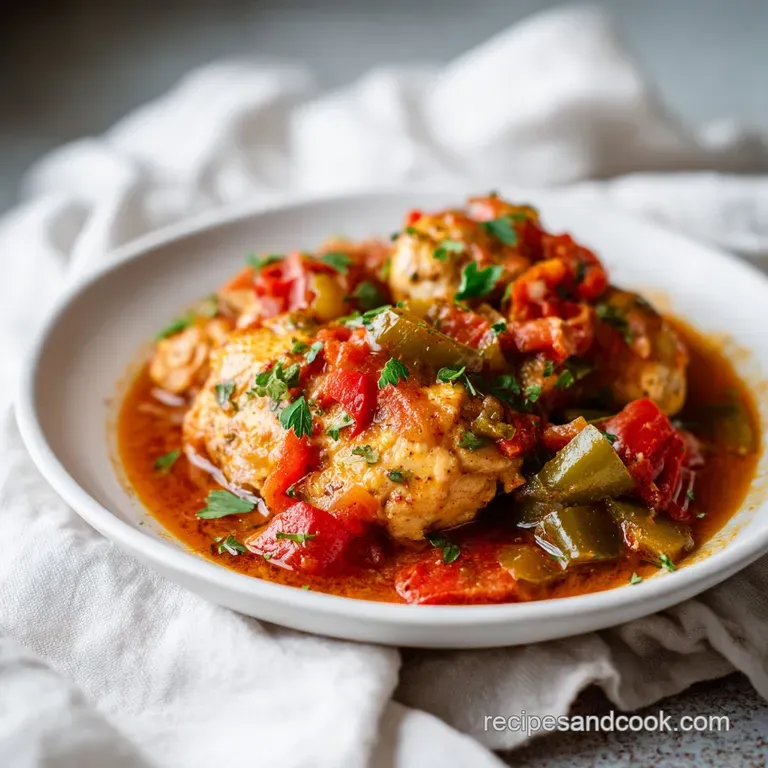
- Time: Active 20 minutes, Passive 40 minutes, Total 1 hour
- Flavor/Texture Hook: Smoky, tender, and vibrantly zesty
- Perfect for: Sunday family dinners or meal prepping satisfying lunches
- Mastering a Rich and Savory Creole Chicken Recipe
- The Alchemy of the Braise
- Essential Timing and Yield Data for Your Meal
- Gathering Your Pantry Staples for This Southern Classic
- The Best Tools for a Flawless One Skillet Dinner
- A Step-by-Step Guide to Searing and Simmering
- Fixing Common Texture and Flavor Balance Issues Easily
- Creative Ways to Personalize Your Spicy Tomato Sauce
- Storing and Reusing Your Leftovers for Maximum Flavor
- Making Your Platter Look as Good as It Smells
- Recipe FAQs
- 📝 Recipe Card
Mastering a Rich and Savory Creole Chicken Recipe
The first time I stood over a pan of this Creole Chicken, it wasn't the heat that got me - it was the rhythm. There is something hypnotic about the way the onions, bell peppers, and celery (the famous "Holy Trinity") begin to soften and release that sweet, earthy perfume into the kitchen.
I remember my grandmother telling me that you can't rush the trinity; you have to let them sweat until they’re translucent and humble, waiting to soak up the spices that come next.
We’re making something that feels like a warm hug on a rainy Tuesday. This isn't just about throwing things in a pot, it’s about the sizzle of skin hitting hot oil and the way fire roasted tomatoes transform from a simple pantry staple into a glossy, rich blanket for the meat.
By the time the bay leaves have done their work, your whole home will smell like a cozy kitchen in the heart of Louisiana, and you'll be reaching for a crusty piece of bread to swipe every last drop from the skillet.
The Alchemy of the Braise
The Maillard Impact: Searing the skin side first creates a complex crust of amino acids and sugars, ensuring the meat stays juicy while the fat renders into the sauce base.
Aromatic Concentration: Sweating the Holy Trinity at a medium heat breaks down cellulose, which allows the vegetables to melt into the sauce and act as a natural thickener.
Acidic Balancing: The fire roasted tomatoes provide a charred sweetness and necessary acidity that cuts through the richness of the dark meat, keeping the palate refreshed.
| Thickness | Internal Temp | Rest Time | Visual Cue |
|---|---|---|---|
| 1.5 inch Thighs | 175°F | 5 minutes | Juices run clear when pierced |
| 1 inch Thighs | 170°F | 3 minutes | Meat pulls easily from bone |
| 2 inch Thighs | 180°F | 8 minutes | Skin is mahogany and tight |
Chef's Tip: For a deeper flavor, let your spices "bloom" in the hot oil for exactly 45 seconds before adding the liquid. This wakes up the fat soluble compounds in the paprika and cayenne that have been sleeping in your spice jar.
Essential Timing and Yield Data for Your Meal
When we talk about traditional comfort food, timing is everything. While this recipe is remarkably forgiving, hitting these specific checkpoints ensures your poultry is never stringy or dry.
Dark meat loves a bit of extra time to break down connective tissue, which is why we aim for a slightly higher internal temperature than you would for a breast. This results in a texture that is almost buttery.
If you are looking for a different profile but love this style of cooking, you might also enjoy the technique used in my Caribbean Chicken Stew recipe. Both dishes rely on that initial hard sear to lock in the savory notes before a long, slow simmer.
| Ingredient | Science Role | Pro Secret |
|---|---|---|
| Chicken Thighs | Collagen source | Leave the bone in for a silkier, more body heavy sauce texture. |
| Smoked Paprika | Flavor stabilizer | Adds a "false smoke" effect that mimics hours in a wood fired oven. |
| Fire Roasted Tomatoes | pH Balancer | The char on the skins adds a subtle bitterness that balances the sweet onion. |
Using bone in, skinless thighs is my favorite budget smart shortcut. You get all the deep flavor of the bone and the richness of dark meat without the struggle of trying to keep skin crispy in a bubbling sauce. It’s practical, effective, and honestly, the meat just falls apart better this way.
Gathering Your Pantry Staples for This Southern Classic
- 1.5 lbs bone in, skinless chicken thighs: Why this? Provides rich flavor and stays tender during the 40 minute simmer.
- Substitute: Chicken drumsticks (Adds a bit more fat; simmer 10 mins longer).
- 2 tbsp avocado oil: Why this? High smoke point allows for a hard sear without burning.
- Substitute: Grapeseed oil (Neutral flavor and high heat stability).
- 1 tbsp smoked paprika: Why this? Core flavor component for that signature Creole earthiness.
- Substitute: Liquid smoke (2 drops) + plain paprika (Less depth).
- 1 tsp garlic powder: Why this? Distributes evenly over the meat for a consistent crust.
- Substitute: Onion powder (Sweeter profile; less pungent).
- 0.5 tsp cayenne pepper: Why this? Provides the "back of the throat" heat essential to the dish.
- Substitute: Red pepper flakes (Heat is more localized, less integrated).
- 1 large yellow onion, finely diced (150g): Why this? High sugar content helps with browning and sauce body.
- Substitute: White onion (Sharper bite, less sweetness when cooked).
- 2 medium green bell peppers, diced (200g): Why this? Adds a necessary grassy note to the Holy Trinity.
- Substitute: Celery (Increase amount if peppers are unavailable).
- 3 stalks celery, diced (120g): Why this? Provides structure and a subtle saltiness to the base.
- Substitute: Fennel bulb (Adds a slight anise note; very traditional).
- 4 cloves garlic, minced: Why this? Adds fresh, sharp aromatic depth to the simmering liquid.
- Substitute: Garlic paste (1 tbsp; more intense, less texture).
- 14.5 oz fire roasted crushed tomatoes: Why this? Pre charred flavor adds instant complexity to the sauce.
- Substitute: Plain crushed tomatoes + 0.5 tsp sugar.
- 1 cup low sodium chicken bone broth: Why this? Adds protein and gelatin for a velvety mouthfeel.
- Substitute: Vegetable broth (Lighter flavor; less body).
- 2 bay leaves: Why this? Acts as a background "herbal" anchor for the spices.
- Substitute: 0.5 tsp dried oregano (Different aroma but works well).
- 1 tsp dried thyme: Why this? Classic woodsy herb that pairs perfectly with poultry.
- Substitute: Fresh thyme (3 sprigs; remove stems after cooking).
| Original Ingredient | Substitute | Why It Works |
|---|---|---|
| Chicken Thighs | Firm Tofu (Pressed) | Note: Drastic texture change. Sear heavily to mimic meat structure. |
| Avocado Oil | Lard or Bacon Grease | Increases the savory/smoky profile significantly. Very traditional. |
| Bone Broth | Water + Bouillon | Budget friendly. Adjust salt carefully as bouillon is often very salty. |
The Best Tools for a Flawless One Skillet Dinner
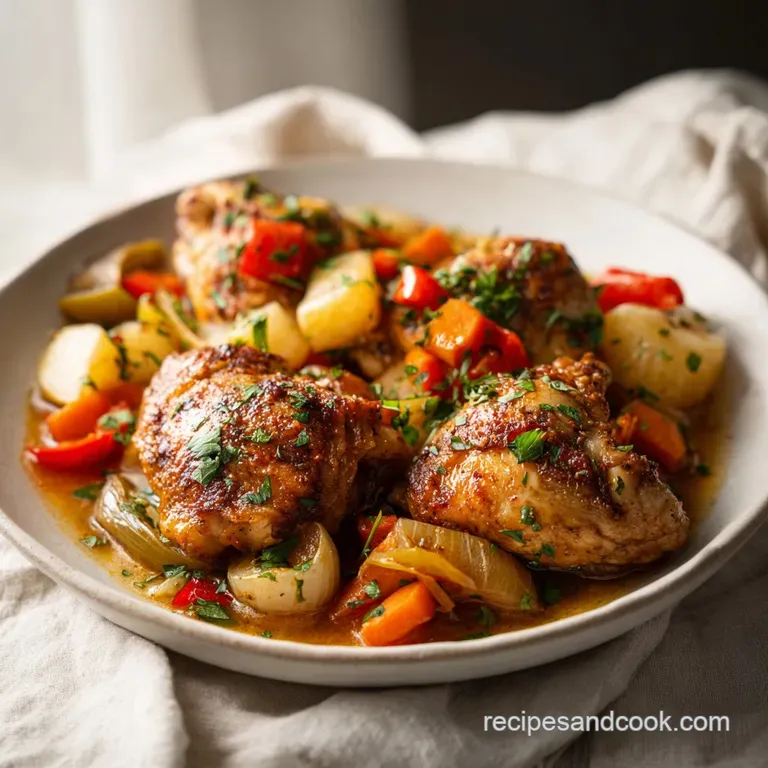
To get that perfect sear, I highly recommend using a heavy bottomed skillet. A cast iron pan is the gold standard here because it holds heat like a champion, meaning when you drop your 1.5 lbs of chicken in, the pan temperature doesn't plummet.
If you don't have cast iron, a high-quality stainless steel pan works too, though you'll need to be more careful about the meat sticking.
You’ll also want a sturdy wooden spoon. This isn't just for stirring; it's for scraping. When you add that cup of bone broth, you're going to use that spoon to "deglaze" the pan, which is just a fancy way of saying you're scratching up all those delicious brown bits stuck to the bottom.
Those bits are flavor gold. Don't leave them behind!
A step-by-step Guide to Searing and Simmering
- Season the poultry. Rub the 1.5 lbs of chicken thighs with smoked paprika, garlic powder, and cayenne until thoroughly coated and vibrant red.
- Heat the skillet. Add 2 tbsp avocado oil to a large skillet over medium high heat until the oil shimmers and barely smokes.
- Sear the chicken. Place thighs in the pan and cook for 5 minutes per side until a deep mahogany crust forms. Note: Don't move them too early or the crust will tear.
- Remove and rest. Transfer the chicken to a plate. The meat will not be cooked through yet, which is exactly what we want.
- Sauté the Trinity. Add the diced onion, green peppers, and celery to the same pan, stirring until they soften and turn translucent (about 6-8 minutes).
- Add the aromatics. Stir in the 4 cloves of minced garlic and 1 tsp dried thyme, cooking for 1 minute until the fragrance fills the room.
- Deglaze the pan. Pour in the 1 cup of chicken bone broth and use a spoon to scrape up all the browned bits from the bottom.
- Build the sauce. Stir in the 14.5 oz of fire roasted tomatoes and add the 2 bay leaves until the mixture begins to bubble.
- The final simmer. Nestled the chicken back into the sauce. Cover and simmer on low for 30 minutes until the meat is tender and pulling away from the bone.
- Garnish and serve. Remove the bay leaves and sprinkle with fresh parsley and green onions to add a pop of bright color.
Fixing Common Texture and Flavor Balance Issues Easily
Sometimes the kitchen throws us a curveball. Maybe your tomatoes were extra acidic today, or perhaps your stove runs a bit hotter than mine. If your sauce tastes a little "sharp" or metallic, that's usually the acidity from the tomatoes.
A tiny pinch of sugar we’re talking half a teaspoon can round those edges right off without making the dish sweet.
Fixing a Bitter Sauce
If you accidentally let the garlic brown too much or the spices scorched, you might notice a bitter aftertaste. You can often mask this by adding a small splash of heavy cream or a pat of butter at the very end. The fat coats the tongue and dulls the perception of bitterness.
Preventing Thin or Watery Sauce
If you find your sauce is looking more like a soup after the 30 minute simmer, simply remove the lid and turn the heat up to medium high for the last 5 minutes. This allows the excess water to evaporate, leaving behind a thick, velvety glaze that clings to the chicken.
| Problem | Root Cause | Solution |
|---|---|---|
| Tough Chicken | Undercooked | Simmer for an additional 10 minutes; dark meat needs time to soften. |
| Bland Base | Lack of Salt/Acid | Add a squeeze of lemon juice or another pinch of salt to "wake up" the flavors. |
| Scortched Bottom | Heat too high | Add a splash of broth immediately and turn the dial down to low. |
Common Mistakes Checklist
- ✓ Always pat the chicken dry with paper towels before seasoning to ensure a crisp sear.
- ✓ Don't skip the deglazing step - that's where the concentrated "umami" lives.
- ✓ Keep the lid on during the simmer to trap moisture; otherwise, the meat might dry out.
- ✓ Ensure your celery and peppers are diced to a similar size so they cook evenly.
- ✓ Give the dish a full 5 minute rest before serving to let the juices redistribute.
Creative Ways to Personalize Your Spicy Tomato Sauce
If you’re feeling adventurous, this recipe is a fantastic canvas. For a more "Creole Chicken Casserole" feel, you can transfer the finished dish to a baking dish, top it with a layer of sharp cheddar or Monterey Jack cheese, and broil it for 3 minutes until the cheese is bubbling and golden.
It adds a decadent, creamy element that kids especially love.
For those who want to turn up the volume on the heat, you can double the cayenne or add a few dashes of your favorite vinegar based hot sauce (like Crystal or Tabasco) at the very end. The vinegar provides a bright "zing" that complements the smoky paprika beautifully. If you're a fan of velvety sauces, you might want to compare this technique to my Chicken Marsala for recipe, which uses wine and mushrooms for a different kind of richness.
Scaling the Spice Level
- Mild: Reduce cayenne to a pinch and use regular canned tomatoes instead of fire roasted.
- Medium (As written): A pleasant warmth that builds but doesn't overwhelm.
- Hot: Increase cayenne to 1 tsp and add 1 finely diced jalapeño to the Trinity.
Storing and Reusing Your Leftovers for Maximum Flavor
Creole Chicken is one of those rare dishes that actually tastes better the next day. As it sits in the fridge, the spices continue to mingle and the sauce thickens even further.
- Fridge
- Keep in an airtight container for up to 4 days. The sauce might gelatinize due to the bone broth; this is normal and will melt back into a liquid when heated.
- Freezer
- This freezes beautifully for up to 3 months. Thaw overnight in the fridge before reheating.
- Reheating
- Use a small saucepan over low heat. Add a tablespoon of water or broth to loosen the sauce if it’s too thick.
Zero Waste Tip Don't throw away the bones! Once you’ve eaten the meat, save the bones in a freezer bag. When you have enough, you can simmer them with onion scraps and carrot ends to make your own homemade bone broth for the next batch of this recipe.
Making Your Platter Look as Good as It Smells
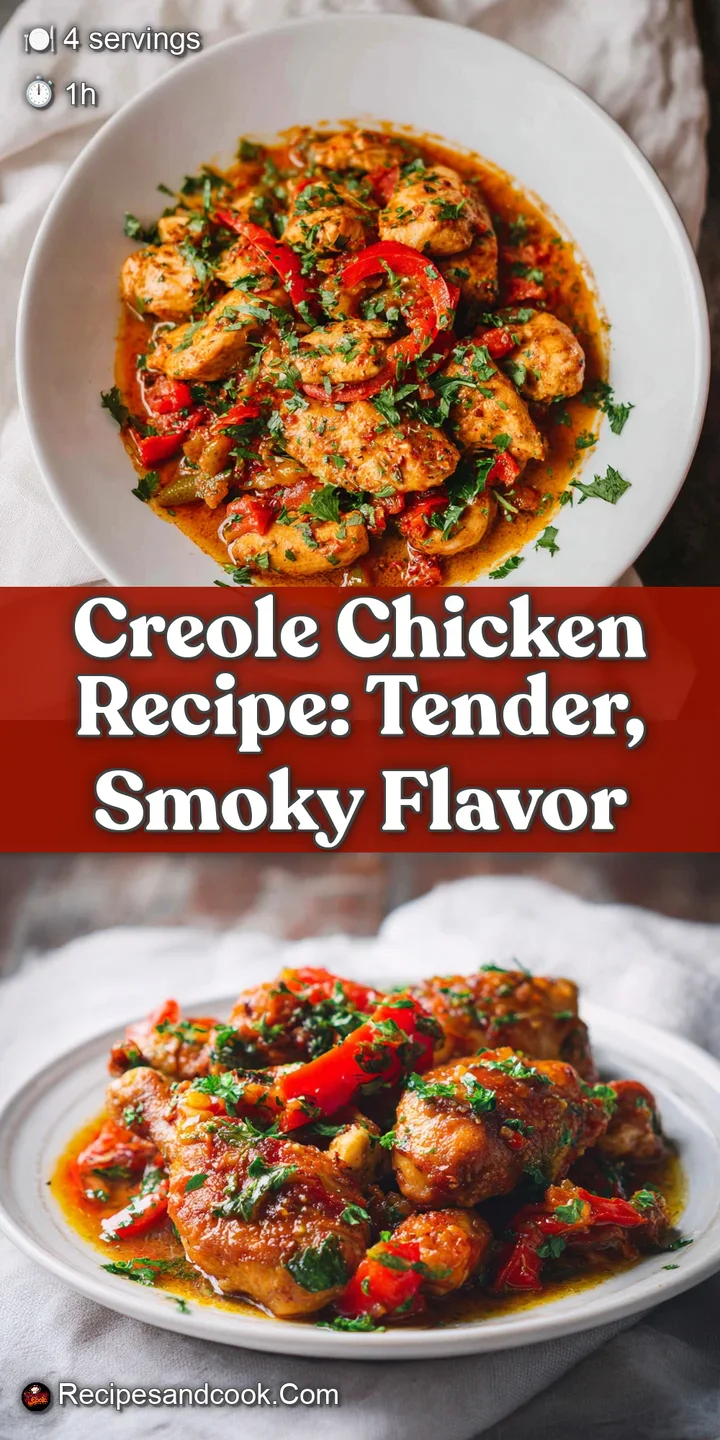
Presentation doesn't have to be fancy to be effective. Since this is a rustic, one pan meal, I love serving it right out of the skillet or in a shallow ceramic bowl. The deep red of the sauce is naturally beautiful, but it can look a bit "heavy" on its own.
To make the dish pop, always add something fresh at the end. A heavy handed sprinkle of bright green scallions and chopped parsley provides a necessary contrast to the mahogany chicken.
If you’re serving this over rice, try fluffing the rice with a fork and placing the chicken thigh right in the center, spooning the extra sauce over the top so it bleeds into the white grains. It looks intentional, professional, and incredibly inviting.
| If you want... | Then do... |
|---|---|
| A Crispier Texture | Sear the chicken with skin ON, but keep the skin above the liquid line while simmering. |
| A Thicker Sauce | Mash 1/4 cup of the cooked beans (if adding) or vegetables against the side of the pan. |
| A Creamier Finish | Stir in 2 tablespoons of room temperature butter just before serving. |
Myths About Searing Meat
One of the biggest misconceptions in the kitchen is that searing meat "seals in the juices." Science tells us that moisture loss happens regardless of the crust. The real reason we sear is for the Maillard reaction, which creates dozens of new flavor compounds that simply don't exist in boiled or steamed meat.
Another myth is that you shouldn't use "old" spices. While spices don't "spoil" in a way that makes you sick, they lose their volatile oils over time. If your paprika doesn't smell like anything when you open the jar, it's not going to taste like anything in your chicken. Trust your nose!
This dish is a testament to how simple ingredients, treated with a little bit of patience and respect, can turn into something truly timeless. Whether you're making this for a crowd or just a quiet night in, it's a recipe that never fails to satisfy. Happy cooking!
Recipe FAQs
What is the minimum internal temperature for Creole Chicken thighs?
170°F. Dark meat is best served slightly higher than breast meat to ensure connective tissue breaks down completely, resulting in a buttery texture.
How do I deepen the smoky flavor if I don't have smoked paprika?
Use regular paprika plus two drops of liquid smoke. This mimics the effect, although smoked paprika provides a more complex earthy base.
How to prevent the sauce from tasting too sharp or acidic?
Stir in half a teaspoon of sugar at the end. This subtle addition balances the acidity released by the fire roasted tomatoes without making the dish taste sweet.
Is it true that searing the chicken locks in all the juices?
No, this is a common misconception. The primary function of searing is initiating the Maillard reaction to develop deep, savory flavor compounds on the surface of the meat.
How can I use up the leftover Creole sauce if I don't want to reheat chicken?
Use the sauce base to start a quick soup or stew. This sauce integrates beautifully with shredded chicken; see how we build complexity in our Shredded Chicken in recipe using similar aromatic foundations.
How to quickly thicken a Creole Chicken sauce that seems too watery?
Remove the lid and simmer aggressively for 5 minutes. Evaporating excess liquid concentrates the starches and natural gelatin from the bone-in meat, creating a velvety glaze.
What is the best technique for ensuring the Holy Trinity (onion, pepper, celery) cooks evenly?
Dice all three vegetables to a uniform, small size (about 1/4 inch). This ensures their cellular structure breaks down simultaneously during the 6 to 8 minute sauté phase.
Soulful Creole Chicken
Ingredients:
Instructions:
Nutrition Facts:
| Calories | 268 kcal |
|---|---|
| Protein | 26.5 g |
| Fat | 12.2 g |
| Carbs | 12.8 g |
| Fiber | 3.4 g |
| Sugar | 5.1 g |
| Sodium | 165 mg |
