The Best Soft Snickerdoodles Cookies Recipe
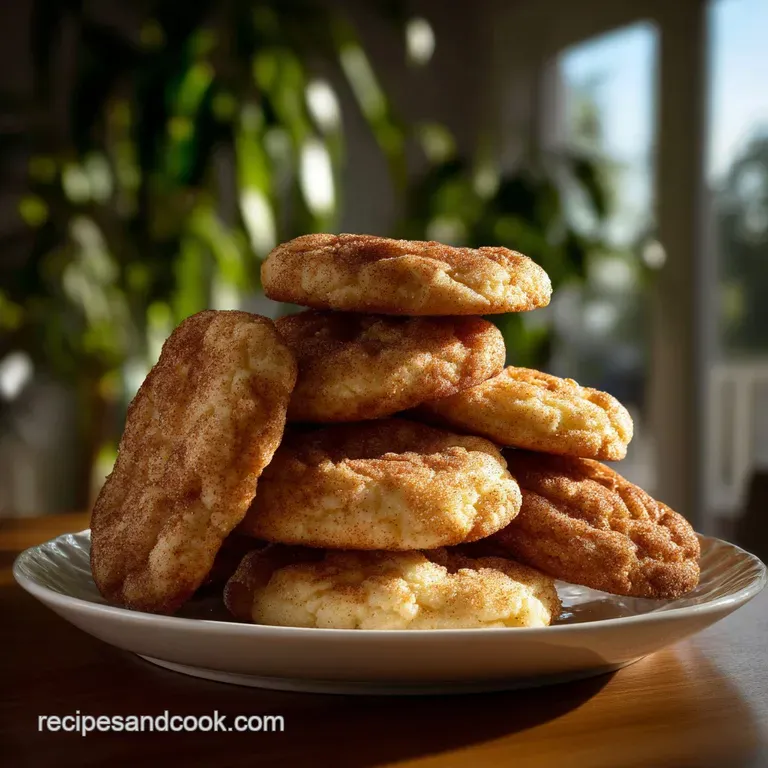
- Effort/Time: 25 minutes total; beginner-friendly assembly for making snickerdoodles cookies.
- Flavor Hook: Sharp cinnamon-sugar crust meets a buttery, slightly acidic crumb in these perfect snickerdoodles cookies.
- Perfect for: Festive-baking exchanges, lunchbox treats, and grab-and-go snacking with your snickerdoodles cookies.
- The Culinary Chemistry of Chewy, Crinkly snickerdoodles cookies
- Essential Metrics for the Perfect snickerdoodles cookies Batch
- The Flavor Architecture: Selecting Your Cookie Elements
- Precision Tools for Consistent Baking Results
- Mastering the Technique for snickerdoodles cookies from scratch
- Why Your Cookies Spread or Stiffen
- Creative Flavor Profiles and Dietary Adjustments
- ⚗️ The Scaling Lab
- Common Myths
- Preserving the Shattering Exterior and Soft Center
- Curated Pairings for Festive Baking
- Recipe FAQs
- 📝 Recipe Card
There is nothing more soul crushing than pulling a tray of snickerdoodles cookies out of the oven only to find they’ve transformed into greasy, transparent puddles on the parchment.
I’ve spent twenty dollars on premium European butter just to watch it weep across a baking sheet because the emulsion broke during the creaming stage. When the ratio of fat to flour is off, you don't get a cookie; you get a kitchen wide cleanup and a very expensive disappointment when making snickerdoodles cookies.
I once thought I could skip the cream of tartar and just use extra baking powder, assuming it was an outdated pantry relic. I ended up with twenty four bland, cakey mounds that lacked that iconic "snickerdoodle" tang and stayed stubbornly smooth on top.
It took three failed batches and a deep dive into leavening chemistry to realize that the specific pH shift caused by that white powder is what actually creates the classic crinkle and chewy bite in traditional snickerdoodles cookies.
The secret to this Masterclass version lies in the "acid base interference" which prevents the sugar from crystallizing too quickly, resulting in a flexible, chewy internal structure.
By using Land O'Lakes Unsalted Butter and room temperature eggs, we create a stable emulsion that traps air and prevents the dough from collapsing under high heat.
You aren’t just baking; you’re managing thermal expansion to achieve that shattering cinnamon crust and a soft, pillowy interior, which is the hallmark of great snickerdoodles cookies.
The Culinary Chemistry of Chewy, Crinkly snickerdoodles cookies
- Acidic Interference: Cream of tartar lowers the dough's pH, inhibiting sucrose crystallization for a characteristic chew in snickerdoodles cookies.
- Carbon Dioxide Burst: The reaction between cream of tartar and baking soda creates an immediate gas release, puffing the dough before the edges set.
- Surface Tension Manipulation: Rolling the dough in sugar draws moisture from the surface, creating a localized "drought" that causes the top to crack as the center expands.
- Fat Aeration: Creaming butter and sugar creates microscopic air pockets that expand in the oven, ensuring the cookies aren't leaden or dense.
Essential Metrics for the Perfect snickerdoodles cookies Batch
- Prep time: 15 minutes
- Cook time: 10 minutes
- Total time: 25 minutes
- Yield: 24 cookies
The Flavor Architecture: Selecting Your Cookie Elements
| Ingredient | Chemical/Physical Role (Science) | The Pro Secret (Why This Matters) |
|---|---|---|
| Unsalted Butter | Plasticity and steam generation | Fat solids provide flavor while water content creates lift. |
| Cream of Tartar | Acidic leavening agent | Prevents sugar crystallization to ensure a flexible, chewy crumb. |
| Baking Soda | Alkaline reactant | Reacts with acid to produce CO2 and promotes browning. |
| All-Purpose Flour | Gluten network formation | Provides the structural "skeleton" to hold the fat and air. |
- 1 cup (226g) Land O'Lakes Unsalted Butter, softened. Why this? high-quality fat ensures a clean flavor and stable emulsion for superior snickerdoodles cookies.
- 1 ½ cups (300g) Domino Granulated Sugar.
- 2 Large Eggs, room temperature.
- 2 tsp McCormick Vanilla Extract.
- 2 ¾ cups (345g) King Arthur All-Purpose Flour. Why this? Consistent protein content (11.7%) prevents excessive spreading.
- 2 tsp Cream of Tartar. Why this? Essential for the signature tang and crinkled texture of our snickerdoodles cookies.
- 1 tsp Baking Soda.
- ½ tsp Diamond Crystal Kosher Salt.
- ¼ cup (50g) Granulated Sugar (for coating).
- 2 tbsp McCormick Ground Cinnamon (for coating).
Precision Tools for Consistent Baking Results
Using a KitchenAid Stand Mixer with the paddle attachment is non-negotiable for achieving the correct aeration without melting the butter through friction. For even heat distribution, I recommend a USA Pan Half Sheet paired with a Silpat Silicone Baking Mat. The silicone provides a slight insulation that prevents the bottom of the snickerdoodles cookies from scorching before the middle is set. Finally, a #40 Cookie Scoop ensures every portion is exactly the same mass, which is critical for a uniform bake across the tray. Much like making a Peanut Butter Cookies recipe, consistency in sizing determines whether you get a tray of perfection or a mix of burnt and raw dough when preparing snickerdoodles cookies.
Mastering the Technique for snickerdoodles cookies from scratch
- Preheat oven to 400°F (204°C) until the internal thermometer stabilizes.
- Cream 1 cup softened butter and 1 ½ cups sugar for 3 minutes until the mixture is pale, fluffy, and doubles in volume. Note: Incorporates air for lift.
- Add 2 large eggs and 2 tsp vanilla extract until the batter looks glossy and fully emulsified. Note: Room temperature eggs prevent the butter from curdling.
- Whisk 2 ¾ cups flour, 2 tsp cream of tartar, 1 tsp baking soda, and ½ tsp salt in a separate bowl until no clumps remain.
- Fold the dry ingredients into the wet mixture until just combined and no white streaks are visible. Note: Over mixing develops too much gluten, making snickerdoodles cookies tough.
- Combine ¼ cup sugar and 2 tbsp cinnamon in a small bowl until the color is a uniform mahogany brown.
- Scoop 2 tablespoon sized balls of dough and roll between palms until smooth and spherical.
- Tumble each ball in the cinnamon sugar until completely coated in a thick layer of spice.
- Space dough balls 2 inches apart on the baking sheet until the tray is full but not crowded.
- Bake for 10 minutes until the edges are set and golden, but the centers look slightly puffed and underdone. Note: Residual heat finishes the centers.
Why Your Cookies Spread or Stiffen
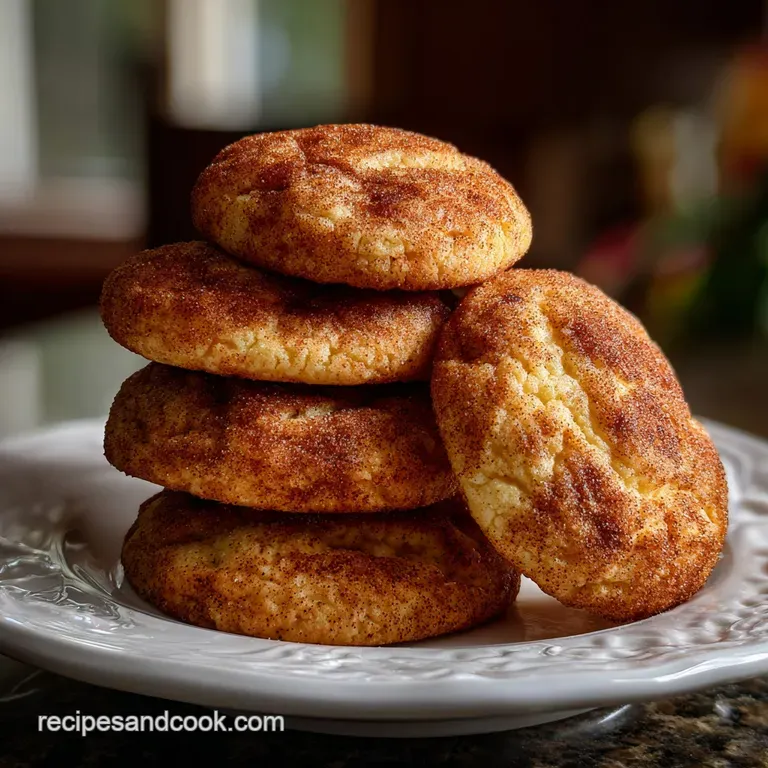
Understanding the physics of your dough helps you course correct before the whole batch is ruined. If your snickerdoodles cookies are spreading into thin wafers, your butter was likely too warm (verging on melted) or your oven temperature is running low, allowing the fat to melt before the flour structure sets.
On the other hand, a "cakey" cookie usually indicates you over measured the flour or over beated the eggs, trapping too much air.
Why are my cookies flat and greasy?
When butter is too soft, the emulsion is weak. As soon as it hits the heat, the fat separates from the solids, causing the dough to lose its "grip" on the baking sheet.
| Problem | Root Cause | The Fix | Pro Protocol |
|---|---|---|---|
| Excessive Spread | Warm dough or greasy pans | Chill dough for 30 minutes | Use a silicone mat to provide "traction." |
| No Crinkles | Expired Cream of Tartar | Replace leavening agents | Always whisk dry ingredients to ensure even distribution. |
| Tough Texture | Over worked gluten | Mix dry ingredients by hand | Stop mixing the second the flour disappears. |
Creative Flavor Profiles and Dietary Adjustments
While the classic version is iconic, you can adapt this base for different seasons. For a fall twist, many people look for a Pumpkin Cookies recipe that maintains this texture. You can create Pumpkin Snickerdoodles Cookies by replacing one egg with 1/4 cup of pumpkin purée and adding 1 tsp of pumpkin pie spice to the dough.
- Chocolate Snickerdoodles: Replace ½ cup of AP flour with high-quality Dutch process cocoa powder for a deep, earthy contrast to the cinnamon.
- dairy-free Substitution: Use Miyoko’s Creamery Plant Milk Butter. It has a similar water-to-fat ratio, ensuring the cookies don't become oily.
- gluten-free Variation: Use Cup4Cup Multipurpose Flour. The cornstarch in the blend actually mimics the softening effect of the cream of tartar quite well for GF snickerdoodles cookies.
⚗️ The Scaling Lab
- Flavor Saturation: If doubling to 48 cookies, scale the cinnamon and salt to 1.5x. Spices can become overpowering and bitter at 2x volume when doubling the batch of snickerdoodles cookies.
- Chemical Leavening: Scale the baking soda and cream of tartar exactly. Even a 1/4 tsp variance can ruin the pH balance, leading to a metallic aftertaste in your otherwise perfect batch of snickerdoodles cookies.
- The Square Cube Law: If you double the batch, do not crowd the oven. Baking two trays at once increases the moisture in the oven (humidity), which can prevent the cookies from developing that "shatter" crust. Rotate trays halfway through.
- Thermal Mass: A double batch of dough in a single bowl will stay colder in the center. Give the dough a final fold by hand to ensure the temperature is consistent before scooping.
Common Myths
- Myth: You can swap Cream of Tartar for Lemon Juice.
- Truth: While both are acidic, lemon juice adds liquid, which changes the hydration ratio and prevents the classic "crackle" from forming on your snickerdoodles cookies.
- Myth: Softened butter means "melted."
- Truth: Butter should be 65°F (18°C). It should yield to a finger press but still hold its shape; if it’s shiny or oily, it’s too warm.
Preserving the Shattering Exterior and Soft Center
Storage is where most people lose the texture of their snickerdoodles cookies. To keep them "masterclass" quality, store them in an airtight glass container at room temperature for up to 4 days.
Including a small piece of white bread in the container acts as a sacrificial moisture source the sugar in the cookies will pull moisture from the bread rather than the air, keeping them soft. For long term storage, these cookies freeze beautifully for up to 3 months.
Wrap them individually in plastic wrap to prevent freezer burn.
💡 ZERO WASTE: Don't discard the leftover cinnamon sugar coating! Transform: Whisk it into your morning coffee grounds or sprinkle it over buttered toast. Science: The sugar will undergo the Maillard reaction on hot toast, creating a quick caramel crust.
Curated Pairings for Festive Baking
These snickerdoodles cookies are the cornerstone of any Festive Baking tray. They pair exceptionally well with darker, more bitter elements like a robust espresso or a dark chocolate ganache dip. If you are looking for more Christmas Baking Contest Ideas, consider pairing these with other classics found in our Cookie Recipes collection to show off a variety of textures from chewy to crispy.
For a true sensory experience, serve these slightly warm (10 seconds in the microwave) alongside a glass of cold whole milk. The cold fat in the milk cleanses the palate of the spice, making every bite of the snickerdoodles cookies feel like the first.
Trust me, once you master the acidic balance of the dough, you'll never go back to a standard sugar cookie again. Let's crack on and get that oven preheated!
Recipe FAQs
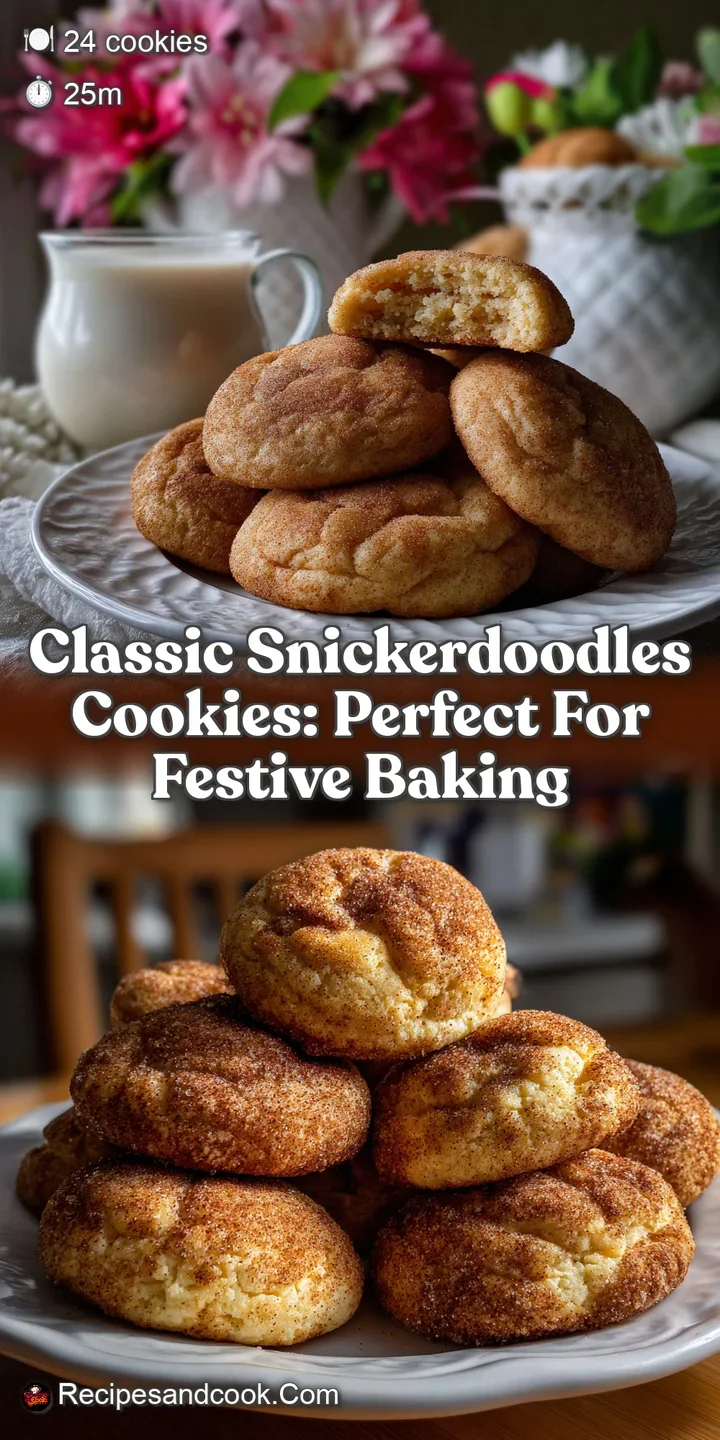
What is the role of cream of tartar in Snickerdoodles?
It provides the signature tang and crinkle. Cream of tartar lowers the dough's pH, inhibiting sucrose crystallization, which results in a flexible, chewy crumb texture.
Should I use salted or unsalted butter?
Why did my Snickerdoodles spread into flat, greasy puddles?
- Ensure butter is only softened, not shiny
- Chill dough for 30 minutes before scooping
- Verify oven temperature with a dedicated thermometer
What is the total active prep and cook time?
Can I substitute baking powder for cream of tartar?
How do I achieve the classic crinkled top surface?
Should I use cold dough or room temperature dough?
Soft Snickerdoodles Cookies Recipe
Ingredients:
Instructions:
Nutrition Facts:
| Calories | 183 kcal |
|---|---|
| Protein | 2.0 g |
| Fat | 8.2 g |
| Carbs | 25.6 g |
| Fiber | 0.5 g |
| Sugar | 14.6 g |
| Sodium | 105 mg |
