Secret Side Dish Chefs Don't Want You Using with Garlic Butter
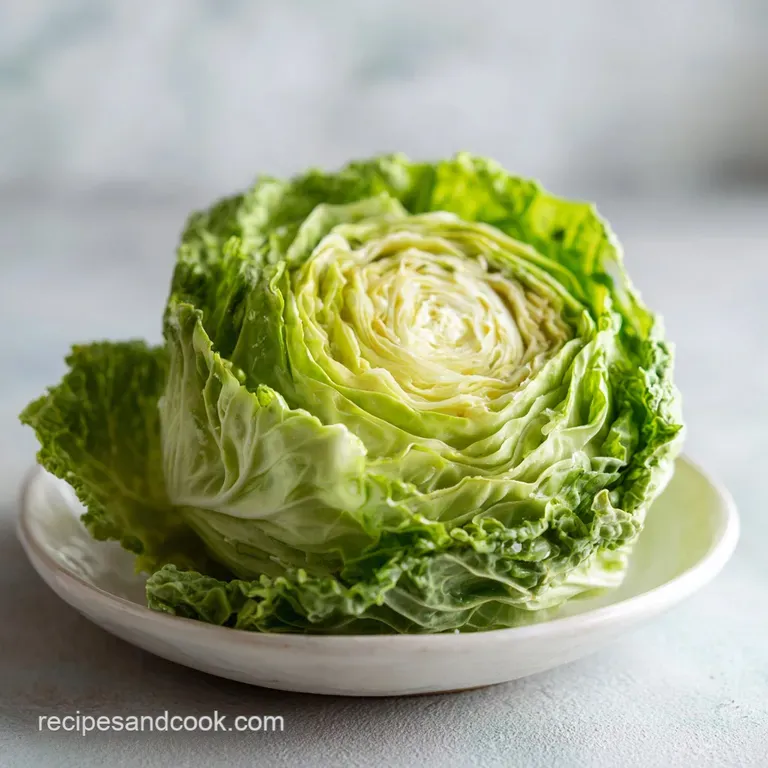
- Time: Active 5 minutes, Passive 20 minutes, Total 25 minutes
- Flavor/Texture Hook: Charred, crispy edges with a velvety, garlic infused core
- Perfect for: Stress free weeknight dinners or a surprising holiday side dish
- Secret Side Dish Chefs Don't Want You Using with Garlic Butter
- The Science of High Heat Caramelization
- Ingredient Component Analysis
- Essential Grocery List and Smart Substitutes
- Step-by-Step Roasted Cabbage Instructions
- Troubleshooting Common Cabbage Hurdles
- Scaling for Large Groups or Small Meals
- Culinary Myths and Truths
- Storage and Zero Waste Tips
- Sophisticated Presentation Ideas
- Recipe FAQs
- 📝 Recipe Card
Secret Side Dish Chefs Don't Want You Using with Garlic Butter
Right then, let's talk about the time I almost ruined a dinner party because I forgot to buy asparagus. I had a beautiful roast in the oven and absolutely nothing green to go with it, except for a lonely, heavy head of green cabbage rolling around in the back of my crisper drawer.
I was panicked, honestly, but then I remembered a trick a chef friend once mentioned about roasting wedges at high heat.
I sliced that cabbage into thick wedges, brushed them with oil, and let the oven do the heavy lifting. When the timer dinged, the aroma hitting me wasn't that weird boiled cabbage smell we all remember from school lunches. It was nutty, sweet, and rich.
I drizzled on some garlic butter right at the end, and my friends literally ignored the expensive roast to finish every single scrap of the cabbage. Unlock the secret to an unforgettable garlic butter side dish that chefs keep under wraps.
We've all been taught that cabbage is just for coleslaw or slow simmered stews, but roasting it is a total revelation. It’s one of those traditional comfort foods that feels modern because it’s so unexpected.
You get these layers that shatter like pastry on the outside while the inside stays tender and sweet. It’s a timeless trick that I now use at least once a week because it's so easy.
The Science of High Heat Caramelization
Understanding why this works helps you get that perfect texture every single time without guessing.
- Maillard Reaction: High heat transforms the natural sugars in the cabbage leaves into complex, savory compounds that create those brown, crispy edges.
- Steam Insulation: The tight layers of the cabbage wedge trap moisture, allowing the inside to steam in its own juices while the outside roasts.
- Fat Soluble Aromatics: Garlic and parsley flavors are carried by the fats in the butter, coating the vegetable fibers more effectively than water based sauces.
| Method | Cook Time | Final Texture | Best For |
|---|---|---|---|
| oven-roasted | 20 minutes | Crispy edges, tender core | Deep flavor and hands off cooking |
| Pan Seared | 12 minutes | Heavy char, firmer bite | Quicker prep for small batches |
| Slow Braised | 45 minutes | Completely soft, silky | Meltingly tender comfort food |
Roasting is my preferred way because you get the best of both worlds the crunch and the softness. This method is quite similar to the vegetable prep in my Garlic Butter Tilapia recipe, where we let the oven do the work to develop flavor without drying things out.
Ingredient Component Analysis
Each part of this dish has a specific job to do, and choosing the right stuff makes a huge difference.
| Ingredient | Science Role | Pro Secret |
|---|---|---|
| Green Cabbage | Structural base | Keep the core intact so the wedge doesn't fall apart in the pan. |
| Unsalted Butter | Flavor carrier | Use room temperature butter to ensure the garlic and herbs mix evenly. |
| Microplaned Garlic | Aromatic punch | Grating the garlic creates a paste that melts into the butter without leaving bitter chunks. |
Essential Grocery List and Smart Substitutes
You don't need a long list of items to make this happen, but quality matters here.
- 1 medium head of Green Cabbage (approx. 2 lbs): Look for one that feels heavy for its size with tightly packed leaves.
- Substitute: Red cabbage. Why this? It’s earthier and takes slightly longer to soften but looks stunning.
- 3 tablespoons Extra Virgin Olive Oil: This helps the over high heat roasting without burning too fast.
- Substitute: Avocado oil. Why this? It has a higher smoke point for even crispier edges.
- 1 teaspoon Kosher salt: Essential for drawing out moisture and seasoning the deep layers.
- 0.5 teaspoon Coarse black pepper: Adds a little bite to cut through the rich butter.
- 4 tablespoons Unsalted butter, softened: The vehicle for all that garlic goodness.
- Substitute: Ghee. Why this? Offers a nuttier toasted flavor and is lactose free.
- 3 cloves Garlic: Use fresh cloves, not the pre minced jarred stuff.
- 1 tablespoon Fresh parsley: Adds a bright, grassy finish to balance the fat.
- 1 teaspoon Lemon juice: The acid "wakes up" the dish right before serving.
step-by-step Roasted Cabbage Instructions
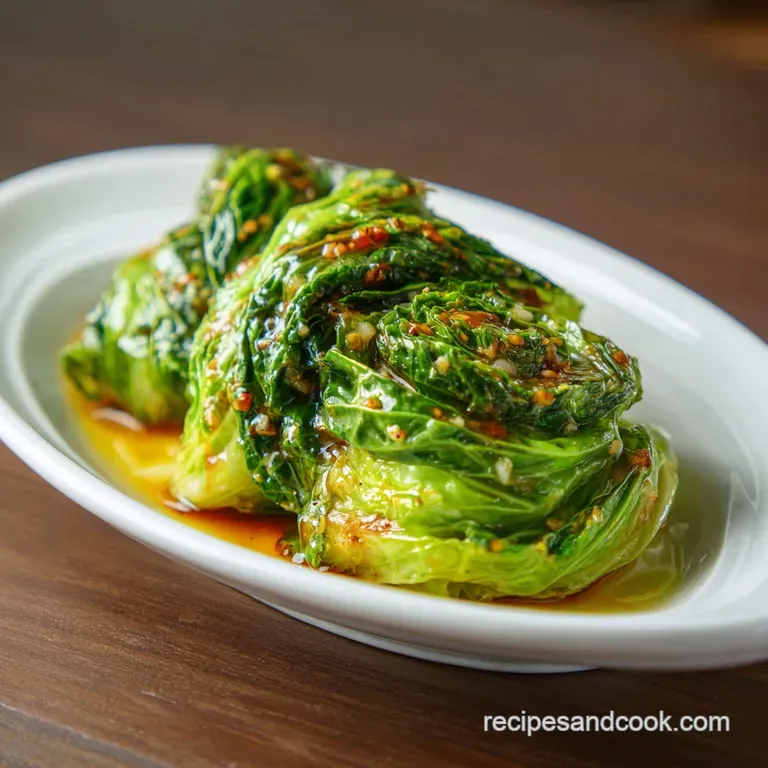
- Heat the oven. Set your oven to 400°F (200°C) and place a large rimmed baking sheet inside while it preheats. Note: A hot pan gives you an immediate sear.
- Prep the cabbage. Remove any wilted outer leaves and cut the head in half through the root, then into 8 equal wedges.
- Oil the wedges. Brush both sides of each wedge with the 3 tablespoons of olive oil.
- Season well. Sprinkle the 1 teaspoon of salt and 0.5 teaspoon of pepper evenly over all sides of the cabbage.
- Roast first side. Carefully place wedges on the hot baking sheet and bake for 10 minutes until the bottom edges are dark brown.
- Flip and continue. Use tongs to gently flip the wedges and roast for another 10 minutes until the core is tender when pierced with a knife.
- Make garlic butter. While the cabbage roasts, stir the 3 cloves of microplaned garlic, parsley, and lemon juice into the 4 tablespoons of softened butter.
- The final melt. Remove the cabbage from the oven and immediately dollop the garlic butter over the hot wedges.
- Rest and serve. Let the butter melt into the crevices for 2 minutes before plating.
Troubleshooting Common Cabbage Hurdles
Even the simplest dishes can have a few hiccups. Usually, it comes down to how you handle the heat or the knife.
Why Your Cabbage Is Soggy
If your wedges look pale and limp rather than crispy, you probably overcrowded the pan. When the wedges are too close together, the moisture they release turns into steam instead of evaporating. This prevents the Maillard reaction from happening.
Why Your Garlic Tastes Bitter
Garlic can turn bitter if it burns. If you add the garlic butter at the beginning of the roasting process, the high heat of the oven will scorch the tiny garlic pieces. That is why we wait until the very end to apply the butter mixture.
| Problem | Root Cause | Solution |
|---|---|---|
| Burnt outer leaves | Oven rack too high | Move the tray to the middle or lower third of the oven. |
| Cabbage falls apart | Root was cut off | Always leave the bottom core intact to hold the leaves together. |
| Raw center | Wedges too thick | Slice into 8 pieces instead of 4, or cover with foil for the first 10 mins. |
Common Mistakes Checklist
- ✓ Pat the cabbage dry if it was recently washed to prevent steaming.
- ✓ Don't skip the lemon juice; it cuts through the sulfurous notes of the cabbage.
- ✓ Leave at least an inch of space between each wedge on the baking sheet.
- ✓ Ensure the butter is truly softened so it incorporates the garlic paste smoothly.
Scaling for Large Groups or Small Meals
Adjusting this recipe is straightforward because cabbage is so forgiving. If you are cooking for a crowd, you'll just need more oven real estate.
- Downsizing (1-2 people): Use half a head of cabbage. You can use a smaller toaster oven or a cast iron skillet. Reduce the butter mixture by half, but keep the seasoning the same per wedge.
- Upsizing (8-10 people): Use two large baking sheets. Do not try to cram two heads of cabbage onto one tray. Rotate the pans halfway through the cooking time (top to bottom) to ensure even browning. Increase the salt and spices to 1.5x rather than doubling them to avoid over seasoning.
- Baking Multiple Trays: If your oven is crowded, drop the temperature to 375°F (190°C) and add about 5-10 minutes to the total time to account for the heat loss.
If you find yourself with extra cabbage, you might want to try incorporating it into a Breakfast Casserole recipe for a savory morning twist, as roasted cabbage bits add a fantastic depth to egg dishes.
Culinary Myths and Truths
Myth: Cabbage must be boiled to be tender. This is probably the biggest lie in the kitchen! Roasting actually makes it more tender because the internal steam breaks down the fibers while the outside stays structural. Boiling just makes it waterlogged and smelly.
Myth: Red and green cabbage are interchangeable. While they are similar, red cabbage has a much higher anthocyanin content, which makes it denser. If you swap green for red, you'll need to add about 5 minutes to the roasting time to get that same "melt in-your mouth" feel.
Myth: Garlic powder is just as good as fresh. For this specific garlic butter side dish, garlic powder just won't cut it. You need the moisture and sharp bite of fresh cloves to stand up to the charred flavor of the roasted cabbage.
Storage and Zero Waste Tips
Storage Guidelines Roasted cabbage is best eaten fresh, but you can keep it in the fridge for up to 3 days. Store it in an airtight glass container to keep the garlic scent from taking over your whole refrigerator. To reheat, don't use the microwave unless you want it to get mushy.
Instead, pop it back into a 350°F (180°C) oven or a dry skillet for 5 minutes to bring back the crisp.
Zero Waste Kitchen Don't throw away those outer leaves you peeled off! If they aren't totally wilted, you can shred them thin and toss them into a soup or a stir fry. Even the tough core can be thinly sliced and pickled in a bit of vinegar and sugar for a crunchy snack later. If you have leftover garlic butter, it works perfectly on an Oven Baked Grilled recipe the next day.
Sophisticated Presentation Ideas
To make this feel like the "Secret Side Dish" it really is, the presentation should be simple but bold. I like to serve these wedges on a large wooden board or a white ceramic platter to let the charred colors pop.
- Steakhouse Style: Arrange the wedges in a circular pattern with the roots pointing inward. Top with a final sprinkle of flaky sea salt and a few extra cracks of black pepper.
- The Contrast Play: If you want to get fancy, drizzle a tiny bit of balsamic glaze over the garlic butter. The dark purple black against the golden green cabbage looks incredible and adds a sweet punch.
- Texture Boost: Sprinkle some toasted breadcrumbs or crushed walnuts over the top right before serving. It adds an extra layer of "shatter" that makes the dish feel even more substantial.
Trust me, once you serve this, your family will be asking for it every single week. It's affordable, incredibly easy, and honestly better than most fancy sides I’ve paid $15 for at restaurants. Enjoy the sizzle!
Recipe FAQs
What is the best side dish ever?
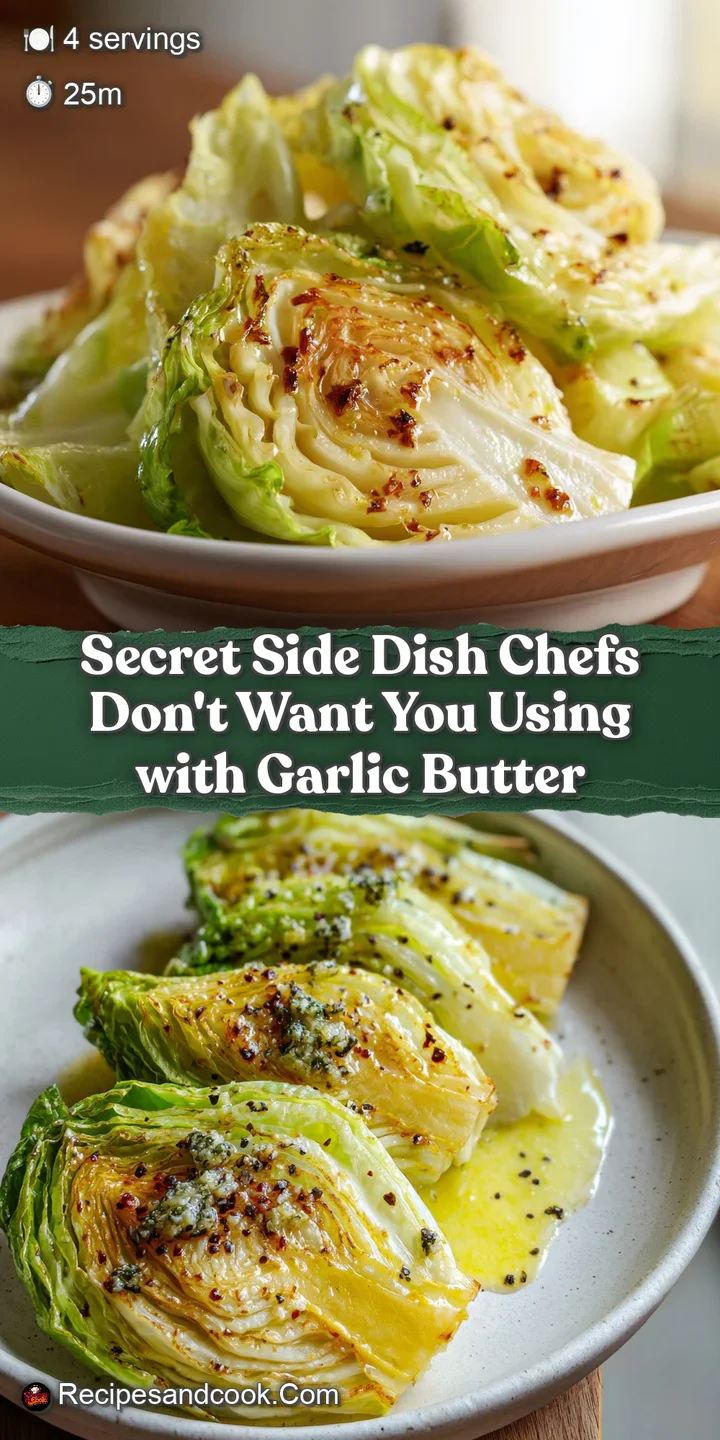
The roasted cabbage wedges highlighted here. This side dish is unparalleled because it achieves a steak like texture with caramelized sweetness, balancing richness from the butter.
What is the least favorite side dish to pair with garlic butter?
Over boiled, watery green vegetables are the worst pairing. They dilute the garlic butter flavor and introduce excessive moisture, contrasting poorly with the rich coating.
What to cook when you really don't want to?
Make these roasted cabbage wedges. The active cooking time is only 5 minutes of prep before the oven handles the remaining 20 minutes hands free.
What's the most difficult dish to make?
Dishes requiring precise emulsion or delicate dough handling are hardest. If you enjoyed mastering the simple slicing and high heat roasting technique here, you'll find temperature control easier in complex recipes.
Is it true that I must use olive oil for roasting cabbage?
No, this is a common misconception. You can substitute avocado oil as it has a higher smoke point, allowing the cabbage edges to achieve maximum crispiness without burning.
How to make the garlic butter truly penetrate the cabbage?
Microplane the garlic directly into softened butter. Grating the garlic finely creates a paste that adheres better and melts deeply into the cabbage crevices, unlike rough chopping.
What can I serve instead of cabbage if I want a meatier side?
Try roasting a small roast with similar garlic and herb flavors. For a perfectly tender centerpiece that uses high heat principles, follow the steps in our How to Cook Sirloin Tip Roast recipe.
Secret Garlic Butter Cabbage
Ingredients:
Instructions:
Nutrition Facts:
| Calories | 251 kcal |
|---|---|
| Protein | 3.1 g |
| Fat | 22.1 g |
| Carbs | 13.8 g |
| Fiber | 5.7 g |
| Sugar | 7.3 g |
| Sodium | 495 mg |
