Sourdough Baguette: Master the French-Style Loaf with a Perfect Open Crumb
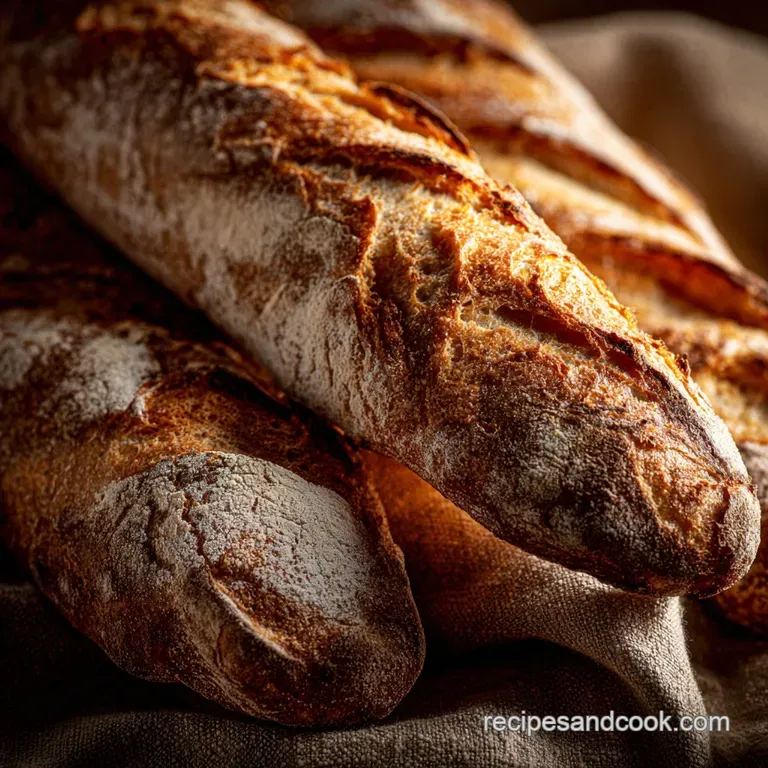
- Unlocking the Secret to the Perfect Sourdough Baguette
- The Science of the Shatteringly Crisp Crust and Open Crumb
- Essential Components for Authentic Sourdough Baguettes
- The Baker’s Full Schedule: Crafting the Sourdough Baguette Dough
- Expert Troubleshooting: Achieving the Perfect Bake
- Maintaining Freshness: Storing Your Homemade Baguettes
- Beyond the Bake: Culinary Pairings for Sourdough Baguettes
- Recipe FAQs
- 📝 Recipe Card
Unlocking the Secret to the Perfect Sourdough Baguette
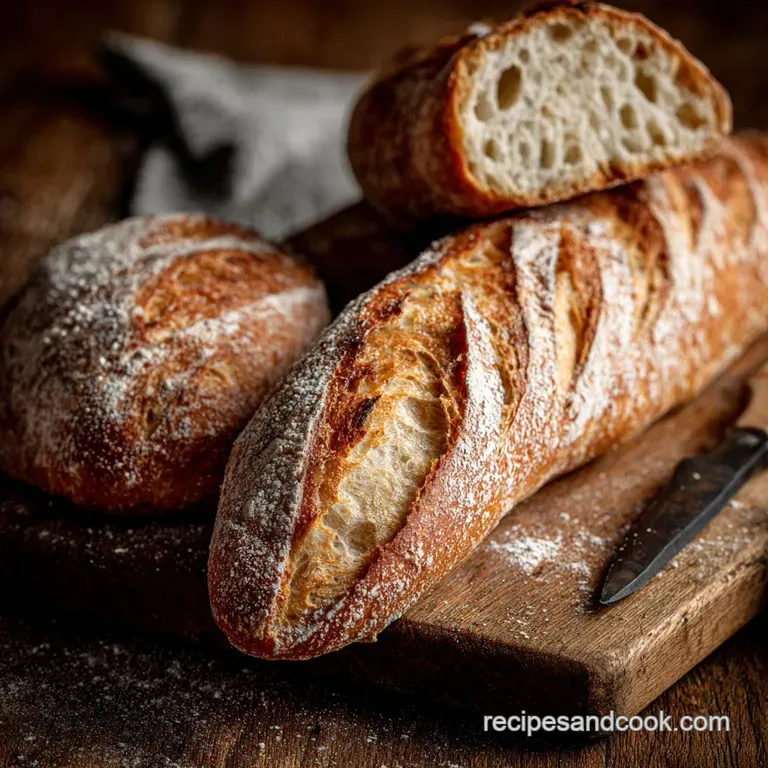
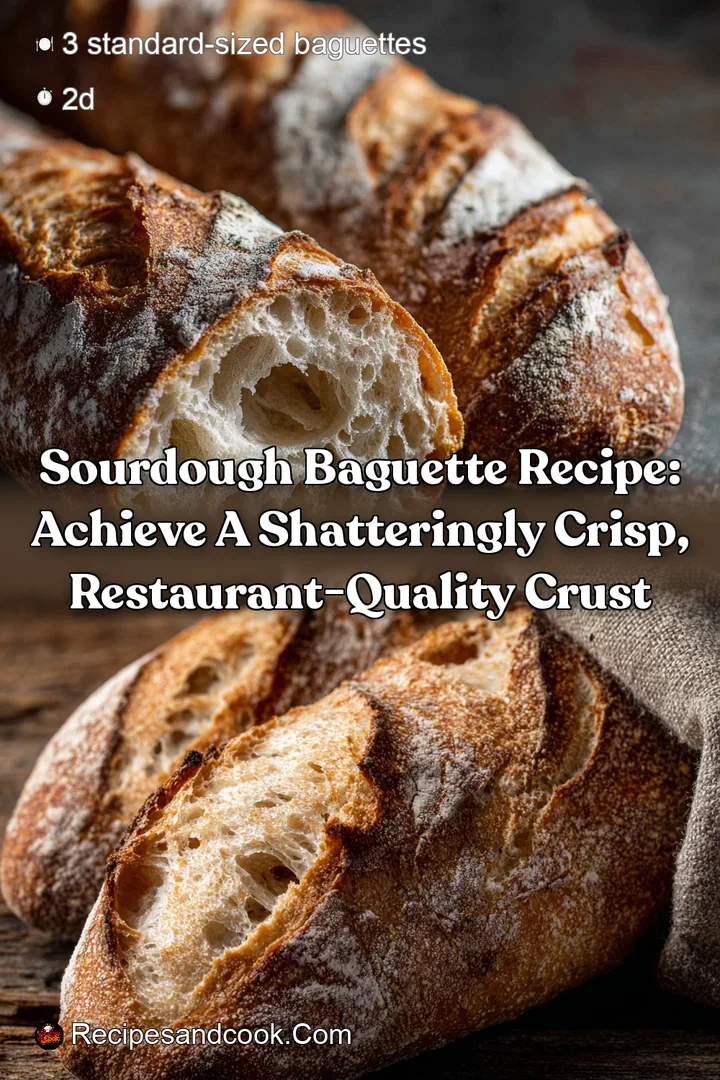
You know that sound? That glorious, high pitched shatter when you slice into a properly baked crust? That is the sound of success. It means you absolutely nailed the steam injection.
The aroma that hits you deeply nutty, yeasty, and just a little bit tart is pure heaven, promising a light, airy texture inside.
Baking a true French style sourdough baguette recipe at home feels like a ridiculous, impossible undertaking. But honestly, the ingredients are dirt cheap, and the process is mostly waiting for the starter to do its magic, not strenuous work.
It transforms literally any simple cheese or spread into a five star experience, and I promise, it's totally achievable.
I wasted years making sad, flat loaves before I figured out the critical details that make the difference between bread and real bread. Forget the confusing, vague instructions you read elsewhere. We are focusing on high hydration, powerful steam, and the power of cold proofing.
Let's crack on and learn the baker's secret to that coveted open crumb.
The Science of the Shatteringly Crisp Crust and Open Crumb
This is where we ignore the clock and start listening to the dough. The success of a classic sourdough baguette rests not on complex ingredients, but on maximizing structure and flavor through time and moisture control. If you understand these three concepts, you’ll never buy a dry, store-bought baguette again.
Defining the True French Baguette Crumb Structure
We are aiming for an open, irregular crumb the holy grail of sourdough baking. This means large, uneven holes trapped within a network of strong gluten strands, not a dense, cake like interior.
This structure is a direct result of managing gas production and meticulously building dough strength through careful folding. Do not over mix this dough.
Why Slow Fermentation Elevates the Flavor Profile
The long, slow bulk fermentation process, particularly the cold retard (refrigeration), is your flavor superpower. When the dough chills out overnight, the organic acids created by the starter have time to fully develop the complex, nutty tang unique to natural sourdough.
Rushing this stage sacrifices depth of flavor, giving you just "sour" bread instead of rich, nuanced sourdough.
The Essential Equipment Checklist for Home Bakers
You don't need a professional bakery, but a few tools make handling this sticky dough much easier. A digital kitchen scale is non-negotiable for accurate baking; measurements must be precise for high hydration doughs.
Crucially, invest in a good linen proofing couche (baker's canvas) to support the baguettes during the final proof.
- Digital Kitchen Scale
- Baking Steel or Stone (for retaining high heat)
- Proofing Couche (essential for maintaining shape)
- Lame or Razor Blade (for sharp scoring)
- Shallow Metal Tray (for generating steam)
Controlling Hydration for Superior Chewiness
This sourdough baguette recipe uses a high hydration level around 75%. That means it uses a lot of water relative to the flour. Higher hydration is directly responsible for the beautiful, chewy texture and the wide open interior structure we crave.
It’s sticky, yes, but working with wet hands or a wet bench scraper helps manage it.
The Maillard Reaction and Deep Crust Color
We bake these baguettes hot, hot, hot! The high heat, combined with the initial blast of steam, causes the Maillard reaction, which is essentially the browning and caramelization of sugars and amino acids in the flour.
This reaction is what gives the sourdough baguette its deep, rich, golden brown color and the incredible, complex flavor of the crust. If your oven is too cool, your crust will look pale and taste bland.
Autolyse: Pre-Hydrating the Flour for Optimal Gluten Development
The autolyse step is deceptively simple but incredibly powerful. We mix only the flour and the water together first and let it rest for 30 minutes. This pre-hydration allows the enzymes naturally present in the flour to begin forming the gluten network before we introduce the salt and starter.
The result is a more extensible dough that requires less kneading later on.
Essential Components for Authentic Sourdough Baguettes
The ingredients are simple, but their quality matters immensely, especially the flour. Remember, a baguette is essentially just flour, water, salt, and yeast (or our starter).
Flour Selection: High Protein vs. Traditional French T65
For a truly authentic, open crumb, strong bread flour (12% protein or higher) is key. The higher protein content develops the robust gluten network needed to trap all those gas bubbles. If you can find actual French T65 flour, use it! If not, a high-quality unbleached bread flour is a superb substitute.
The Role of the Mature Sourdough Starter (Levain)
Your starter needs to be hungry and powerful for this job. Use it when it is at its peak usually 4– 8 hours after feeding, when it has doubled and is beginning to dome slightly. A weak starter will result in a flat, dense sourdough baguette with no oven spring.
Salt and Water Ratios: Achieving Precision in Measurements
This is not the time for guesswork. You need exactly 8g of salt for a 400g batch of flour to properly control the fermentation rate and flavor. Use filtered, chlorine free water. Chlorine can stunt your starter's activity, so don't risk it!
Troubleshooting Ingredient Swaps (e.g., minimal whole wheat addition)
| Component | Standard Ingredient | Viable Substitute | Notes |
|---|---|---|---|
| Flour | Strong Bread Flour | All-Purpose Flour | AP works, but the crumb won't be as structured. |
| Water | Filtered Water | Bottled Spring Water | Essential if your tap water is heavily chlorinated. |
| Flavour Boost | N/A | 50g Whole Wheat Flour | Substitute up to 100g of the bread flour with whole wheat for a nuttier flavor; slightly increase water (by 10g). |
The Baker’s Full Schedule: Crafting the Sourdough Baguette Dough
Expert Troubleshooting: Achieving the Perfect Bake
Mixing and the Initial Bulk Fermentation Strategy
After the autolyse, incorporate your starter, followed by the salt dissolved in the remaining water. I like the "pincer method" here, squeezing the dough until everything is integrated. Give it a good 30 minute rest before you start building structure.
Chef’s Note: Don’t be afraid of the sticky mess! You are aiming for cohesion, not a perfectly smooth ball yet. This dough is very wet, and that is a good thing for the final texture.
Developing Dough Strength Through Timed Sets of Folds
We use timed sets of stretch and folds instead of hard kneading. This gentle method aligns the gluten without tearing it. Perform four sets of folds, spaced 30 to 45 minutes apart.
The dough should gradually transform from a shaggy mess into a tight, glossy, highly elastic mass that holds its shape.
Dividing, Pre-Shaping, and the Critical Bench Rest Period
Once bulk fermentation is done (the dough should look airy and 30 50% larger), gently turn it out. Divide it equally into three pieces. I use my scale for accuracy here. Gently pre-shape each piece into a loose cylinder and cover them with a damp towel.
Let them rest for 20 minutes; this bench rest relaxes the gluten, making the final shaping much easier.
Mastering the Final Shaping and Cold Proofing Technique
Final shaping requires tension. You must tightly roll the log, sealing the seam underneath. This surface tension is what keeps the baguettes from spreading flat during the bake. Transfer them immediately to your floured linen couche, seam side down.
The cold proof (12- 18 hours in the fridge) is non-negotiable. It solidifies the structure and prevents over proofing.
The Steam Injection Strategy for Maximum Oven Spring
Steam is your best friend. Pre-heat your oven and your baking steel/stone, along with an empty metal tray, to 500°F (260°C). When you transfer the scored baguettes onto the stone, immediately pour one cup of boiling water into the hot metal tray and slam the door shut.
This steam keeps the crust soft long enough for the baguette to achieve maximum oven spring (the "pop") before the crust sets hard.
Identifying and Correcting a Flat or Dense Loaf
If your sourdough baguette comes out flat, it was likely over proofed . The long cold retard helps prevent this, but if your final proof at room temperature was too long, the dough had no gas left to expand in the oven.
If it's dense, you probably didn't build enough dough strength during your bulk fermentation folds, or your starter was weak.
Maintaining Freshness: Storing Your Homemade Baguettes
There is no point in putting all this effort into an incredible sourdough baguette only to let it go stale quickly! These need different treatment than standard sandwich loaves.
Optimal Cooling and Initial Storage Conditions
Allow the baguettes to cool completely on a wire rack for at least one hour before cutting. Slicing too early releases steam and ruins the crumb structure, making it gummy. For immediate use, store them cut-side down on a wooden cutting board on the counter for the day.
Never store baguettes in plastic at room temperature; the crust will turn rubbery.
Techniques for Freezing and Thawing Sourdough Bread
Sourdough baguettes freeze beautifully! Wrap completely cooled loaves tightly in plastic wrap, then place them inside a freezer bag. They keep well for up to three months. To thaw, remove the plastic, let the baguette sit on the counter for two hours, then proceed to the revival step.
Reviving Day-Old Baguettes to Crisp Perfection
This is the best trick I ever learned, and it brings a stale baguette back to life. Lightly spritz or brush the entire surface of the baguette with water. Place it directly on the oven rack and bake at 350°F (175°C) for 5– 8 minutes.
The water generates surface steam, re-crisping the crust perfectly.
Beyond the Bake: Culinary Pairings for Sourdough Baguettes
Classic French Dips, Oils, and Spreads
The simple, pure flavor of this bread is the perfect canvas. Serve warm slices with high-quality extra virgin olive oil and a dash of fine sea salt (I swear by fleur de sel ). A simple slice of butter proper European butter, please is often all you need.
Building the Ultimate Open Faced Tartine Sandwich
Forget making a traditional closed sandwich. Slice the baguette diagonally, toast lightly, and create beautiful, open faced tartines. Try smashed avocado and chili flakes, or ricotta, honey, and fresh cracked pepper.
Suggested Pairings with Artisan Cheeses and Charcuterie
The mild tang of the sourdough complements rich, creamy cheeses perfectly. Pair it with a pungent goat cheese (Chèvre), a sharp aged Comté, or a creamy Brie. Serve alongside some quality dry-cured sausage and cornichons for a simple but elegant spread.
Recipe FAQs
Why is my baguette crumb dense and tight instead of open and airy?
A dense crumb usually indicates insufficient hydration or significant under proofing. Ensure your dough has passed the "windowpane test" before bulk fermentation, allowing enough time for the gluten network to fully develop and trap gas.
Also, verify your starter is vigorous and active, capable of producing the lift needed for an open structure.
How do I achieve that signature dark, shatteringly crisp crust?
The secret lies in proper steam injection during the initial bake. Bake at a high temperature (ideally 475°F or higher) on a preheated baking surface (like a stone or steel). Introduce steam, typically by pouring ice into a preheated pan beneath the bread, for the first 10 minutes to delay crust formation and maximize oven spring.
My sourdough baguette lacks the intense tangy flavour I was hoping for. How can I boost the sourness?
Sourness is developed during slow fermentation at cooler temperatures, which encourages the production of acetic acid. Try extending the cold fermentation period (the retard) in the refrigerator to 12-18 hours, or use a slightly cooler, less recently fed starter when mixing your dough.
A longer, slower proof equals a deeper, more complex flavour profile.
I struggle to shape the long, even baguettes; mine look lumpy or taper too quickly. Any tips?
Focus on creating strong surface tension during shaping, ensuring the dough is evenly degassed before the final roll. Use gentle but firm pressure as you lengthen the log, starting with a flat rectangle and folding/rolling it tightly, minimizing the use of bench flour so the dough grabs the surface slightly for better stretching.
What is the best way to store leftover sourdough baguettes, and can they be frozen?
Baguettes stale quickly due to their high surface area, so they are best eaten the day they are baked; short term, simply leave them cut-side down on a cutting board. To freeze, wrap the cooled baguettes tightly in aluminum foil and then place them in a large freezer bag for up to two months, reheating them directly from frozen in the oven for about 10 minutes at 350°F.
My dough keeps sticking to my linen couche or proofing basket. What am I doing wrong?
The issue is insufficient flour coating the proofing vessel. For baguettes proofing in a couche, ensure the linen is thoroughly dusted with rice flour, which is excellent because it resists moisture absorption. If using a banneton, a 50/50 mix of all-purpose and rice flour provides the best release.
Can I use alternative flours, like whole wheat or spelt, in this baguette recipe?
Yes, you can, but whole grain flours absorb much more water and inhibit gluten development, leading to a tighter crumb. Start by substituting no more than 20-25% of the white bread flour, and be prepared to increase the overall dough hydration slightly to compensate for the higher absorption rate.
Proper French Sourdough Baguette Recipe
Ingredients:
Instructions:
Nutrition Facts:
| Calories | 411 kcal |
|---|---|
| Protein | 11.0 g |
| Fat | 1.7 g |
| Carbs | 84.9 g |
