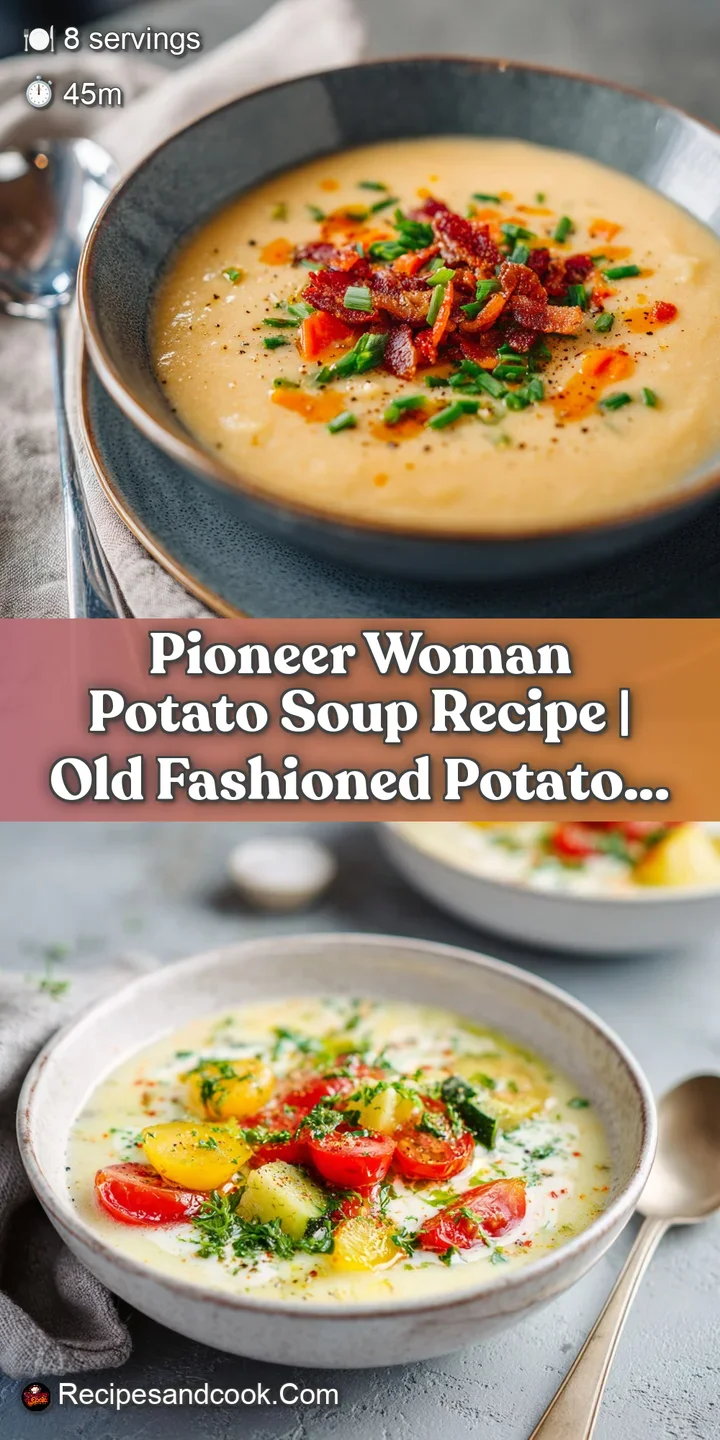
Pioneer Woman Potato Soup: Creamy and Hearty

- Time: Active 15 minutes, Passive 30 minutes, Total 45 minutes
- Flavor/Texture Hook: Silky, starch thickened base with crispy, mahogany bacon crumbles
- Perfect for: Chilly weeknights, family gatherings, or ultimate comfort food cravings
- Why Everyone Loves This Pioneer Woman Potato Soup Recipe
- How Mashing Half the Potatoes Changes Everything
- Component Analysis for Better Results
- Choosing The Best Farmhouse Style Ingredients
- Essential Tools For A Smooth Preparation
- Step By Step Stovetop Cooking Methods
- Solving Common Texture And Flavor Issues
- Customizing Your Bowl With Flavorful Substitutes
- Keeping Leftovers Fresh And Zero Waste
- Perfect Side Dishes For Hearty Soups
- Kitchen Wisdom and Flourishing Myths
- Very High in Sodium
- Recipe FAQs
- 📝 Recipe Card
Why Everyone Loves This Pioneer Woman Potato Soup Recipe
The first thing you notice isn't the sight of the pot, but the sound. It’s that rhythmic, rhythmic sizzle of thick cut bacon hitting a cold Dutch oven. As the heat climbs, the fat begins to render out, filling the kitchen with an aroma so savory it practically pulls people from other rooms.
I remember making this on a Sunday when the rain was drumming against the window panes; the house felt drafty until that first batch of onions hit the bacon fat. The smell changed from smoky to sweet, and suddenly, the kitchen was the only place anyone wanted to be.
It’s a sensory experience that defines comfort long before the first spoon hits the bowl.
This version of a classic is about more than just throwing ingredients into a pot. It’s about the patience of browning bacon until it reaches that perfect, shatter crisp texture and the clever trick of using the potatoes' own starch to create thickness. You don't need fancy equipment or hard to find garnishes.
We are talking about humble Russet potatoes, a few carrots for sweetness, and enough sharp cheddar to make things interesting. It is a hearty, stick to your ribs meal that feels like a warm hug from the inside out.
We’ve all had those watery, bland soups that leave you wanting more. This isn’t that. Because we build a light roux right on top of our sautéed vegetables, the broth has a body and weight to it that carries the flavors of garlic and black pepper beautifully.
It’s reliable, it’s nostalgic, and honestly, it’s the kind of recipe you’ll find yourself scribbling on a recipe card for a neighbor. Let’s get into the "how" and "why" so your next batch is the best one yet.
How Mashing Half the Potatoes Changes Everything
Starch Release: Mashing exactly half of the tender potatoes breaks their cellular structure, releasing natural amylose into the liquid to create a thick, velvety mouthfeel without excess flour.
Roux Stabilization: Cooking the flour with the vegetable fats for two minutes coats the starch granules, preventing them from clumping and ensuring a silky finish when the broth is added.
Fat Emulsification: The combination of heavy cream and whole milk stirred in at the end bonds with the released potato starch, preventing the dairy from curdling or separating during the final heating phase.
| Cook Method | Time | Texture | Best For |
|---|---|---|---|
| Stovetop | 45 minutes | Velvety with chunks | Busy weeknights and precision |
| Slow Cooker | 6 hours | Very soft, unified | Set it and forget it meal prep |
| Dutch Oven | 45 minutes | Deeply caramelized base | Maximum flavor and heat retention |
Choosing the right method depends on how much time you have to hover over the stove. While the slow cooker is great for convenience, I find the stovetop method in a heavy Dutch oven yields the most complex flavor because you can really control that initial sauté of the aromatics.
Component Analysis for Better Results
| Ingredient | Science Role | Pro Secret |
|---|---|---|
| Russet Potatoes | High starch content | Peel them deeply to remove all bitter skin; the starch is the primary thickener here. |
| Thick cut Bacon | Flavor & Fat | Start in a cold pan to render more fat without burning the meat. |
| Sharp Cheddar | Emulsified richness | Grate it yourself from a block; pre shredded cheese is coated in cellulose which prevents a smooth melt. |
| Chicken Broth | Liquid Base | Use low sodium so you can control the salt levels as the soup reduces. |
A quick note on the potatoes: Russets are non negotiable here. While Yukon Golds are great for a waxy, buttery bite, they don't break down as easily when mashed. We want that powdery starch to escape and thicken our broth, which is exactly what a Russet is designed for.
Choosing The Best Farmhouse Style Ingredients
When you head to the store for this pioneer woman potato soup recipe, don't just grab the first bag of potatoes you see. Look for Russets that feel heavy for their size and are free of any green tinges or soft spots. Since we are using 1.2kg of them, quality matters.
The skin should be dusty and brown, indicating a high starch content that will give us that iconic texture.
- 150g Thick cut bacon: This provides the 3 tablespoons of fat we need for the roux.
- 200g Yellow onion: Finely diced to disappear into the base while adding sweetness.
- 150g Carrots: Sliced into rounds for a pop of color and natural sugar.
- 100g Celery: Adds that essential savory "green" note to the aromatics.
- 3 cloves Garlic: Minced fresh; don't use the jarred stuff here.
- 1.2kg Russet potatoes: Peeled and cubed into 1/2 inch pieces for even cooking.
- 6 cups Chicken broth: The backbone of the liquid.
- 25g All purpose flour: Just enough to stabilize the fats.
- 1 tsp Dried parsley: Provides a subtle earthiness.
- 1/2 tsp Salt & Black pepper: Adjust these at the very end.
- 1.5 cups Whole milk: For creamy volume.
- 0.5 cup Heavy cream: For that luxurious, velvety finish.
- 225g Sharp cheddar cheese: Shredded fresh for the best melt.
- 1/4 cup Fresh chives: For a bright, sharp garnish.
| Original Ingredient | Substitute | Why It Works |
|---|---|---|
| Whole Milk | Evaporated Milk | Higher protein/fat concentration; makes the soup even richer. |
| Chicken Broth | Vegetable Stock | Keeps the soup vegetarian friendly if you skip the bacon. |
| Sharp Cheddar | Smoked Gouda | Adds a deep, woodsy flavor that complements the bacon beautifully. |
If you find yourself missing the carrots or celery, don't panic. While they add depth, the soul of this dish is the potato and the dairy. However, if you want to explore more creamy vegetable bases, you might find my Pioneer Woman Tomato Soup a great alternative for a lighter lunch.
Essential Tools For A Smooth Preparation
You don't need a kitchen full of gadgets, but a few specific items make this much easier. A heavy bottomed Dutch oven is my first choice. It distributes heat evenly, which is vital when you’re building a roux or simmering milk.
If the bottom of your pot is too thin, the milk and cheese are likely to scorch, leaving you with a bitter taste that is impossible to hide.
A sturdy potato masher is the second "must have." We aren't looking for a perfectly smooth purée we want texture. A hand masher allows you to feel exactly how many chunks are left.
If you only have an immersion blender, use it very sparingly (two or three quick pulses only), otherwise, the potatoes can become "gummy" from over processing the starch.
Finally, a sharp chef's knife makes prepping 1.2kg of potatoes much less of a chore. Aim for uniform 1/2 inch cubes. If some are huge and some are tiny, the small ones will turn to mush before the large ones are even tender. Consistency in your knife work leads to consistency in your final texture.
step-by-step Stovetop Cooking Methods
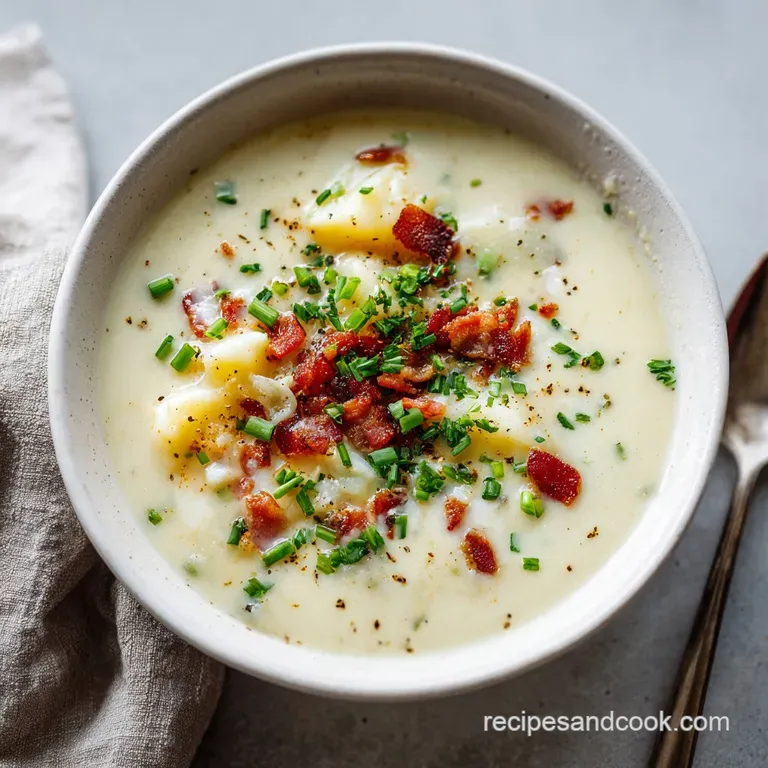
Phase 1: The Bacon and Vegetable Base
- Place 150g diced bacon into a cold Dutch oven. Turn heat to medium. This cold start method ensures the fat renders out slowly, leaving the bacon perfectly crispy and mahogany colored.
- Once the bacon is crisp, remove it with a slotted spoon to a paper towel lined plate. Make sure you leave about 3 tablespoons of that liquid gold (rendered fat) in the pot.
- Add the 200g diced onion, 150g carrots, and 100g celery to the bacon fat. Sauté for 4-5 minutes until the onions turn translucent and the carrots lose their stiffness.
- Stir in the 3 minced garlic cloves and 25g of flour. Cook for 1-2 minutes. Note: This toasts the flour, removing the "raw" taste and creating a light roux foundation.
Phase 2: Building the Roux and Simmering
- Gradually pour in 6 cups of chicken broth. Do this slowly at first, whisking constantly. You want to incorporate the flour/fat mixture into the liquid without creating any stubborn lumps.
- Add the 1.2kg of cubed potatoes, dried parsley, salt, and pepper. Turn the heat up to bring the liquid to a boil.
- Once boiling, immediately reduce the heat to a simmer. Cover and cook for 15-20 minutes until a fork easily slides into a potato cube.
Phase 3: Mashing and Emulsifying
- Using a potato masher, mash approximately half of the potatoes directly in the pot. Note: This releases the starches that act as a natural thickener.
- Pour in 1.5 cups of whole milk and 0.5 cup of heavy cream. Stir gently and let the soup heat through. Do not let it reach a full boil once the dairy is added, or it might break.
- Stir in the 225g of shredded cheddar cheese. Continue stirring until the cheese is completely melted and the soup is glossy. Serve immediately, topped with your reserved bacon and fresh chives.
Solving Common Texture And Flavor Issues
Why Your Soup Feels Gummy
If the texture reminds you of glue rather than silk, the potatoes were likely over worked. This happens most often when using a high speed blender or an immersion blender for too long. When potato starch is sheared too aggressively, it releases too much amylopectin, creating a sticky, gummy mess.
Why the Soup Lacks Punch
Sometimes a potato soup can taste "flat." This usually means it needs more acid or salt. Even though we added salt earlier, potatoes absorb a massive amount of seasoning. A tiny splash of apple cider vinegar or a squeeze of lemon juice can brighten the whole pot without making it taste "sour."
| Problem | Root Cause | Solution |
|---|---|---|
| Thin/Watery | Not enough potatoes mashed | Mash another 20% of the potatoes or simmer longer uncovered. |
| Grainy Texture | Cheese added to boiling liquid | Remove from heat before adding cheese; stir until just melted. |
| Bland Flavor | Potatoes absorbed all salt | Add a pinch more salt or a teaspoon of Dijon mustard for depth. |
For those looking for a different profile of comfort, you might compare this experience to a Paula Deen Potato Soup, which often leans even heavier into the slow cooked, creamy style of the South.
Common Mistakes Checklist
- ✓ Never boil the soup after adding the milk and cream (prevents curdling).
- ✓ Don't skip the "cold start" for the bacon; it's the secret to maximum fat rendering.
- ✓ Avoid using pre shredded cheese; the anti clumping agents ruin the silky texture.
- ✓ Pat the potatoes dry if you aren't putting them straight into the broth (prevents oxidation).
- ✓ Always whisk the broth in slowly to the roux to ensure a lump free base.
Customizing Your Bowl With Flavorful Substitutes
For a Hearty Pioneer Woman Potato Soup with Ham
If you have leftover holiday ham, this is the place to use it. Swap the bacon for 2 cups of diced ham. Since ham doesn't render fat like bacon, you’ll need to melt 3 tablespoons of butter to sauté your vegetables and build your roux.
The ham adds a meaty, salty bite that is more substantial than the bacon crumbles.
To Make it a Pioneer Woman Potato Soup Slow Cooker Version
You can absolutely adapt this for a slow cooker. Sauté the aromatics and build the roux in a pan first (this step is crucial for flavor), then transfer everything except the dairy and cheese to the crockpot. Cook on low for 6 hours.
Stir in the milk, cream, and cheese during the last 30 minutes of cooking. This results in a very soft, unified texture that many people prefer for meal prepping.
If You Want a Lighter Version
You can replace the heavy cream with extra whole milk, but be aware the soup will be thinner. To compensate, mash 75% of the potatoes instead of 50%. This relies entirely on the potato starch for body, which keeps the "hearty" feel without the extra fat of the cream.
| Modification | Ingredient Change | Resulting Texture |
|---|---|---|
| Extra Chunky | Don't mash potatoes | Brothy with distinct bites; less "creamy" feel. |
| Vegetarian | Swap bacon for butter | Misses the smoky note but remains rich and savory. |
| Spicy Kick | Add diced jalapeños | Brightens the heavy starch with a sharp, lingering heat. |
If you find yourself enjoying these hearty, vegetable forward dishes, you should check out my Green Bean Casserole recipe which uses similar farmhouse techniques to create a scratch made sauce.
Keeping Leftovers Fresh And Zero Waste
Potato soup is one of those rare dishes that actually tastes better the next day. As it sits in the fridge, the flavors of the onion, garlic, and bacon fat have more time to penetrate the potato chunks. However, potatoes are starch heavy, meaning they will continue to absorb liquid as they cool.
When you go to reheat your leftovers, you’ll likely find the soup has turned into a thick mash.
- Storage
- Keep in an airtight container in the fridge for up to 4 days.
- Freezing
- I don't generally recommend freezing potato soup. Dairy and potatoes both have a tendency to separate and become "mealy" or grainy once thawed and reheated. If you must freeze it, do so before adding the cheese and dairy.
- Reheating
- Always reheat on the stovetop over low heat. Add a splash of milk or chicken broth to loosen the texture back to its original silkiness.
Zero Waste Tip: Don't throw away those potato peels! Toss them with a little olive oil, salt, and pepper, and bake them at 200°C for 15-20 minutes until crispy. They make a fantastic "kitchen snack" or an extra crunchy garnish for the soup itself.
Also, the celery leaves are packed with flavor finely chop them and mix them with the chives for your garnish.
Perfect Side Dishes For Hearty Soups
While this soup is a meal in itself, it loves a good partner. A crusty piece of sourdough or a warm baguette is the classic choice for mopping up every last drop of the creamy base. The acidity of sourdough, in particular, cuts through the richness of the cheddar and cream beautifully.
For a Complete Farmhouse Feast
If you're serving a larger crowd, consider a crisp green salad with a sharp vinaigrette. The contrast between the hot, heavy soup and the cold, acidic greens makes the meal feel balanced. You could also serve this alongside a simple roast chicken or even a platter of roasted root vegetables.
For a Light and Balanced Lunch
Keep it simple. A half sandwich, perhaps a classic turkey and swiss, pairs excellently. The key is to avoid anything too heavy or cheesy in the side dish, as the soup already provides plenty of that. If you are looking for more lunch inspiration, my Pioneer Woman Chicken Salad is a fantastic, creamy classic that fits the same nostalgic vibe.
Kitchen Wisdom and Flourishing Myths
One of the biggest misconceptions in the kitchen is that you must boil potatoes vigorously to cook them. In reality, a gentle simmer is far better. Aggressive boiling knocks the potatoes against each other, causing the outsides to slough off and turn into mush before the centers are even warm.
A steady, gentle simmer ensures the cubes stay intact until you are ready to mash them yourself.
Another myth is that "fat free" milk can be used as a direct substitute. While it technically works as a liquid, it lacks the protein and fat structure to hold the emulsion of the potato starch. You’ll end up with a soup that feels watery and looks greyish rather than that bright, golden white we are aiming for.
Stick to whole milk for the best experience you’re eating bacon and cheese soup, after all; now is not the time to count calories!
Finally, many people believe you need to soak Russet potatoes to remove starch before cooking. While this is true for crispy French fries, it’s the opposite of what we want for a pioneer woman potato soup recipe.
We want every bit of that starch to stay with the potato so it can eventually thicken our broth. Peel, dice, and drop them straight into the pot or a bowl of broth to prevent browning. Trust the starch it’s your best friend in this recipe.
Very High in Sodium
1145 mg 1145 mg of sodium (50% 50% of daily value)
The American Heart Association recommends limiting sodium intake to less than 2,300mg per day, ideally aiming for a lower limit of 1,500mg for most adults.
Tips to Reduce Sodium in Your Recipe
-
Opt for Low-Sodium Broth-30%
Replace the 6 cups of regular chicken broth with low-sodium or no-salt added chicken broth. This is the biggest sodium contributor in the recipe.
-
Halve the Added Salt-15%
Reduce the 1/2 teaspoon of added salt by half, to just 1/4 teaspoon. You can always add more salt at the table if needed.
-
Choose Lower Sodium Cheese-15%
Select a sharp cheddar cheese specifically labeled as lower in sodium, or use slightly less of the regular sharp cheddar. Flavorful cheeses can often be used in smaller quantities.
-
Rinse the Bacon-5%
After dicing the bacon, briefly rinse it under cold water and pat it dry. This can help remove some surface salt without significantly altering flavor.
-
Boost Flavor with Herbs and Spices
Increase the use of dried parsley and black pepper. Consider adding other unsalted herbs like thyme, rosemary, or a pinch of nutmeg to enhance the overall flavor profile without adding sodium.
Recipe FAQs
What are the primary ingredients in this potato soup?
This recipe relies on thick cut bacon, yellow onion, carrots, celery, garlic, Russet potatoes, chicken broth, flour, dried parsley, salt, pepper, whole milk, heavy cream, sharp cheddar cheese, and fresh chives. These components build the classic flavor profile and creamy texture characteristic of the
dish.
What are common mistakes to avoid when making this potato soup?
Avoid boiling the soup after adding the milk and cream, as this can cause the dairy to curdle. Additionally, always use freshly shredded cheddar cheese rather than pre-shredded varieties, as the anti clumping agents in pre-bagged cheese prevent a smooth, silky melt.
What defines an old-fashioned style potato soup?
Traditional potato soup is defined by a thickened, rustic base created by mashing a portion of the potatoes directly into the pot. If you enjoyed mastering this technique of natural thickening using starches, you can see how a similar approach builds body in our hearty lamb stew.
How do I give my potato soup more flavor?
Prioritize the "cold start" method for your bacon to maximize the amount of rendered fat left in the pot. Sautéing your aromatic vegetables onions, carrots, and celery in this flavorful fat provides the essential foundation for the entire soup.
How to ensure the soup base is lump free?
Whisk the chicken broth into your flour and vegetable roux slowly and gradually. Stirring constantly while you pour prevents the flour from clumping, resulting in a perfectly smooth consistency.
How to achieve the best potato texture?
Mash exactly half of your tender potatoes once they are cooked through. This releases enough starch to naturally thicken the liquid without requiring excessive flour, keeping the texture light and velvety.
How to prepare the bacon for the best results?
Place diced bacon into a cold Dutch oven before turning the heat to medium. This specific technique ensures the fat renders fully and the bacon reaches a crispy, mahogany colored finish before the vegetables are added.
Pioneer Woman Potato Soup

Ingredients:
Instructions:
Nutrition Facts:
| Calories | 467 kcal |
|---|---|
| Protein | 20.8 g |
| Fat | 30.2 g |
| Carbs | 33.6 g |
| Fiber | 3.8 g |
| Sugar | 5.9 g |
| Sodium | 1145 mg |
