Pan Seared Ribeye: Cast Iron Perfection
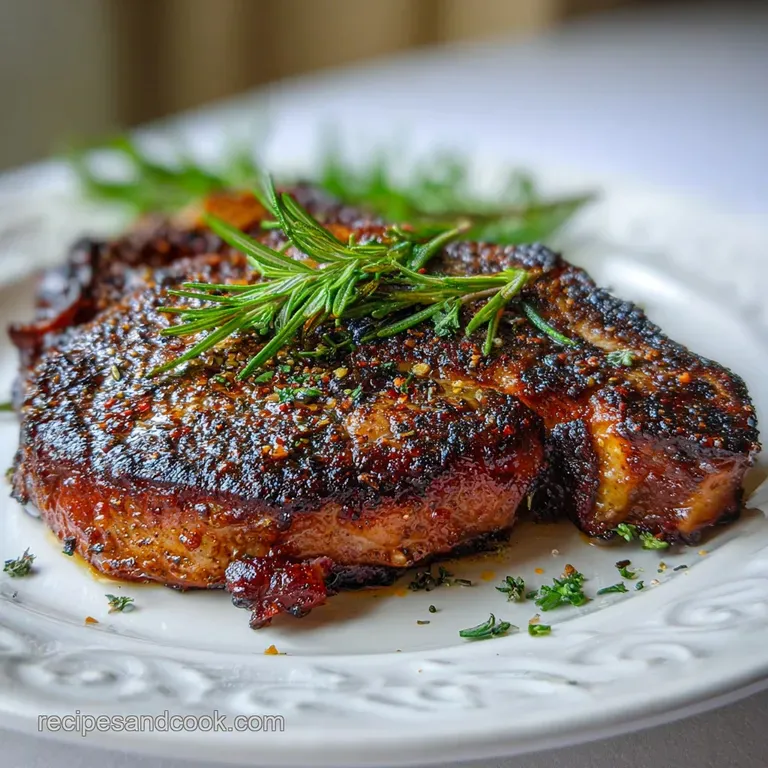
- Time: Active 15 minutes, Passive 15 minutes, Total 30 minutes
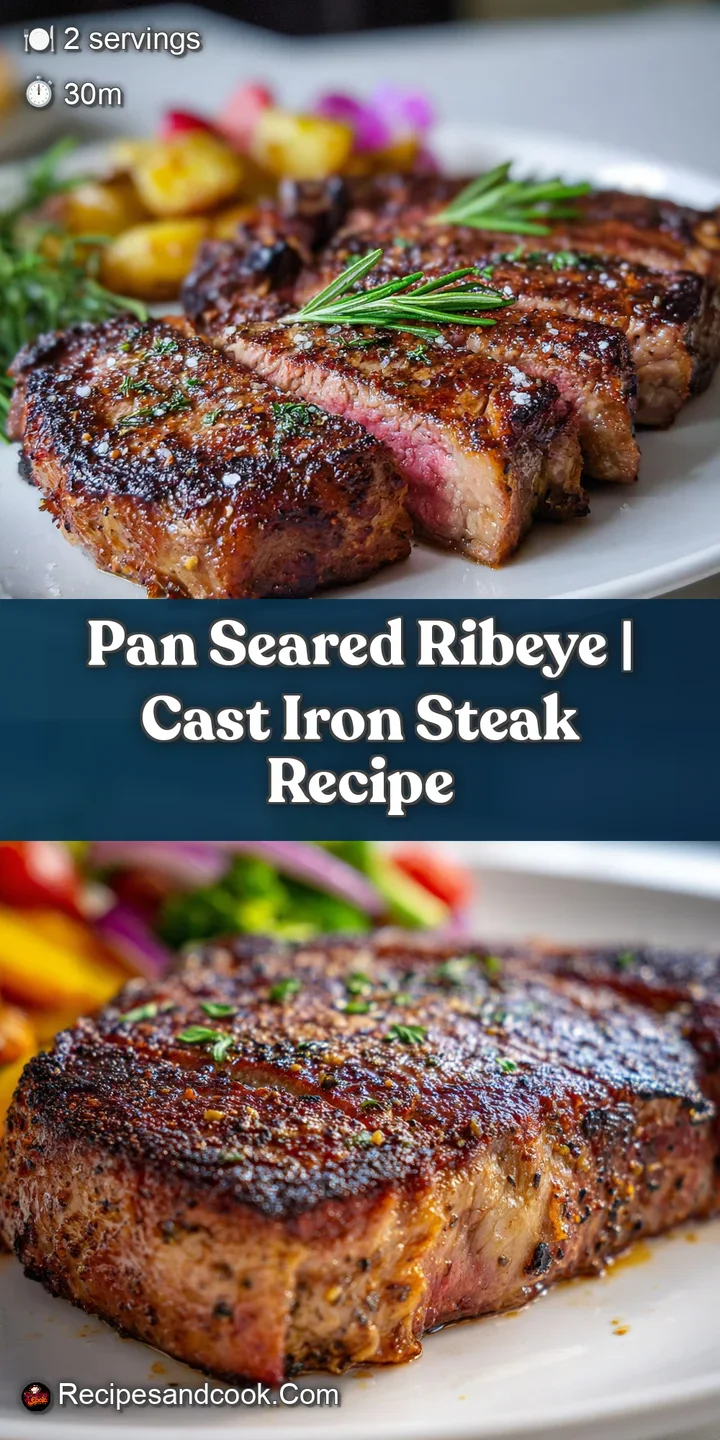
- Flavor/Texture Hook: Shatter crisp crust with a buttery, garlic infused finish
- Perfect for: Impressive date nights or a timeless weekend comfort meal
- Master the Perfect Pan Seared Ribeye
- Why This Steak Works
- Timing and Temperature Guides
- Ingredients for Flavor Success
- Essential Kitchen Searing Tools
- Creating the Perfect Sear
- Solving Your Steak Issues
- Adjusting Your Steak Count
- Debunking Searing Misconceptions
- Storing Your Leftover Steak
- Best Sides for Steak
- Critical High in Sodium
- Pan Seared Ribeye FAQs
- 📝 Recipe Card
Master the Perfect Pan Seared Ribeye
There is a specific, primal sound that happens when a cold piece of marbled beef hits a white hot cast iron skillet. It’s not just a sizzle; it’s a violent, crackling roar that tells you the surface of the meat is undergoing a beautiful transformation. I remember the first time I actually got this right.
I used to be terrified of the smoke, turning the heat down and ending up with a grey, sad looking steak that tasted more like it had been boiled than seared. Then I learned about the "dry brine" and everything changed.
Last winter, I invited my old neighbor over for dinner. He’s one of those guys who thinks a steak isn't "real" unless it’s charred over charcoal. I decided to prove him wrong using nothing but my stovetop and a heavy pan.
As the aroma of toasted garlic and scorched rosemary filled the kitchen, he actually stood up from the table just to watch. When that first slice revealed a wall to wall pink center encased in a mahogany crust, he didn't say a word. He just pointed at the pan and nodded.
That's the power of a Pan Seared Ribeye done with intention.
We’re going to focus on the basics today no fancy gadgets, just a pan, some heat, and a few tricks I’ve picked up after ruining more than my fair share of expensive cuts. You don't need a backyard grill to get that steakhouse finish.
In fact, the control you get on a stovetop actually makes it easier to nail that medium rare sweet spot. Let’s get into the details so you can stop guessing and start searing with total confidence.
Why This Steak Works
The Maillard Effect: High heat triggers a chemical reaction between amino acids and sugars, creating hundreds of flavor compounds and that characteristic brown crust.
Thermal Inertia Management: Using a heavy pan like cast iron prevents the temperature from dropping when the cold meat hits the surface, ensuring a constant sear.
Aromatic Fat Infusion: Basting with butter at the end carries the fat soluble flavors of garlic and thyme deep into the nooks and crannies of the meat.
Surface Moisture Removal: Salting early draws out moisture which then re absorbs, seasoning the interior while leaving the surface bone dry for a better sear.
| Thickness | Internal Temp | Rest Time | Visual Cue |
|---|---|---|---|
| 1 inch | 130°F (Med Rare) | 5 minutes | Firmness of a thumb fleshy part |
| 1.5 inches | 130°F (Med Rare) | 8 minutes | Deep mahogany exterior crust |
| 2 inches | 130°F (Med Rare) | 10 minutes | Significant resistance when pressed |
Understanding the relationship between heat and time is the biggest hurdle for most home cooks. When you use a heavy skillet, you are essentially building a battery of heat that won't deplete the moment the steak touches it.
This constant energy is what creates that "shatter" texture on the outside while keeping the inside silky.
Timing and Temperature Guides
To get the most out of your Pan Seared Ribeye, you have to look at the ingredients as functional components. It isn't just about flavor; it's about how these items interact with the heat.
For instance, the oil isn't just for sticking it's a heat transfer medium that fills the microscopic gaps between the pan and the meat.
| Ingredient | Science Role | Pro Secret |
|---|---|---|
| Ribeye Steak | Intramuscular Fat | Choose "Choice" or "Prime" for better rendering |
| Avocado Oil | High Smoke Point | Stays stable at 500°F without turning bitter |
| High Fat Butter | Emulsification | Use European style butter for less water and more foam |
| Kosher Salt | Protein Denaturation | Coarse grains distribute better and don't over salt |
A quick tip for the butter: I like to use unsalted high fat butter. This gives you total control over the seasoning. If you use standard salted butter, the salt concentrates as the water evaporates, and you might end up with a salt lick of a steak.
It's a small change, but it makes a massive difference in the final balance of the dish.
Ingredients for Flavor Success
- 2 Ribeye Steaks: 1.5 inches thick, approx. 1 lb / 450g each. Why this? Thick cuts allow for a deep sear without overcooking the center.
- Substitute: New York Strip. It has a similar fat cap but a tighter grain.
- 2 tsp (10g) Kosher Salt: Specifically for the dry brine process. Why this? Larger crystals dissolve slower, seasoning deeper into the muscle fibers.
- Substitute: Sea salt. Avoid table salt as it's too fine and metallic.
- 1 tsp (5g) Coarse Ground Black Pepper: For that classic steakhouse bite. Why this? Coarse pepper provides texture and won't burn as quickly as fine powder.
- Substitute: Crushed peppercorns for an even more aggressive "Au Poivre" style.
- 2 tbsp (30ml) Avocado Oil: The engine of your sear. Why this? Its high smoke point prevents the kitchen from becoming a literal fire hazard.
- Substitute: Grapeseed oil. It's neutral and can also handle the extreme heat.
- 3 tbsp (42g) Unsalted High Fat Butter: For the finishing basting phase. Why this? High fat content means more milk solids for better browning.
- Substitute: Ghee. It has an even higher smoke point but lacks the nutty milk solids.
- 4 cloves Garlic: Smashed but skin removed. Why this? Smashing releases the oils without the garlic burning into bitter bits.
- Substitute: Shallots. They offer a sweeter, more delicate aromatic profile.
- 3 sprigs Fresh Thyme or Rosemary: The classic steakhouse aromatic. Why this? Fresh herbs release oils into the butter that dried herbs simply can't match.
- Substitute: Fresh sage. It pairs beautifully with the richness of the ribeye fat.
- 1 tsp (5g) Flaky Sea Salt: For the final crunch. Why this? It provides a hit of salinity that highlights the rendered fat.
- Substitute: Smoked salt. This adds a "grilled" dimension to a pan seared steak.
Essential Kitchen Searing Tools
You really don't need a lot of gear for a Pan Seared Ribeye, but the quality of what you use matters. A thin, non stick pan is your enemy here. It can't hold enough heat, and the coating will likely degrade at the temperatures we’re aiming for. Stick to heavy metal.
I always reach for my cast iron skillet. It’s a timeless tool that actually gets better the more you use it. If you don't have one, a heavy bottomed stainless steel pan (like an All Clad) will work, but you'll need to be more careful about the meat sticking. You also need a pair of long tongs. Don't use a fork!
Piercing the meat lets those precious juices escape before they've had a chance to set.
Finally,, get a digital instant read thermometer. I used to think I could tell doneness by "feel," but I was wrong about 40% of the time. Steak is too expensive to gamble with. A quick probe takes the anxiety out of the process and ensures you hit that 130°F mark every single time.
It's the best investment you'll make for your kitchen.
Creating the Perfect Sear
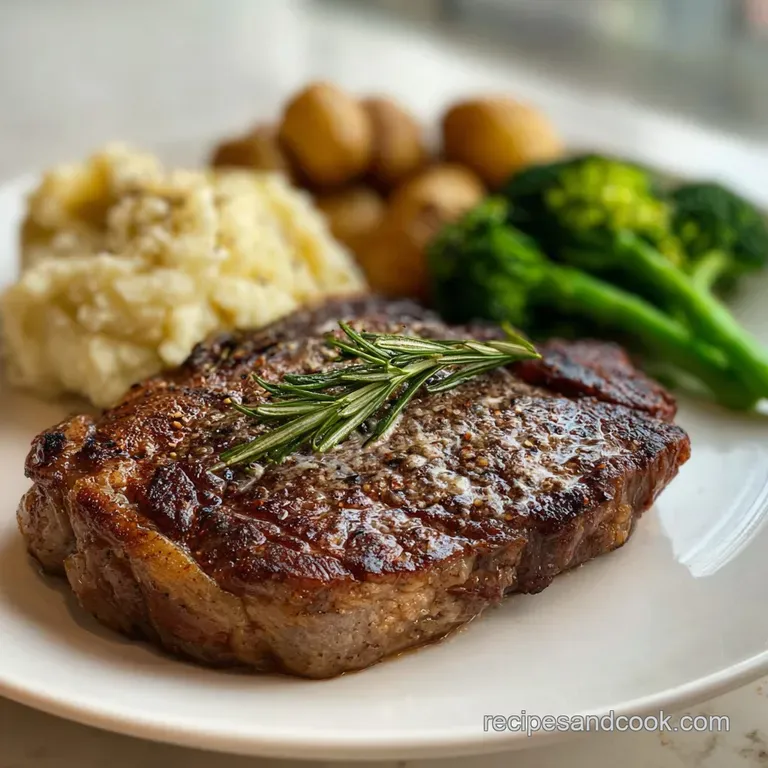
- Dry the meat. Pat the 2 Ribeye Steaks with paper towels until the surface is completely matte. Note: Moisture on the surface turns to steam, which prevents browning.
- Season heavily. Coat all sides with 2 tsp Kosher Salt and 1 tsp Black Pepper. Note: Don't forget the edges; that fat cap needs seasoning too.
- Preheat the pan. Place your skillet over medium high heat for 5 minutes until a drop of water dances and vanishes instantly.
- Add the oil. Pour in 2 tbsp Avocado Oil and swirl to coat the bottom. Note: The oil should shimmer and show tiny ripples.
- Start the sear. Lay the steaks into the pan away from you. Cook 3-4 mins until a dark, mahogany crust forms. This is the same over high heat technique I use for my Rockfish recipe to get that perfect crunch.
- Flip carefully. Use tongs to turn the steaks. Cook another 3 mins until the second side is deeply browned.
- Add aromatics. Drop in 3 tbsp Butter, 4 cloves Garlic, and 3 sprigs Thyme. Note: Move the steaks to one side to let the butter melt in the open space.
- Baste the meat. Tilt the pan and spoon the foaming butter over the steaks repeatedly for 2 mins until the aroma is nutty and fragrant.
- Check temperature. Insert your thermometer into the thickest part until it reads 130°F for medium rare.
- Rest the steak. Move to a warm plate and pour the pan juices over them. Wait 8-10 mins until the juices re distribute.
Solving Your Steak Issues
Why Your Steak Is Grey
This usually happens because the meat was too wet or the pan wasn't hot enough. If you take a steak straight from the plastic wrap and drop it into a lukewarm pan, the surface moisture will steam the meat rather than sear it. Always pat it dry and wait for that oil to shimmer.
Why Your Garlic Is Bitter
Garlic is delicate. If you throw it in at the beginning of the sear, it will turn black and acrid long before the steak is done. The trick is to add it during the last two minutes of cooking. This is just enough time to infuse the butter without destroying the garlic's natural sweetness.
| Problem | Root Cause | Solution |
|---|---|---|
| Tough/Chewy Meat | Sliced with the grain | Find the lines of muscle and cut perpendicular to them |
| Uneven Cooking | Steak was too cold | Let meat sit at room temp for 45 mins before cooking |
| Burnt Crust/Raw Middle | Heat was too high | Sear both sides, then lower heat for the butter basting phase |
Common Mistakes Checklist
- ✓ Never skip the drying step; a wet steak will never develop a "shatter" crust.
- ✓ Don't overcrowd the pan; if you're making more than two, work in batches.
- ✓ Avoid flipping the steak every 30 seconds; let it sit to build a proper crust.
- ✓ Ensure your butter is fresh; old butter can have "off" flavors that intensify when browned.
- ✓ Always let the meat rest; cutting too early is the #1 cause of dry steak.
Adjusting Your Steak Count
If you're cooking for a crowd, you'll need to work in batches. Trying to cram four ribeyes into one skillet will drop the temperature of the metal so fast that you'll end up poaching the meat in its own juices.
Cook two, move them to a wire rack over a baking sheet, and keep them in a 200°F oven while you do the next batch.
For scaling down to a single person, the process is identical. However, you might find you need slightly less butter for the basting phase, or it will overwhelm the single steak. Just use 2 tablespoons instead of 3.
If you're doubling the recipe, don't double the salt and pepper linearly start with 1.5x and adjust to taste, as over seasoning a large batch is a common pitfall.
If you enjoy this rich, savory profile, you might also want to try my Surf and Turf recipe, which uses these exact searing principles but adds a decadent lobster tail on the side. It's the ultimate way to scale up a special occasion dinner without adding hours of extra work.
Debunking Searing Misconceptions
One of the oldest myths in the book is that "searing seals in the juices." Science has proven this false time and again. Searing is entirely about flavor and texture through the Maillard reaction. In fact, a seared steak loses just as much moisture as a non seared one.
The reason a seared steak tastes juicier is that the crust provides a textural contrast that makes the tender interior feel more succulent.
Another myth is that you should only flip a steak once. While flipping once is great for getting those perfect grill marks, "multi flipping" on a stovetop can actually result in more even internal cooking.
However, for this specific butter basted method, flipping once or twice is ideal because it allows the crust to set properly before we introduce the liquid fat of the butter.
Storing Your Leftover Steak
- Storage: Keep leftovers in an airtight container in the fridge for up to 4 days. I like to wrap mine tightly in foil first to prevent it from drying out.
- Zero Waste: Don't throw away that solidified butter and garlic from the pan! Scrape it into a small jar and use it to fry eggs the next morning. It’s "liquid gold" packed with beefy, herby flavor.
- Reheating: Avoid the microwave! It will turn your beautiful medium rare steak into a rubber tire. Instead, warm it in a 250°F oven until it reaches 110°F internal, then give it a 30 second flash sear in a hot pan to crisp the edges.
- Repurposing: Leftover ribeye is the king of salad toppers. Slice it thin against the grain and serve it over arugula with a balsamic glaze. You can also chop it up for a high end version of my Chipotle Barbacoa Copycat Recipe by simmering the meat briefly in the smoky sauce.
Best Sides for Steak
A Pan Seared Ribeye is a heavy, rich dish, so you want sides that provide a bit of acidity or a different texture to cut through the fat. A simple wedge salad with a sharp blue cheese dressing is a classic for a reason.
The cold, crisp lettuce and the tangy vinegar in the dressing reset your palate after every buttery bite of steak.
If you want to keep it traditional, garlic mashed potatoes or crispy roasted Brussels sprouts are the way to go. I personally love serving this with sautéed mushrooms. Use the same pan you cooked the steak in don't even wash it and toss the mushrooms in those leftover beef drippings.
They’ll soak up every bit of that concentrated flavor, making them the most savory thing on your plate. Trust me, it’s a game changer for a cozy night in.
Critical High in Sodium
3480 mg of sodium per serving (151% of daily value)
The American Heart Association recommends limiting sodium intake to no more than 2,300mg per day for optimal heart health.
Simple Swaps to Savor Flavor and Reduce Sodium
-
Cut Back on Salt-25%
Reduce the kosher salt from 2 tsp (10g) to 1 tsp (5g). This single change can significantly lower the overall sodium content. Consider using a low-sodium salt alternative.
-
Omit Flaky Sea Salt-15%
Eliminate the 1 tsp of flaky sea salt sprinkled at the end. Its primary purpose is texture and flavor burst, which can be achieved with other sodium free methods. This will reduce sodium intake without compromising overall taste.
-
Unsalted Butter is Key-10%
Ensure you are using truly unsalted butter. Even a small amount of salt in butter can contribute noticeably to the recipe's total sodium.
-
Garlic Power-5%
Instead of simply smashing the garlic, mince half of it and lightly roast the rest. Roasting mellows the flavor while mincing intensifies it, allowing you to use less salt.
-
Spice It Up!
Experiment with other herbs and spices like smoked paprika, onion powder (sodium free), or a pinch of red pepper flakes to enhance flavor without adding sodium. Freshly ground pepper can also boost the flavor profile.
Pan Seared Ribeye FAQs
How long should you pan sear a ribeye?
It depends on thickness and desired doneness, aiming for 3-4 minutes per side for a 1.5 inch steak. A 1.5 inch ribeye typically needs about 3-4 minutes per side for a medium rare finish (130°F internal temperature). Thicker steaks will require longer, while thinner ones cook faster.
Always use a thermometer to confirm doneness.
Do you sear steak in oil or butter?
Start with a high smoke point oil, then finish with butter for basting. Oil, like avocado or grapeseed, provides a stable base for the initial high heat sear without burning. Butter is added towards the end for flavor and to help create that irresistible glossy crust during basting.
What is the 3-3-3 rule for steaks?
The 3-3-3 rule is a common guideline for cooking steak: 3 minutes per side for searing, 3 minutes to rest, and 3 minutes to eat. While a useful starting point, it's best used for thinner steaks and always should be supplemented with a meat thermometer for accuracy.
A 1.5 inch steak, for example, needs more time.
How to get the perfect sear on a ribeye?
Ensure the steak is completely dry, use a very hot pan with high smoke point oil, and don't move it too early. Pat the steak thoroughly dry with paper towels to remove surface moisture, which creates steam instead of a crust.
Get your pan screaming hot before adding the oil and steak, then let it sear undisturbed for several minutes until a deep brown crust forms.
Should I use a thermometer to check steak doneness?
Yes, absolutely. It's the most reliable way to achieve your desired doneness. Relying on touch or timing alone can lead to guesswork and disappointment. An instant read thermometer inserted into the thickest part of the steak ensures you hit precise temperatures like 130°F for medium rare.
Why does my steak come out grey instead of browned?
This typically happens when the steak is too wet or the pan isn't hot enough. Surface moisture turns to steam, preventing the Maillard reaction that creates browning. Ensure your steak is patted bone dry and your pan is preheated until it's shimmering hot before adding the steak.
How do I prevent my garlic from burning when basting?
Add garlic and aromatics during the last few minutes of cooking. This allows them to infuse the butter with flavor without burning and turning bitter. If you enjoyed controlling the flavor infusion here, see how we apply similar aromatic techniques in the Quail Recipes: Roast with Sticky Apple Easy Cider Glaze.
Pan Seared Ribeye
Ingredients:
Instructions:
Nutrition Facts:
| Calories | 1442 calories |
|---|---|
| Protein | 84 g |
| Fat | 121 g |
| Carbs | 2 g |
| Fiber | 0.5 g |
| Sugar | 0.1 g |
| Sodium | 3480 mg |
