Mini Berry Bundt Cake with Cream Cheese Glaze
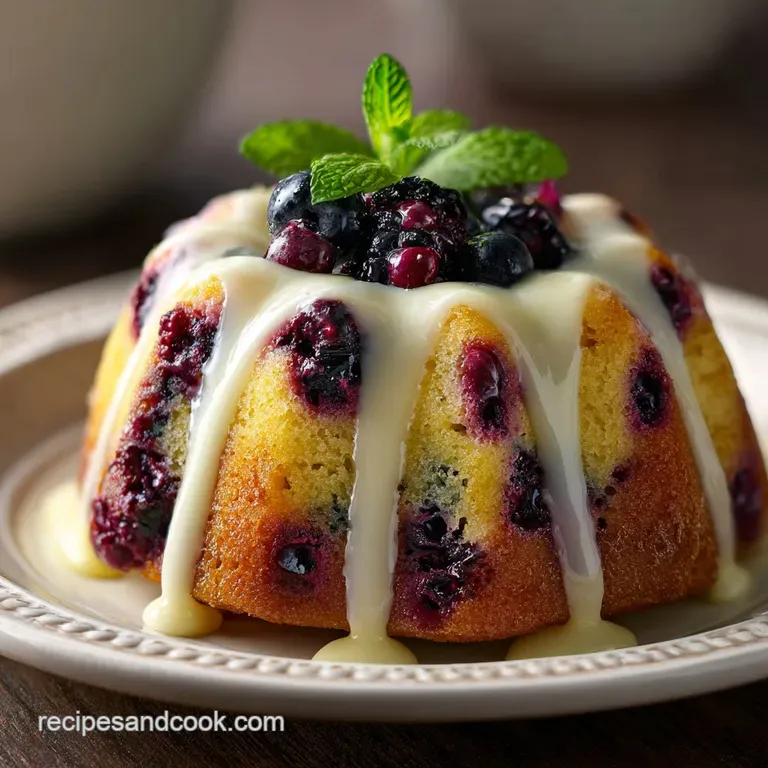
- Time:20 minutes prep + 25 minutes bake = 85 minutes total
- Flavor/Texture Hook: Zesty, velvety, and berry packed
- Perfect for: Elegant tea parties or individual meal prep desserts
- Why This Mini Berry Bundt Stays Moist
- Critical Measurements for Success with This Recipe
- The Alchemy of Selecting Your Fresh Components
- Essential Gear for a Flawless Cake Release
- Navigating the Method for a Velvety Crumb
- Solving Structural Issues and Common Baking Errors
- Smart Swaps and Flavor Profile Adjustments
- Preservation and Reviving Your Leftover Cakes
- Three Professional Plating Levels for Every Occasion
- Recipe FAQs
- 📝 Recipe Card
Why This Mini Berry Bundt Stays Moist
The success of this Mini Berry Bundt Cake with Cream hinges on a few specific interactions between the ingredients. Most people assume a cake is moist just because of the butter, but it is actually the combination of fat and acidity that does the heavy lifting here.
By using sour cream, we introduce a thick, high fat component that does not thin out the batter like milk would. This thickness is what keeps our berries suspended in mid air instead of falling to the bottom of the pan.
- Fat Barrier: The softened butter coats the flour particles, which limits the development of tough gluten strands.
- Acidity Boost: Sour cream provides enough acid to soften the flour proteins, resulting in a tighter, more "bakery style" crumb.
- Berry Suspension: Dusting the fruit in flour creates a rough surface that allows the batter to "grip" the berries during the initial rise.
- Steam Control: The hole in the center of the bundt pan allows heat to reach the middle of the cake, ensuring the center sets before the edges overcook.
| Pan Cavity Size | Internal Temp | Rest Time | Visual Cue |
|---|---|---|---|
| Standard Mini (1/2 cup) | 205°F (96°C) | 10 minutes | Edges pull from sides |
| Large Mini (1 cup) | 205°F (96°C) | 12 minutes | Golden brown top |
| Micro Bundt (1/4 cup) | 200°F (93°C) | 8 minutes | Toothpick comes out clean |
Choosing the right pan size is essential for the timing. If you use a very small micro pan, you need to shave about five minutes off the bake time to prevent the sugar from burning. The visual cue of the edges pulling away slightly is your best indicator that the structure is set enough to survive the flip.
Critical Measurements for Success with This Recipe
When we talk about precision in baking, we are usually focusing on the weight of the flour. For this Berry Bundt Cake with Cream Cheese Glaze, the 250g of all purpose flour needs to be measured exactly.
If you use a measuring cup and pack it too tightly, you might end up with 300g of flour, which results in a heavy, bready cake. I always suggest using a digital scale because it eliminates the guesswork and ensures that every single mini cake has the same texture.
The timing of the "Rest and Flip" is also a non negotiable metric. If you wait too long, the sugar in the cake will cool and act like glue, sticking the cake to the pan forever. If you flip too soon, the internal structure is still too fragile and the cake might collapse under its own weight.
We have found that exactly 10 minutes is the "Goldilocks" zone for these specific dimensions.
| Component | Science Role | Pro Secret |
|---|---|---|
| Sour Cream | Tenderness | Use full fat for the best mouthfeel and structure |
| Baking Powder | Aeration | Ensure it is under 6 months old for max lift |
| Lemon Zest | Flavor Release | Rub into the sugar first to release essential oils |
| Cream Cheese | Glaze Stability | Must be fully room temp to avoid tiny lumps |
Using room temperature ingredients is another "invisible" spec that people often ignore. When your eggs and sour cream are cold, they cause the creamed butter to seize up, creating a broken batter. This leads to a coarse, uneven texture.
If you are in a rush, you can place your eggs in a bowl of warm water for 5 minutes to take the chill off.
The Alchemy of Selecting Your Fresh Components
Choosing your ingredients for the Mini Berry Bundt Cake recipe is where the personality of the dish really comes through. While the recipe calls for blueberries, the technique works with almost any small fruit. However, the moisture content of the fruit matters.
If you use frozen berries, do not thaw them first; otherwise, they will bleed purple streaks throughout your beautiful yellow batter and add too much liquid, which messes with the bake time.
The quality of your vanilla extract also plays a huge role here. Since this is a simple butter based cake, the vanilla isn't just a background note it’s a main character. I always reach for a high-quality bean paste if I have it, as the little black flecks look stunning in the finished cake.
It provides a deeper, more complex floral note that balances the tang of the cream cheese glaze perfectly.
- 250g all purpose flour: The structural foundation.
- 200g granulated sugar: For sweetness and that golden crust.
- 10g baking powder: Our primary lifting agent.
- 3g salt: Essential to balance the sugar.
- 115g unsalted butter: Must be softened to "mayonnaise" consistency.
- 2 large eggs: Room temperature for proper emulsification.
- 120ml sour cream: The secret to a moist, velvety crumb.
- 5ml vanilla extract: Pure extract or bean paste is best.
- 150g fresh blueberries: Plump, dry berries work best.
- 1 tbsp lemon zest: Freshly grated right before mixing.
- 1 tbsp melted butter + 1 tbsp flour: For the foolproof "pan release" paste.
- 60g cream cheese: Full fat, softened for the glaze.
- 120g powdered sugar: Sifted to ensure no lumps.
- 30ml milk: Use whole milk for a richer drizzle.
- 2ml vanilla extract: For the final aromatic touch in the glaze.
| Original Ingredient | Substitute | Why It Works |
|---|---|---|
| Sour Cream | Greek Yogurt | Similar acidity and fat. Note: Result is slightly tangier |
| Fresh Blueberries | Raspberries | Same size and moisture. Note: More fragile, fold gently |
| Lemon Zest | Orange Zest | Provides citrus oils. Note: Yields a sweeter, less tart aroma |
If you find yourself out of sour cream, full fat Greek yogurt is your best friend. It has that same acidic "hit" that reacts with the baking powder, though the cake might be a tiny bit denser. For those who want to experiment with different base flavors, you might consider how this compares to a Vanilla Pound Cake recipe, which relies more on air incorporation than chemical leavening.
Essential Gear for a Flawless Cake Release
The most important piece of equipment is, predictably, the 12 cavity mini bundt pan. I prefer the heavy duty cast aluminum versions because they distribute heat much more evenly than thin, dark steel pans. Thin pans often result in "hot spots" where the outside of the cake burns before the inside is fully baked.
If you only have a dark pan, you might want to lower the oven temperature by about 10 degrees to compensate for the faster heat absorption.
A good pastry brush is also vital. You need to be able to get that "DIY pan release" into every single tiny crevice of the bundt design. Using a spray is tempting, but a hand brushed mixture of melted butter and flour creates a physical barrier that is much more reliable.
This is the difference between a cake that slides out like silk and one that requires a knife and a prayer to remove.
- 12 cavity mini bundt pan: Preferably non stick but still treated with release paste.
- Digital kitchen scale: For measuring the 250g flour and 200g sugar accurately.
- Electric hand mixer: To achieve the "light and fluffy" stage of creaming.
- Silicone spatula: Best for folding in the berries without crushing them.
- Wire cooling rack: Essential for airflow during the cooling phase.
- Microplane zester: For getting the fine lemon zest without the bitter white pith.
Having these tools ready before you start prevents the batter from sitting out too long. Once you mix the dry and wet ingredients, the baking powder starts reacting immediately. You want that reaction to happen inside the oven, not on your countertop, so efficiency is key!
Navigating the Method for a Velvety Crumb
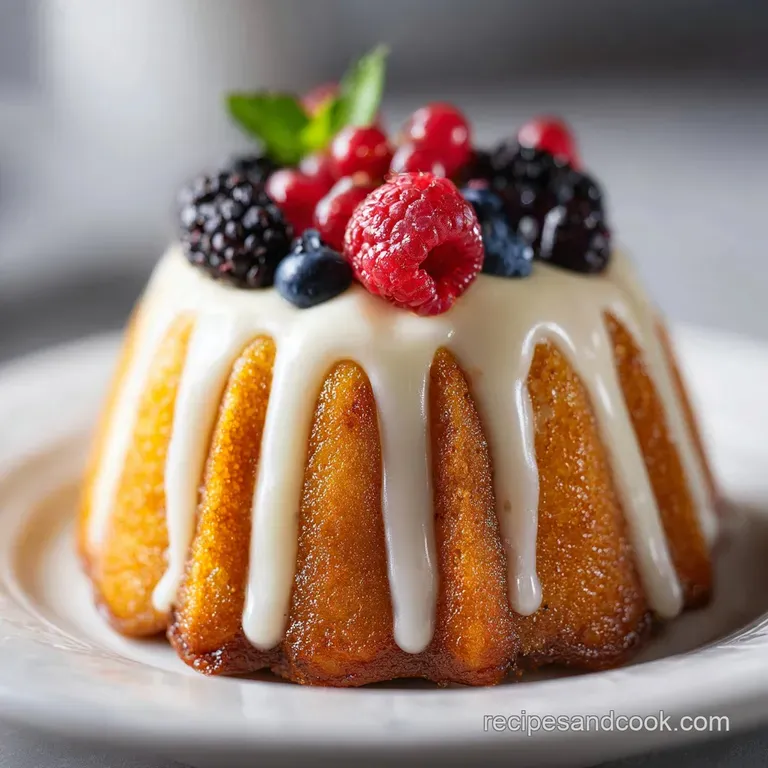
To begin, preheat your oven to 350°F (175°C). This temperature is the sweet spot for browning the exterior while giving the interior enough time to rise. Prepare your "pan goop" by mixing 1 tablespoon of melted butter with 1 tablespoon of flour.
Brush this generously into every nook and cranny of your 12 cavity mini bundt pan.
Phase One: Preparation
Whisk together your 250g flour, 10g baking powder, and 3g salt in a medium bowl. This ensures the leavening agent is evenly distributed, so you don't end up with one giant air bubble in one cake and a flat brick in another. In a separate large bowl, cream the 115g softened butter and 200g granulated sugar.
You are looking for a pale yellow color and a texture that looks like thick frosting. This usually takes about 3 minutes of high speed mixing.
Phase Two: Mixing
Beat in your room temperature eggs one at a time. This is a critical checkpoint if the batter looks "curdled," your eggs were likely too cold. Don't panic; just keep mixing, and it should smooth out as it warms. Stir in the 120ml sour cream, 5ml vanilla, and 1 tbsp lemon zest.
The aroma at this stage is usually what makes my family wander into the kitchen!
Phase Three: Folding
Take a small tablespoon of your flour mixture and toss it with the 150g blueberries. This "sanding" of the berries is the one step most people skip, but it is why professional cakes have berries evenly distributed throughout. Gradually fold the dry ingredients into the wet.
Stop the moment you see the last streak of flour disappear. Over mixing at this stage will develop gluten and turn your velvety cake into a tough, chewy muffin. Gently fold in the floured berries last.
Phase Four: Baking
Divide the batter evenly among the 12 cavities. I find that a cookie scoop or a piping bag makes this much cleaner. Bake for 25 minutes. You are looking for a golden brown top and a toothpick that comes out clean or with a few moist crumbs.
While they bake, whisk together your 60g softened cream cheese, 120g powdered sugar, 30ml milk, and 2ml vanilla. If the glaze is too thick, add milk one teaspoon at a time until it reaches a "slow pour" consistency.
Allow the cakes to rest in the pan for exactly 10 minutes. This is the hardest part waiting! Then, place a wire rack over the top of the pan and flip the whole thing over.
The cakes should slide out with a satisfying "thump." Cool them completely for at least 30 minutes before drizzling with the cream cheese glaze. If the cakes are still warm, the glaze will simply melt and run off, leaving you with a soggy mess instead of beautiful white ribbons.
Solving Structural Issues and Common Baking Errors
Even with the best instructions, baking can be fickle. The most common issue I hear about is the "Stuck Bundt." Usually, this is because the pan wasn't greased thoroughly or the cake sat in the pan until it was completely cold.
If your cake is stuck, try placing the bottom of the pan on a hot, damp towel for a few minutes. The steam can sometimes help loosen the sugar "glue" that is holding the cake hostage.
Why Your Cakes Collapsed
If your mini cakes rose beautifully in the oven but shriveled up as they cooled, you likely have a "structural integrity" issue. This happens if the baking powder was expired or if you over creamed the butter and sugar, incorporating too much air that the flour couldn't support.
Another culprit is opening the oven door too early. That rush of cold air can shock the delicate bubbles before they have a chance to set.
| Problem | Root Cause | Solution |
|---|---|---|
| Berries at the bottom | No flour coating | Toss berries in flour before adding to batter |
| Gummy texture | Underbaked | Use a thermometer to check for 205°F internal temp |
| Glaze is watery | Too much milk | Add more powdered sugar one tablespoon at a time |
Why the Glaze Disappeared
If you drizzle the glaze and it seems to vanish into the cake, your cake was definitely too warm. The heat from the cake breaks the emulsion in the cream cheese, causing it to turn back into a liquid. Always wait until the cake is cool to the touch.
If you're in a hurry, you can pop the cooled cakes into the fridge for 10 minutes to "set" the surface before glazing.
- ✓ Always use room temperature dairy and eggs to ensure a smooth emulsion.
- ✓ Never skip the 10 minute rest period before flipping the cakes.
- ✓ Sift your powdered sugar for the glaze to avoid "white dots" in your drizzle.
- ✓ Pat your fresh berries completely dry after washing to prevent excess moisture.
- ✓ Check your oven temperature with an external thermometer to ensure accuracy.
Smart Swaps and Flavor Profile Adjustments
While this Mini Berry Bundt Cake with Cream is a classic, there are plenty of ways to make it your own. If you aren't a fan of blueberries, blackberries or even finely diced strawberries work wonderfully.
Just remember that strawberries release more water, so you might need to add an extra 2 minutes to the bake time. For a deeper flavor, you could try using browned butter instead of just softened butter, though you would need to chill the browned butter back to a solid state before creaming it with the sugar.
If you are looking for a chocolate variation, you can check out this Chocolate Raspberry Cupcake recipe for inspiration on how to balance fruit with cocoa. The principles are very similar moisture management and careful folding.
| Method | Time | Texture | Best For |
|---|---|---|---|
| Standard Oven | 25 minutes | Crispy exterior, soft crumb | Traditional results |
| Stovetop Steam | 35 minutes | Ultra moist, pale, dense | No oven baking |
| Air Fryer | 18 minutes | Very crusty, slightly drier | Small batches |
Steaming the cakes on the stovetop (like a pudding) results in a much more dense and moist texture, but you lose that beautiful golden brown crust. It is a great option if your oven is broken or if you prefer a "molten" feel to your cakes. However, for that classic Bundt snap, the oven is the undisputed king.
Preservation and Reviving Your Leftover Cakes
Storing these little beauties is straightforward, but the glaze changes the rules. Because the glaze contains cream cheese and milk, these cakes shouldn't sit out on the counter for more than a few hours. If you've already glazed them, keep them in an airtight container in the fridge.
They will stay fresh and moist for up to 4 days. The cold actually makes the crumb a bit firmer, which some people prefer!
Freezing for Later
These cakes freeze exceptionally well but only if they are unglazed. Wrap the naked cakes individually in plastic wrap and then place them in a freezer bag. They will last for up to 3 months. When you're ready to eat, let them thaw at room temperature for about an hour, then whip up a fresh batch of glaze.
This prevents the glaze from getting "sweaty" or losing its texture during the thawing process.
Zero Waste Tips
If you have leftover lemon peels, don't toss them! You can simmer them with equal parts sugar and water to make a quick lemon simple syrup. Drizzle this over the cakes before glazing for an extra punch of citrus. If you have leftover glaze, it makes a fantastic dip for fresh fruit or can be spread onto a morning bagel.
Nothing goes to waste in a smart kitchen.
Three Professional Plating Levels for Every Occasion
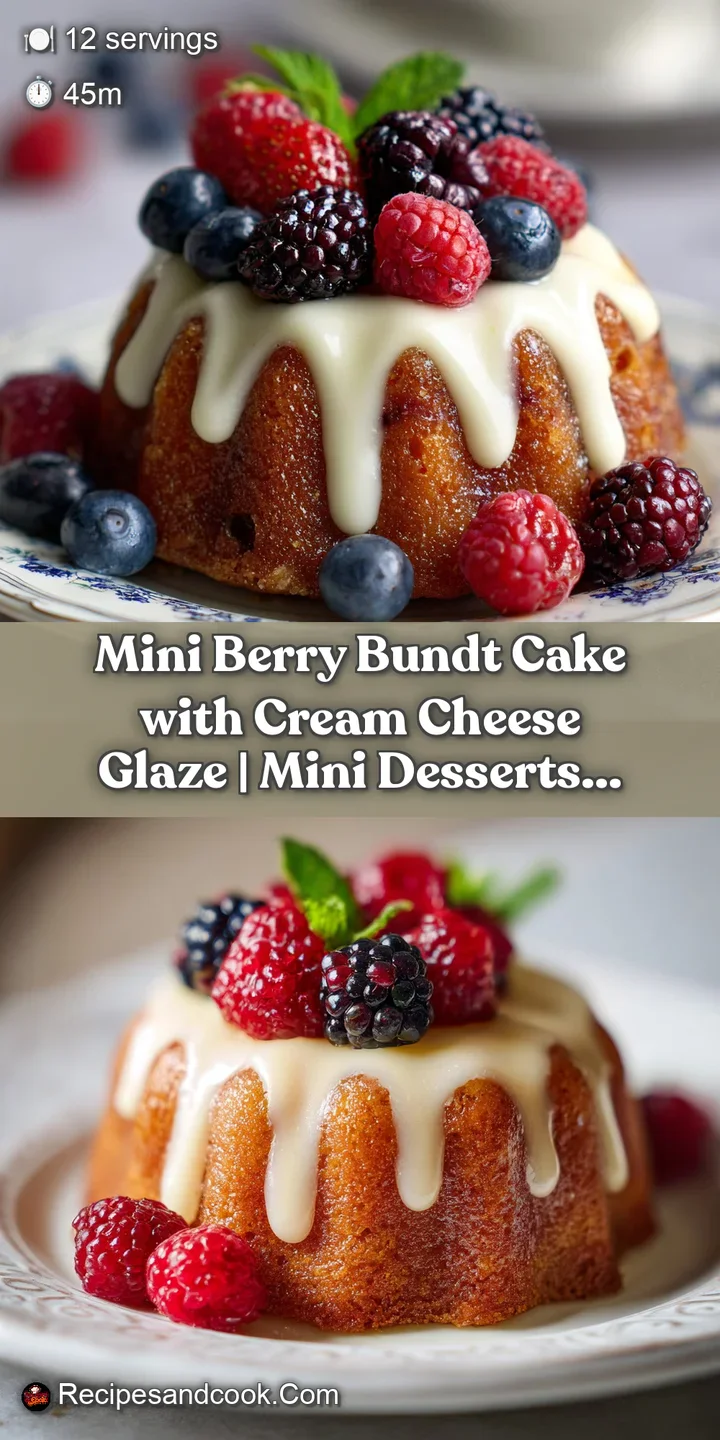
Presentation is where you can really show off. Depending on the event, you might want a simple "home style" look or a "restaurant quality" display. The Mini Berry Bundt Cake with Cream is naturally beautiful because of its shape, but a few small tweaks can change the entire vibe of the dessert.
| Plating Level | Main Element | Garnish | Best For |
|---|---|---|---|
| Simple | Single drizzle | Dusting of sugar | Casual afternoon tea |
| Polished | Double cross drizzle | 3 fresh berries on top | Dinner party dessert |
| Restaurant | Glaze pool on plate | Mint leaf & lemon curl | Special celebrations |
For the "Restaurant" level, try placing a large spoonful of the glaze in the center of the plate first. Use the back of the spoon to "swoosh" it across the porcelain, then set the cake on top of the swoosh. Top the cake with a single, perfect blueberry and a tiny sprig of fresh mint.
This adds height and color contrast that makes the dish look like it cost twenty dollars at a high end bistro.
The "Polished" level is all about the drizzle. Instead of just dumping the glaze on top, put it in a small piping bag (or a sandwich bag with the corner snipped off). Pipe thin, even lines back and forth across the cake.
This creates a more intentional, geometric look that highlights the ridges of the Bundt shape without hiding them under a blanket of white frosting. Whatever level you choose, the taste of the with Cream Cheese Glaze will be the star of the show.
Common Misconceptions in Baking
A big myth is that "more baking powder equals a fluffier cake." In reality, too much leavening causes the cake to rise too fast and then collapse, resulting in a dense, rubbery mess. Stick to the 10g measured. Another myth is that you must use "cake flour" for a soft result.
While cake flour is nice, all purpose flour combined with the acidity of sour cream provides plenty of tenderness while offering better support for the heavy berries.
Finally, many believe that you should "grease and flour" with cold butter. Cold butter clumps. Melted butter mixed with flour into a paste (the "goop" method) creates a much thinner, more even coating that won't leave white floury patches on your beautiful brown cake.
It is a small change that makes a massive difference in the final look of your with Cream. Trust the process, watch your timers, and you will have a bakery worthy treat on your table in no time.
Recipe FAQs
How to drizzle glaze on Bundt cake?
Whisk your glaze until it reaches a pourable, honey like consistency. Once the cakes have cooled completely for 30 minutes, use a small spoon to drizzle back and forth across the top of each mini bundt to create an even, elegant finish.
Is it true that a specific celebrity popularized this exact Bundt cake?
No, this is a common misconception. There is no evidence linking this specific mini berry recipe to Oprah; it is a classic scratch made dessert focused on the interaction between high fat sour cream and fresh fruit.
What is the 1234 cake rule?
The 1234 rule refers to a classic pound cake ratio of 1 cup butter, 2 cups sugar, 3 cups flour, and 4 eggs. While this recipe uses different proportions to maintain a lighter, delicate texture for mini cakes, if you enjoyed mastering the precise balancing technique required for delicate batters, you will find similar principles applied in our no-bake fruit desserts.
Do bundt cakes with cream cheese frosting need to be refrigerated?
Yes, keep them chilled. Because the glaze contains cream cheese and milk, any leftover cakes should be stored in the refrigerator to ensure food safety and maintain the texture of the frosting.
Why did my berries sink to the bottom of the cake?
You likely skipped the flour tossing step. Coating your fresh blueberries in a small amount of the flour mixture creates a rough surface that allows the batter to grip the fruit and hold it in suspension during the 25-minute bake.
How to ensure the cakes release cleanly from the pan?
Create a DIY pan release by mixing 1 tablespoon of melted butter with 1 tablespoon of flour. Use a pastry brush to coat every single ridge of the 12-cavity pan before adding your batter to ensure the cakes slide out perfectly after their 10-minute rest.
Is it possible to use frozen berries instead of fresh?
No, stick with fresh berries. Frozen fruit releases excess moisture and will bleed color into your batter, potentially resulting in a gummy texture that won't hold the shape of your mini bundts.
Mini Berry Bundt Cakes

Ingredients:
Instructions:
Nutrition Facts:
| Calories | 319 kcal |
|---|---|
| Protein | 3.9 g |
| Fat | 13.2 g |
| Carbs | 46.4 g |
| Fiber | 0.9 g |
| Sugar | 28.2 g |
| Sodium | 208 mg |
