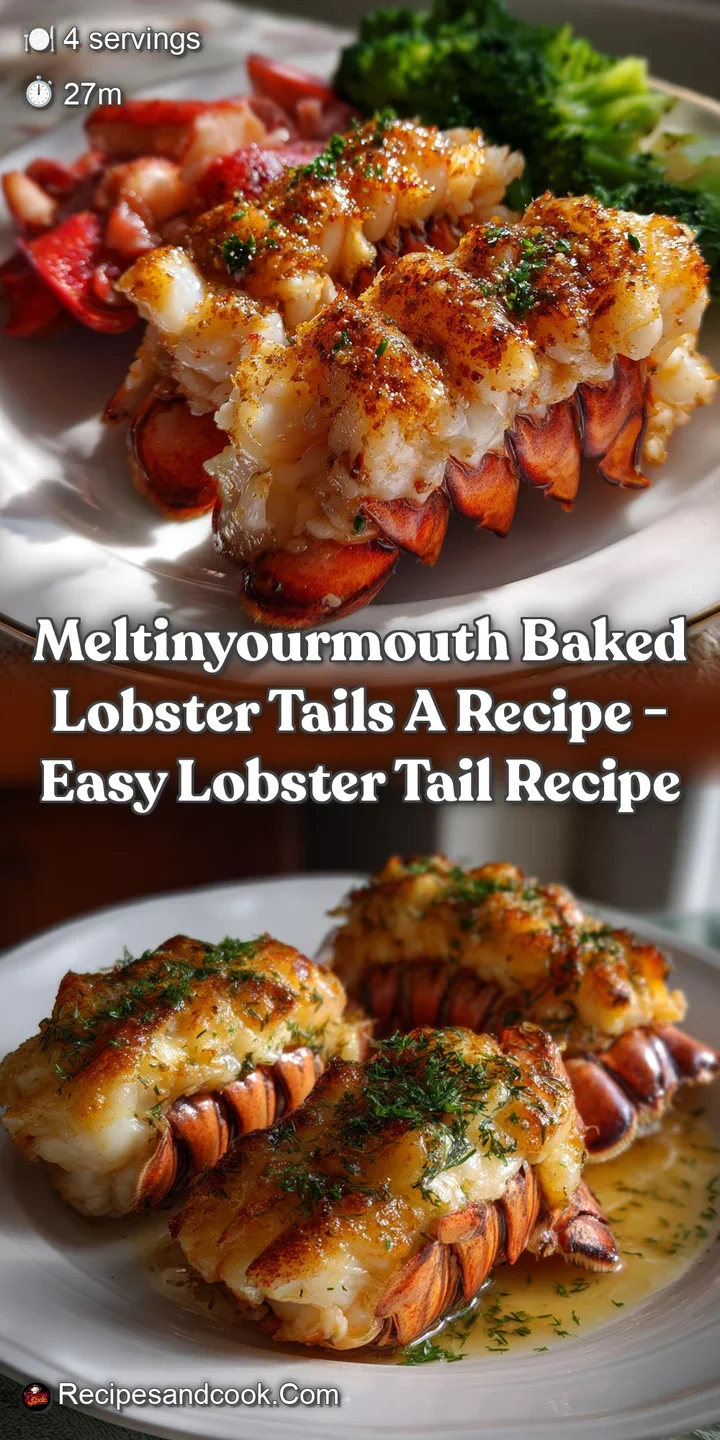
Meltinyourmouth Baked Lobster Tails a Recipe | Velvety & Tender
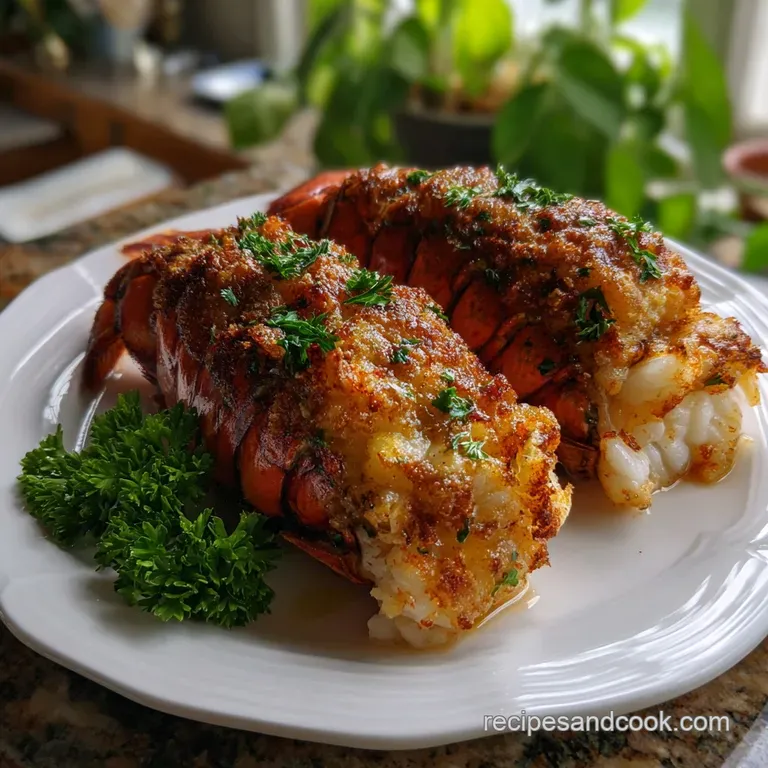
- Effort/Time: Low-effort, 27 minute total turnaround.
- Flavor Hook: Smoked-paprika-infused garlic lipids meet sweet, saline Atlantic lobster.
- Perfect for: High-stakes-date-nights or celebratory-dinner-parties.
- The Scientific Logic Behind MeltinYourMouth Baked Lobster Tails A Recipe
- The Physical Mechanisms: Why This Recipe Works
- Precision Metrics for MeltinYourMouth Baked Lobster Tails A Recipe
- The Alchemy of Marine Elements: Ingredient Chemistry Breakdown
- Essential Tools for High-Performance Broiling
- The Butterfly Protocol: Executing the MeltinYourMouth Baked Lobster Tails A Recipe
- Correcting Texture Anomalies and Structural Failures
- Flavor Architecture and Ingredient Adaptations
- ⚗️ The Scaling Lab: The Physics of Quantity
- Common Myths Debunked
- Preservation Methods and Thermal Recovery
- Contextual Pairings for a Balanced Experience
- Recipe FAQs
- 📝 Recipe Card
The Scientific Logic Behind MeltinYourMouth Baked Lobster Tails A Recipe
There is nothing more gut-wrenching than spending $80 on four cold water tails only to have them emerge from the oven as rubbery, shrunken knots of overcooked protein. I’ve been there pulling a tray of "expensive erasers" out of the oven, realizing I’d completely ignored the thermodynamics of crustacean muscle fibers.
That technical failure isn't just a loss of money; it's a sensory disappointment that lingers long after the meal is over.
Early in my cooking journey, I treated lobster like steak, blasting it with high heat until I thought it looked "done." I ended up with meat so fused to the shell it required surgical precision to extract, and a texture that fought back with every chew.
I had to learn the hard way that lobster is more akin to an egg than a brisket; it requires a gentle hand and a deep understanding of protein denaturation to maintain that signature MeltinYourMouth Baked Lobster Tails A Recipe quality.
The secret isn't a "magic" temperature but rather the butterfly technique which allows for even heat distribution while the shell acts as a heat sink. We are utilizing fat-soluble flavor infusion suspending minced garlic and smoked paprika in a lipid base (melted butter) to coat the protein.
This creates a moisture barrier that prevents evaporation, resulting in a velvety texture and a mahogany colored finish that provides a satisfying snap before melting away.
The Physical Mechanisms: Why This Recipe Works
- Thermal Buffering: The calcium carbonate shell reflects direct radiant heat, allowing the lobster meat to steam from the bottom while the top undergoes the Maillard reaction.
- Lipid Insulation: Coating the meat in 115g of melted butter creates a hydrophobic barrier, trapping internal cellular moisture during the 12 minute bake.
- Protein Denaturation Control: By stopping at exactly 140°F (60°C), we prevent the actin and myosin filaments from tightening into a "rubbery" matrix.
- Osmotic Balance: Seasoning with Diamond Crystal Kosher Salt just before baking ensures the salt dissolves into the surface moisture without drawing out internal juices prematurely.
Precision Metrics for MeltinYourMouth Baked Lobster Tails A Recipe
This technical protocol is designed for 4 servings, calibrated for standard home kitchen environments. Precision in timing is non-negotiable to achieve the desired MeltinYourMouth Baked Lobster Tails A Recipe results.
| Metric | Specification |
|---|---|
| Prep Time | 15 minutes |
| Cook Time | 12 minutes |
| Total Time | 27 minutes |
| Yield | 4 servings (1 tail per person) |
| Ideal Internal Temp | 140°F (60°C) |
The Alchemy of Marine Elements: Ingredient Chemistry Breakdown
Selecting the right components for your MeltinYourMouth Baked Lobster Tails A Recipe is 80% of the battle. We focus on high fat lipids and specific acids to balance the natural sweetness of the cold water tails.
| Ingredient | Chemical/Physical Role (Science) | The Pro Secret (Why This Matters) |
|---|---|---|
| 4 Cold Water Lobster Tails | Provides the primary protein structure (Actin/Myosin) | Cold water tails (like Maine) grow slower, yielding firmer, sweeter meat than warm water varieties. |
| 115g Kerrygold Unsalted Butter | Acts as the primary heat transfer medium and flavor carrier | High butterfat content ensures a richer mouthfeel and more stable emulsion with lemon juice. |
| 3 Garlic Cloves (Minced) | Contains Allium compounds that undergo enzymatic transformation | Mincing increases surface area, releasing more allicin for a sharper, savory contrast. |
| 1 tsp Smoked Paprika | Introduces oil-soluble carotenoids for color and phenols for smoke | Provides a visual "mahogany" cue and adds depth without the need for a charcoal grill. |
- 1 tbsp Olive Oil
- Why this? Higher smoke point than butter; prevents the butter from browning too quickly during the initial heat blast.
- 0.5 tsp Sea Salt
- Why this? Large flakes provide a textural "pop" and controlled salinity levels.
- 1 tbsp Fresh Lemon Juice
- Why this? Citric acid cleaves protein bonds, brightening the flavor and cutting through the heavy lipids.
- 1 tbsp Fresh Parsley
- Finely chopped for a hit of chlorophyll to refresh the palate between bites of rich lobster meat.
Essential Tools for High Performance Broiling
Using the right tools ensures that your Melt-in-Your Mouth Baked Lobster Tails: A Recipe You'll Love remains consistent every time.
- OXO Good Grips Kitchen Shears: Critical for cutting through the calcified chitin without shattering the shell or bruising the delicate meat.
- Nordic Ware Aluminum Half Sheet Pan: Offers superior heat conductivity, ensuring the bottom of the tails cook at the same rate as the tops.
- KitchenAid Digital Instant Read Thermometer: The only way to guarantee you don't overshoot the 140°F (60°C) mark.
- Lodge Cast Iron Melting Pot: Perfect for keeping your garlic butter warm and emulsified while you prep the seafood.
The Butterfly Protocol: Executing the MeltinYourMouth Baked Lobster Tails A Recipe
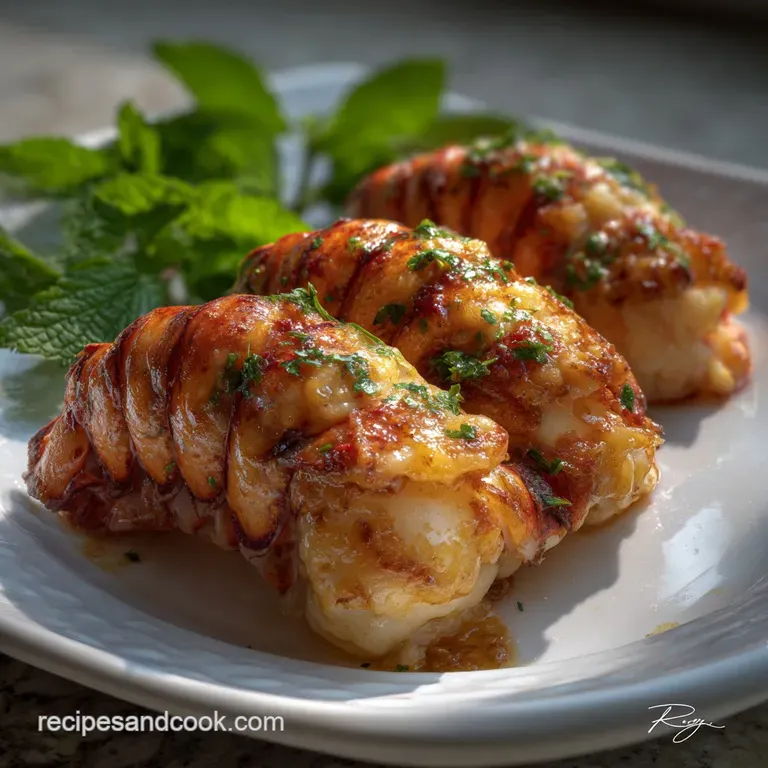
Follow these atomic steps exactly. Each movement is designed to maximize surface area and flavor penetration for these Lobster Tails: A Recipe You'll Love.
- Preheat oven to 425°F (218°C) to ensure immediate thermal impact upon entry.
- Cut the top of the shell lengthwise using kitchen shears, stopping just before the tail fin.
- Separate the meat from the shell by gently sliding your thumb between the two, keeping the meat attached at the base.
- Lift the lobster meat through the slit and rest it on top of the shell (the "butterfly" position).
- Brush the meat with 1 tbsp olive oil until the surface is glistening and fully coated.
- Season with 0.5 tsp sea salt and 0.25 tsp cracked black pepper.
- Whisk 115g melted butter, minced garlic, 1 tsp smoked paprika, lemon juice, and zest in a small bowl until the mixture is a uniform crimson color.
- Drizzle the garlic butter over the elevated meat, ensuring it pools slightly in the crevices.
- Bake for 12 minutes until the meat is opaque, white, and the butter is bubbling vigorously.
- Rest for 2 minutes until the internal carryover heat finishes the core and the juices redistribute.
Correcting Texture Anomalies and Structural Failures
Even with a solid plan, variables like oven calibration can affect your Baked Lobster Tails: A Recipe You'll Love. Here is how to navigate common pitfalls.
Why Your Lobster is Rubbery
This is almost always a result of protein over denaturation. When the internal temperature exceeds 150°F, the muscle fibers contract so tightly they squeeze out all cellular moisture.
It's similar to the science of overcooking an egg; once the structure collapses, it becomes tough and dry.
| Problem | Root Cause | The Fix | Pro Protocol |
|---|---|---|---|
| Rubbery Texture | Internal temp exceeded 145°F | Pull at 138°F-140°F | Use a digital probe; carryover will add 3 5 degrees. |
| Meat Sticking to Shell | Under lubrication or cold tails | Oil the shell meat interface | Ensure tails are at room temp for 15 mins before prep. |
| Bland Flavor | Poor butter-to-garlic ratio | Increase aromatics | Infuse garlic in warm butter for 5 mins before basting. |
Why Your Lobster Meat is Mushy
If your Melt-in-Your Mouth Baked Lobster Tails: A Recipe You'll Love have a texture like mashed potatoes, you likely have "soft shell" tails or tails that were thawed and refrozen. This breaks down the cellular walls via ice crystal formation. Always source "hard shell" cold water tails for the best snap. This is a common issue when people try to rush the process, much like trying to bake Sugar Cookie Cutout Recipe without chilling the dough first the structural integrity just isn't there.
Flavor Architecture and Ingredient Adaptations
While the core MeltinYourMouth Baked Lobster Tails A Recipe is a classic, you can adjust the profile based on your pantry.
| Original Ingredient | Substitute | Why It Works |
|---|---|---|
| Unsalted Butter | Ghee (Clarified Butter) | Higher smoke point and richer, nuttier flavor profile. |
| Smoked Paprika | Old Bay Seasoning | Adds celery salt and mustard notes; more traditional "East Coast" vibe. |
| Fresh Parsley | Fresh Chives | Adds a subtle onion like sharpness that complements the garlic. |
| Lemon Juice | Dry White Wine | Provides acidity but with more complex fermentation esters. |
The Spicy Cajun Twist: Replace the paprika and parsley with 1 tbsp of Cajun seasoning. This increases the capsaicin levels, which triggers a sensory "heat" that pairs beautifully with the cooling fats of the butter. If you enjoy this flavor profile, you might find it reminds you of the bold spices used in a well made Rusty Nail Cocktail recipe.
⚗️ The Scaling Lab: The Physics of Quantity
When doubling this A Recipe You'll Love for a dinner party, the thermodynamics shift.
- The Evaporation Paradox: If you double the butter sauce in a small pot, it won't reduce as fast. Keep your sauce volume in check you only need enough to coat, not to drown.
- Pan Crowding: Do not let the tails touch on the baking sheet. Air must circulate 360 degrees around the shell to ensure the "steam from-below" effect works. If they are crowded, they will steam each other, leading to a gray, unappealing finish.
- Thermal Mass: Eight tails in one oven will drop the ambient temperature more than four. Increase your preheat time by 10 minutes to ensure the oven walls are fully saturated with heat energy.
- Carry Over Cooking: A larger tray of hot lobster tails holds more residual heat. Pull the tray out 2 minutes earlier than you would for a single serving to prevent the center tails from overcooking while sitting on the counter.
Common Myths Debunked
Myth: You must boil lobster before baking it. Truth: Boiling leaches out the natural sugars and saline juices into the water. Baking in the shell, as we do in this Lobster Tails: A Recipe You'll Love, concentrates the flavor through evaporation.
Myth: Frozen lobster is always inferior. Truth: "Flash frozen at sea" tails are often fresher than "fresh" tails that have sat in a display case for 3 days. The key is the thawing process do it slowly in the fridge to prevent tissue damage.
Preservation Methods and Thermal Recovery
Lobster is best consumed immediately, but if you have leftovers of this MeltinYourMouth Baked Lobster Tails A Recipe, follow these strict protocols.
- Storage: Place in an airtight glass container for up to 2 days.
- Reheating: Avoid the microwave at all costs it turns lobster into rubber in seconds. Instead, place tails in a foil pouch with a teaspoon of water and bake at 300°F until just warm (about 8 10 mins).
- Freezing: Not recommended for cooked lobster as the texture becomes spongy upon thawing.
💡 ZERO WASTE PHILOSOPHY: Don't discard those shells! Transform: Simmer the empty shells in water with onion scraps and peppercorns for 1 hour to create a lobster stock. Science: The shells are rich in chitin and residual protein that create a deep, umami rich base for bisques or risotto. It's the same principle as using fruit scraps for a Rhubarb Sauce Recipe — never let flavor go to waste.
Contextual Pairings for a Balanced Experience
To round out the MeltinYourMouth Baked Lobster Tails A Recipe, you need sides that offer contrast.
- Acid/Texture: A bright citrus salad with fennel provides a "shattering" crunch and acidity to cut the butter.
- Starch: Garlic mashed potatoes or a light saffron risotto will soak up the excess garlic butter from the tray.
- Vegetable: Blanched asparagus with a squeeze of lemon mirrors the aromatics in the lobster.
The goal of this MeltinYourMouth Baked Lobster Tails A Recipe is to treat the ingredient with the technical respect it deserves. By understanding the science of the butterfly cut and the insulation of the shell, you'll never have to worry about a "rubbery" dinner again. Let's crack on and get those tails in the oven!
Recipe FAQs
What is the ideal internal temperature for perfectly cooked lobster meat?
140°F (60°C). Pulling the meat at this point ensures the myosin filaments remain hydrated before carryover heat completes the process. Exceeding 150°F causes irreversible contraction and toughness.
Can I use salted butter instead of unsalted butter in this recipe?
Why does my lobster meat stick to the shell after baking?
- Ensure meat is completely lifted through the slit
- Apply oil directly between shell and meat
- Do not use rock hard, frozen tails without proper thawing
Is it necessary to "butterfly" the shell for this method?
Myth: You must use fresh, never frozen lobster tails for the best result.
Can I substitute the lemon juice with vinegar for brightness?
How long should I preheat the oven for this recipe?
Meltinyourmouth Lobster Tails Recipe
Ingredients:
Instructions:
Nutrition Facts:
| Calories | 344 kcal |
|---|---|
| Protein | 21.5 g |
| Fat | 27.1 g |
| Carbs | 1.4 g |
| Fiber | 0.2 g |
| Sugar | 0.1 g |
| Sodium | 585 mg |
