Kimchi and Dumpling Noodle Soup: Umami-Dense & Quick

- Effort/Time: Low-effort, 25 minute total execution.
- Flavor Hook: Effervescent spice meets velvety, starch-thickened broth.
- Perfect for: Rapid weeknight recovery or cold-weather soul-soothing.
- Mastering the Ultimate Kimchi and Dumpling Noodle Soup
- Unlocking Flavor Synergy: The Science of Why it Works
- Technical Specifications for Your Dumpling Noodle Soup Assembly
- The Alchemy of Umami: Selecting Your Elements
- Essential Culinary Tools for Precise Noodle Soup Execution
- The 20 Minute Assembly Protocol: Step-by-Step Culinary Mechanics
- Why Your Noodle Soup Breaks: Pro-Level Troubleshooting
- Flavor Architecture: Creative Variations and Substitution Strategies
- ⚗️ The Scaling Lab: The Physics of Quantity
- Common Myths
- Storage & Reheating: Preserving the Texture
- Final Plating Aesthetics and Flavor Balance Techniques
- Recipe FAQs
- 📝 Recipe Card
There is nothing more frustrating than spending $20 on high-quality ingredients only to have them dissolve into a textural nightmare. I’ve sat over bowls of what should have been a vibrant Kimchi and Dumpling Noodle Soup, only to find the dumplings had "blown out," their skins slippery and disintegrated, turning the broth into a grainy, unappetizing sludge.
It is a waste of money, time, and appetite when the chemistry of the pot fails the ingredients.
I’ll admit, I destroyed at least five batches of this soup before I stopped treating it like a standard boil and dump meal. In my early days, I ignored the importance of the Maillard reaction, thinking the kimchi would provide enough flavor on its own without a proper sauté.
The result was always a flat, one-dimensional acidity that lacked the deep, mahogany colored soul that defines a truly great Noodle Soup.
The breakthrough came when I looked at the physics of the broth. By sautéing the aromatics and the kimchi first, we trigger a specific "Sourdough like" transformation of the sugars.
This Kimchi and Dumpling Noodle Soup works because of starch gelatinization the noodles release just enough starch to create a velvety mouthfeel without making the soup heavy.
The secret isn't more salt; it's the lactic acid from the kimchi juice acting as a natural flavor catalyst that makes every spoonful vibrate with energy.
Mastering the Ultimate Kimchi and Dumpling Noodle Soup
This Kimchi and Dumpling Noodle Soup is a study in efficient flavor extraction. In under 30 minutes, you are building a profile that usually takes hours of simmering.
We achieve this through "flash aged" techniques using fermented kimchi juice to simulate a long cooked bone broth. This Noodle Soup provides a massive nutritional punch of 23.1g of protein per serving, making it a functional, high performance meal that doesn't sacrifice sensory depth.
Unlocking Flavor Synergy: The Science of Why it Works
- Lactic Acid Catalysis: The aged kimchi juice acts as a natural surfactant, breaking down the surface tension of the broth to better carry fat-soluble spice molecules to your palate.
- Starch Suspension: Cooking 300 g fresh Udon or Ramen noodles directly in the broth creates a light emulsion, giving the liquid a "lip-sticking" quality usually reserved for collagen heavy stocks.
- Aromatic Volatilization: Sautéing minced garlic and fresh ginger in neutral oil releases essential oils that are otherwise trapped in the plant cell walls, ensuring a nutty aroma that permeates the entire dish.
- Osmotic Balance: The 1 tbsp soy sauce and 1 tsp sugar work in tandem to balance the high acidity of the kimchi, preventing "palate fatigue" from excessive sourness.
Technical Specifications for Your Dumpling Noodle Soup Assembly
| Metric | Value |
|---|---|
| Yield | 2 servings |
| Prep Time | 10 minutes |
| Cook Time | 15 minutes |
| Total Time | 25 minutes |
| Caloric Density | 638 calories |
| Protein Load | 23.1g |
| Carbohydrate Profile | 91.5g |
| Fat Content | 19.8g |
The Alchemy of Umami: Selecting Your Elements
Selecting the right components for your Kimchi and Dumpling Noodle Soup is the difference between a mediocre bowl and a masterclass.
Ingredient Chemistry Breakdown
| Ingredient | Chemical/Physical Role (Science) | The Pro Secret (Why This Matters) |
|---|---|---|
| Aged Napa Kimchi | Provides lactic acid and complex lacto fermentation esters | Older kimchi is more acidic, which cuts through the starch of the dumplings. |
| Gochujang | High viscosity fermented chili paste for body | Acts as an emulsifier to bind the oil and broth together. |
| Fresh Udon/Ramen | Starch gelatinization for broth thickening | Fresh noodles release surface starch immediately, creating a "shimmering" broth texture. |
| Low-Sodium Broth | Liquid base for thermal conduction | Allows you to control the final salinity without overshooting the 23.1g protein balance. |
- 1 tbsp Grapeseed oil: High smoke point allows for a hard sear on the kimchi. Why this? Neutral fats prevent flavor competition with the fermented aromatics.
- 2 cloves garlic, minced: Releases allicin for pungency.
- 1 tsp fresh ginger, grated: Provides gingerol for a sharp, clean finish.
- 1 cup aged Napa cabbage kimchi, chopped: The primary flavor driver.
- 2 tbsp kimchi juice: Concentrated acidic "liquid gold."
- 1 tbsp gochujang: Use Chung Jung One Gochujang for consistent heat levels.
- 4 cups low-sodium chicken or vegetable broth: The thermal mass for cooking.
- 1 tbsp soy sauce: Adds non-fermented salinity. Why this? Soy sauce contains glutamates that amplify the kimchi’s natural umami.
- 1 tsp sugar: Balances pH.
- 10 kimchi dumplings (pork or vegetarian): The protein rich core.
- 300 g fresh Udon or Ramen noodles: The textural foundation.
- 1 cup fresh baby bok choy: Provides chlorophyll and crunch.
- 1 tsp toasted sesame oil: A volatile aromatic added at the end.
- 1 tsp toasted sesame seeds: For tactile contrast.
If you enjoy the one-pot efficiency of this dish, you might also like the bold flavors found in my Pastalaya Recipe.
Essential Culinary Tools for Precise Noodle Soup Execution
To make a world class Kimchi and Dumpling Noodle Soup, you need tools that manage heat distribution effectively.
- Lodge 6 Quart Enameled Cast Iron Dutch Oven: The heavy bottom prevents the gochujang from scorching and maintains a steady simmer.
- Microplane Zester: Essential for grating the fresh ginger into a fine paste, ensuring even distribution of its spicy oils.
- Global G-2 8 inch Chef's Knife: For precise, fine chopping of scallions and kimchi to ensure even surface area for sautéing.
- Spider Skimmer: Crucial for retrieving dumplings if they reach doneness before the noodles.
The 20 Minute Assembly Protocol: step-by-step Culinary Mechanics
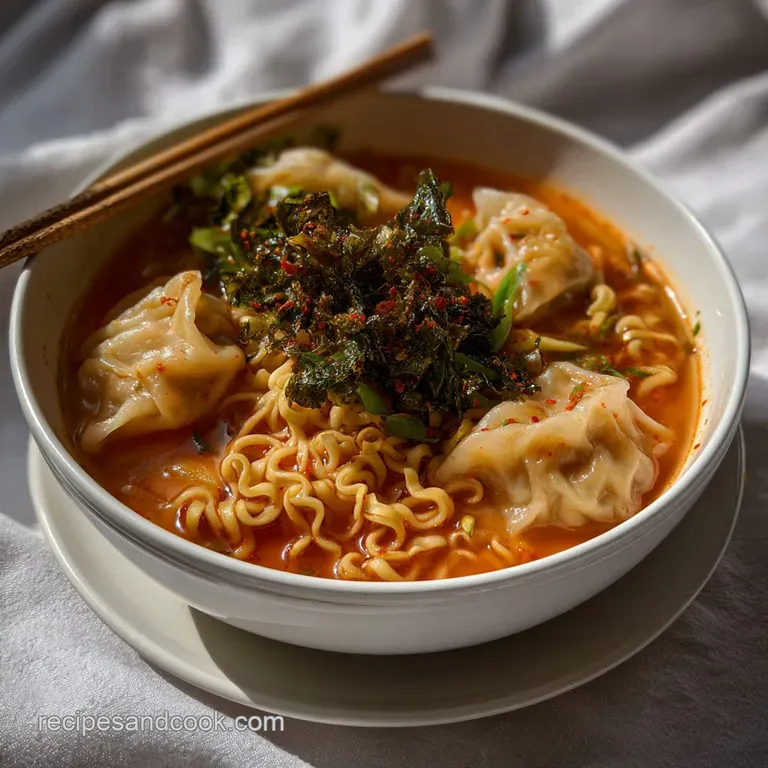
- Heat 1 tbsp neutral oil in a Lodge Dutch Oven over medium high heat until the oil shimmers and a faint wisp of smoke appears. Note: This ensures the aromatics hit a high energy environment immediately.
- Sauté garlic, ginger, and scallion whites for 1 minute until a pungent, nutty aroma fills the kitchen.
- Add 1 cup chopped kimchi and 1 tbsp gochujang. Cook for 3 minutes until the kimchi edges turn translucent and the gochujang darkens to a deep brick red. Note: This is the Maillard reaction deepening the sugars.
- Pour in 4 cups broth, 2 tbsp kimchi juice, 1 tbsp soy sauce, and 1 tsp sugar. Bring to a boil until large, vigorous bubbles break the surface.
- Lower heat to a simmer. Slide 10 kimchi dumplings into the liquid carefully.
- Add 300 g fresh Udon or Ramen noodles. Simmer for 4 minutes until the dumplings float and the noodles are flexible but offer a slight "snap" to the teeth.
- Submerge 1 cup baby bok choy into the broth for 1 minute until the leaves turn vibrant emerald and the stems are crisp tender.
- Drizzle 1 tsp toasted sesame oil over the surface. Remove from heat immediately until the nutty scent is at its peak.
- Garnish with reserved scallion greens and 1 tsp toasted sesame seeds.
Why Your Noodle Soup Breaks: Pro-Level Troubleshooting
Why Your Dumplings Disintegrate
When dumplings are cooked at a rolling boil for too long, the kinetic energy of the water physically tears the delicate dough wrappers. This leads to a messy Kimchi and Dumpling Noodle Soup with no structural integrity.
| Problem | Root Cause | The Fix | Pro Protocol |
|---|---|---|---|
| Soggy Dumpling Skins | Over agitation and excessive cooking time. | Maintain a gentle simmer (approx. 195°F) rather than a hard boil. | Add dumplings when the broth is at a boil, then immediately drop to medium low. |
| Thin, Watery Broth | Insufficient starch release or low kimchi concentration. | Mash one dumpling into the broth to release its filling and starch. | Use fresh noodles instead of dried for maximum surface starch gelatinization. |
| Overpowering Sourness | Kimchi was too fermented (high acidity). | Add 0.5 tsp sugar or a splash of mirin to neutralize pH. | Balance acidity with a small fat addition like extra sesame oil or butter. |
For a sharp, acidic contrast to this rich meal, consider pairing it with a Kamikaze Cocktail Recipe as an aperitif.
Flavor Architecture: Creative Variations and Substitution Strategies
| Original Ingredient | Substitute | Why It Works |
|---|---|---|
| Kimchi Dumplings | Frozen Mandu or Gyoza | Similar steam cook mechanics. Note: Lacks the internal kimchi spice kick. |
| Udon Noodles | Dried Rice Noodles | gluten-free alternative. Note: Less broth thickening; may feel lighter and thinner. |
| Gochujang | Sriracha + Brown Sugar | Mimics the heat/sweet balance. Note: Lacks the deep fermented "funk" of gochujang. |
| Baby Bok Choy | Napa Cabbage or Spinach | Similar rapid wilting point. Note: Spinach has zero crunch; add at the very last second. |
Kimchi Dumplings Healthy (Low-Carb Twist)
If you are looking for a lighter version of this Kimchi and Dumpling Noodle Soup, swap the 300g of Udon for shirataki noodles or "zoodles." This significantly drops the 91.5g of carbohydrates while maintaining the umami profile.
What is Kimchi Dumplings? (The Protein Swap)
Kimchi dumplings are traditionally filled with a mixture of ground pork, tofu, and finely chopped kimchi. If you want to increase the protein beyond 23.1g, you can add sliced silken tofu directly into the broth during the final 2 minutes of simmering.
⚗️ The Scaling Lab: The Physics of Quantity
Scaling a Kimchi and Dumpling Noodle Soup is not a linear process. Doubling the ingredients doesn't always double the quality.
- The Evaporation Paradox: When doubling this recipe for 4 people, do not use 8 cups of broth. Use 7 cups. Because your pot surface area likely hasn't doubled, less liquid will evaporate during the 15 minute cook time. Starting with too much liquid will result in a diluted, watery Noodle Soup.
- Flavor Saturation (The 1.5x Rule): Scale the gochujang and kimchi juice to 1.5x, not 2x. Capsaicin and lactic acid accumulate non-linearly on the tongue. You can always add more at the end, but you can't remove the burn.
- Thermal Mass Recovery: When you drop 20 cold dumplings into a pot instead of 10, the broth temperature will plummet. This extends the cook time and risks the noodles becoming mushy. Fix: Bring the broth to a "hard boil" before adding a double batch of dumplings, then immediately return to a simmer once they are in.
- Pan Crowding: Ensure your pot is large enough that the dumplings aren't stacked. If they touch too much during the initial gelatinization phase, they will fuse together into a single mass of dough.
Common Myths
- Myth: You must use expensive, homemade broth for a good soup.
- Truth: Because the kimchi and gochujang are so dominant, a standard low-sodium carton broth works perfectly as a canvas for the more complex fermented flavors.
- Myth: Dumplings must be thawed before adding to the soup.
- Truth: Cooking dumplings from frozen actually helps them maintain their structure longer in the hot broth, as the center takes time to reach the 165°F safety mark while the skin sets.
Storage & Reheating: Preserving the Texture
- Storage: This Kimchi and Dumpling Noodle Soup is best served fresh. In the fridge, the noodles will continue to absorb liquid, turning into a thick porridge within 12 hours. If you must store it, separate the noodles/dumplings from the broth.
- Freezing: Do not freeze the assembled soup. You can, however, freeze the broth base (after sautéing) for up to 3 months.
- Reheating: Reheat the broth until boiling, then add fresh noodles and dumplings. Never microwave the assembled soup, as the dumplings will turn into rubbery pucks.
💡 ZERO WASTE PHILOSOPHY
Don't discard the Kimchi Brine. Transform: Use it as a marinade for fried chicken or a base for a spicy vinaigrette. Science: The live cultures and lactic acid act as a tenderizer, breaking down protein structures for a more succulent result.
Final Plating Aesthetics and Flavor Balance Techniques
When serving your Kimchi and Dumpling Noodle Soup, focus on the "thermal layering." Place the noodles at the bottom of a deep ceramic bowl, which acts as an insulator. Arrange the 5 dumplings on top, followed by the bok choy. Pour the scalding broth over the top to "re-awaken" the sesame oil aromatics.
The final touch the toasted sesame seeds provides a "shatter" of texture against the velvety udon. This Kimchi and Dumpling Noodle Soup is a food obsession for a reason; it hits every flavor node salty, sour, sweet, bitter, and umami in a single, 638 calorie bowl.
Enjoy this Dumpling Noodle Soup while it's steaming hot for the best sensory experience.

Recipe FAQs
What is kimchi dumplings?
Kimchi dumplings are pockets filled with ground meat or tofu mixed with finely chopped, aged kimchi. The kimchi provides significant spice and lactic acid, contrasting sharply with the richness of the filling. If you enjoy spicy fillings, learning to balance acid here is crucial; see how we apply this principle when balancing flavor in our Crack dip: The Unbeatable Creamy Bacon and Cheddar Party Recipe.
Can I use dried noodles instead of fresh Udon or Ramen?
Yes, but texture suffers significantly. Dried noodles release less surface starch during cooking, resulting in a broth that lacks the necessary velvety suspension. If you master controlling the liquid release and thickening here, you can apply that same skill to making smoother cheese sauces, like in the ChickfilA Mac and Cheese: The Ultra Creamy Copycat Baked Recipe.
Why is my broth too thin and lacking body?
The broth is thin because starch gelatinization was insufficient. Fresh noodles release starch directly into the liquid, creating a viscous, shimmering mouthfeel. You must ensure the broth maintains a steady simmer, not a violent boil, to allow this process to occur without tearing the noodle structure.
- Cook noodles directly in the soup base
- Use fresh noodles for maximum starch
- Ensure broth temperature is stable
Should I use Napa cabbage kimchi or radish kimchi (Kkakdugi)?
Napa cabbage kimchi is superior for this soup. Cabbage kimchi has higher moisture content and collapses beautifully during sautéing, integrating smoothly into the broth base. Radish kimchi retains more rigid structure, leading to chunky textural interruptions.
Myth: You must wash the kimchi before adding it to the soup.
Myth: Washing kimchi removes excess salt and flavor. Reality: Rinsing removes the vital lactic acid and fermented esters that build the umami depth required for a quality broth; only use kimchi juice if you need to dilute overall salinity.
What is the best way to add fat for flavor?
Use a neutral, high smoke point oil for the initial sauté. Grapeseed oil allows the aromatics and kimchi to toast properly without imparting competing flavors. Adding sesame oil at the very end captures its volatile, aromatic compounds just before serving.
Can I make this recipe completely vegetarian/vegan?
Yes, swap chicken broth for vegetable stock and use tofu dumplings. The key flavor driver is the aged kimchi, which remains vegan; the broth is merely the thermal carrier for the flavors. If substituting for richer flavors in a vegan application, look at techniques used in our Hummus without tahini: Silken Smooth and Easy Tahini Free Recipe to build deep base notes.
Kimchi Dumpling Noodle Soup

Ingredients:
Instructions:
Nutrition Facts:
| Calories | 638 calories |
|---|---|
| Protein | 23.1g |
| Fat | 19.8g |
| Carbs | 91.5g |
| Fiber | 6.2g |
| Sugar | 8.4g |
| Sodium | 2310mg |
