Thyme Chicken Thighs: Crispy Skin Finish
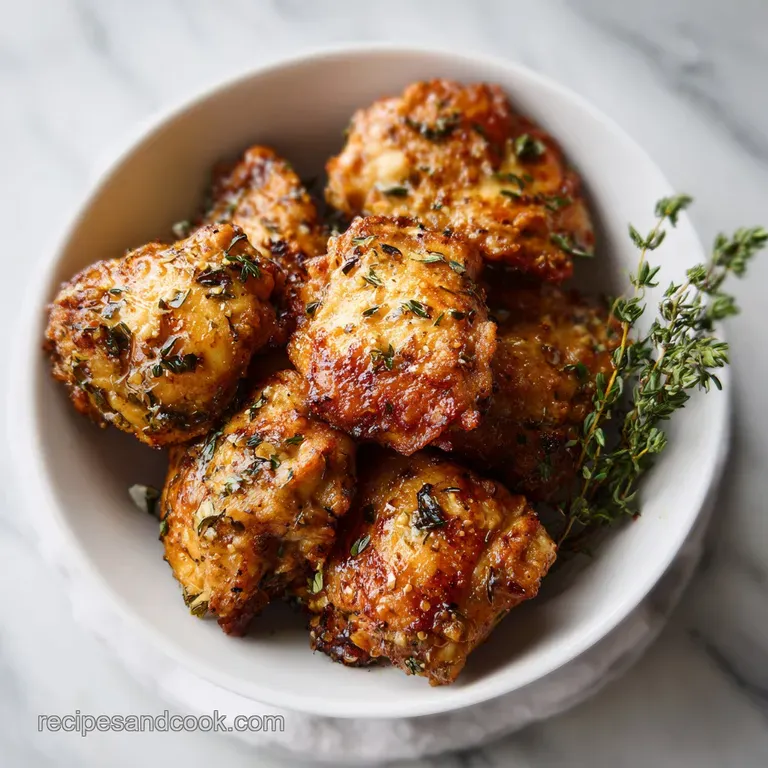
- Time: Active 15 minutes, Passive 25 minutes, Total 40 minutes
- Flavor/Texture Hook: Shattering crispy skin with a citrusy, herbaceous finish
- Perfect for: Stress free Sunday dinners or a reliable weeknight comfort meal
- Achieving the Perfect Sear on Thyme Chicken Thighs
- Why This Time Tested Method Always Delivers
- Essential Metrics for Your Best Chicken Ever
- Sourcing Your Ingredients for Maximum Flavor Impact
- Choosing the Right Tools for Seared Perfection
- Step-by-Step Guide to the Ideal Golden Sear
- Solutions for Common Roasted Chicken Challenges
- Flexible Substitutions for Your Pantry Staples
- Scaling the Recipe for Any Occasion
- Debunking Cooking Myths
- Keeping Your Leftovers Tender and Flavorful
- Thoughtful Pairings to Complete Your Meal
- Recipe FAQs
- 📝 Recipe Card
Achieving the Perfect Sear on Thyme Chicken Thighs
I still remember the first time I actually nailed a pan sear. I was standing in my tiny first apartment, clutching a heavy cast iron skillet I'd inherited from my aunt. The kitchen filled with the scent of woody herbs and rendered fat, and that rhythmic sizzle was the most beautiful sound I'd ever heard.
For years, I struggled with flabby, rubbery skin, but this specific method changed everything for me. It’s that nostalgic, home cooked smell that makes everyone gravitate toward the kitchen before you've even set the table.
We’ve all been there expecting a crispy bite and getting something chewy instead. But honestly, once you understand how heat interacts with the skin, you’ll never go back.
These Thyme Chicken Thighs are about more than just a meal; they're about that satisfying "crack" when your fork hits the surface. We're going to use simple, traditional ingredients to build layers of flavor that feel far more sophisticated than the 40 minutes of total time suggests.
Trust me, your kitchen is about to smell like a high end bistro.
Why This Time Tested Method Always Delivers
Cooking chicken might seem basic, but getting it right every single time requires a little bit of kitchen physics. We aren't just tossing things in a pan; we are managing moisture and fat to achieve a specific result.
- Thermal Mass Advantage: Using a heavy skillet (like cast iron) retains heat better, ensuring the pan temperature doesn't plummet when the cold meat hits the surface.
- Maillard Reaction Control: By searing at a high smoke point before finishing in the oven, we create deep flavor compounds without burning the delicate herbs.
- Subcutaneous Fat Rendering: The skin side down start allows the fat to melt slowly, essentially frying the skin in its own oil for that signature shatter.
- Aromatic Infusion: The essential oils in the fresh thyme are fat soluble, meaning the butter and oil act as a delivery system to carry flavor deep into the muscle.
| Cooking Method | Time | Texture Result | Best Context |
|---|---|---|---|
| Cast Iron Sear | 25 minutes | Ultra crispy skin, juicy meat | Maximum flavor and texture |
| Oven Only | 35 minutes | Soft skin, tender meat | Hands off meal prep |
| Air Fryer | 18 minutes | Very crispy, slightly drier | Small batches, quick fix |
Choosing the right method depends on how much you value that golden crust. If you're looking for something more elaborate for a special dinner, you might want to try this Stuffed Chicken Thighs recipe which uses a similar pan to oven technique.
Essential Metrics for Your Best Chicken Ever
Precision is the difference between "okay" chicken and a dish people ask for every week. I used to eyeball everything, but using these specific numeric checkpoints took the guesswork out of my routine and saved me from many dry dinners.
The Secret to the Shatter
The science here is simple: moisture is the enemy of crispiness. When you pat the skin dry, you're removing the surface water that would otherwise turn into steam. Steam keeps the temperature at 212°F (100°C), which is too low for the Maillard reaction.
By removing it, the skin immediately hits the 300°F+ range needed for browning.
Flavor Component Breakdown
| Ingredient | Science Role | Pro Secret |
|---|---|---|
| Kosher Salt | Denatures proteins | Season 15 minutes early to let salt penetrate deep into the fibers. |
| Avocado Oil | High smoke point | Allows for a hard sear at 400°F (200°C) without the oil breaking down. |
| Fresh Thyme | Volatile aromatics | Bruise the sprigs slightly before adding to release the oils faster. |
One of the tricks I learned is that the type of salt matters. I always use kosher salt because the larger crystals are easier to pinch and distribute evenly. If you love these herbal notes, you should definitely check out my How to Cook recipe for a similar flavor profile using legs.
Sourcing Your Ingredients for Maximum Flavor Impact
You only need a few things to make this work, so quality really shines here. Don't bother with the dried stuff in the back of the pantry; fresh is non negotiable for that bright, woody aroma.
- 2 lbs bone in, skin on chicken thighs: Why this? The bone acts as an insulator, keeping the meat moist during over high heat roasting.
- 1.5 tsp kosher salt: Essential for drawing out moisture and seasoning the meat.
- 1 tsp cracked black pepper: Provides a subtle heat that cuts through the rich fat.
- 2 tbsp avocado oil: A neutral oil that won't smoke your kitchen out.
- 10 sprigs fresh thyme: The star of the show; use the whole sprig.
- 2 sprigs fresh rosemary: Adds a deeper, piney note to the aromatic base.
- 6 cloves garlic, smashed: Why this? Smashing releases the juices without burning as quickly as minced garlic.
- 1 lemon, sliced into rounds: The acidity balances the richness of the rendered chicken fat.
- 2 tbsp unsalted butter: Used for the final baste to add a velvety mouthfeel.
Choosing the Right Tools for Seared Perfection
You don't need a kitchen full of gadgets, but a couple of specific items will make your life significantly easier. I've tried making this in a thin stainless steel pan, and while it works, it's a lot more prone to sticking and uneven browning.
A 12 inch cast iron skillet is my absolute favorite tool for this. It holds onto heat like a champ and can go from the stovetop straight into a 400°F (200°C) oven without a second thought.
If you don't have one, a heavy bottomed oven safe stainless steel skillet will do the trick. You'll also want a set of sturdy tongs to flip the chicken without tearing the skin, and a digital meat thermometer because guessing if chicken is done is a game nobody wins.
step-by-step Guide to the Ideal Golden Sear
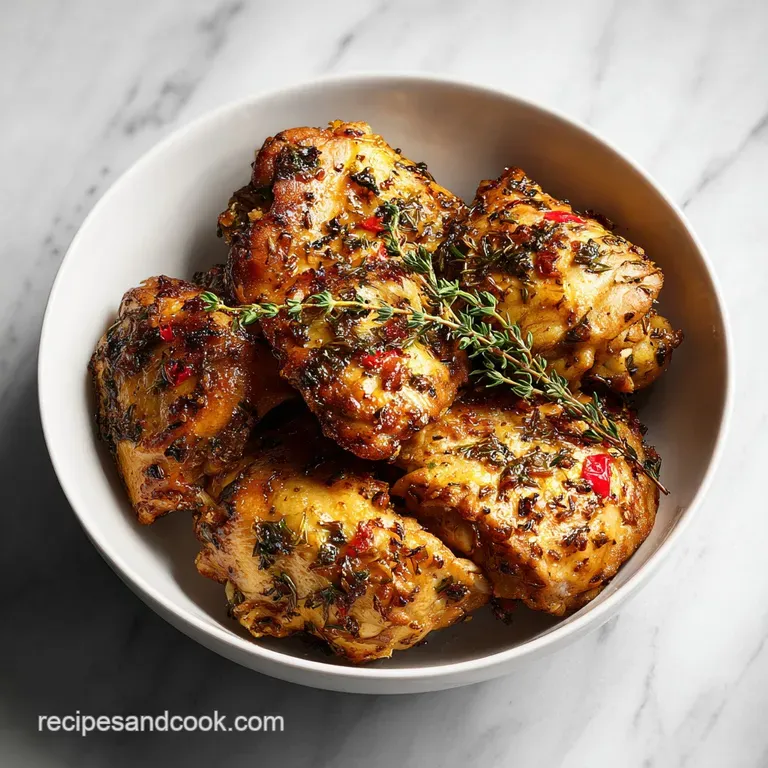
Let’s get into the flow of the kitchen. This is a three phase process: prep, the sear, and the finish. Follow these steps for that signature Thyme Chicken Thighs result.
- Preheat the oven. Set your oven to 400°F (200°C) and ensure the rack is in the center.
- Dry the chicken. Use paper towels to pat the 2 lbs of chicken thighs completely dry on both sides. Note: This prevents steaming and ensures a crispy result.
- Season generously. Sprinkle the 1.5 tsp kosher salt and 1 tsp cracked pepper over both sides of the meat.
- Heat the oil. Add 2 tbsp avocado oil to your skillet over medium high heat until it shimmers and just begins to wispy smoke.
- Start the sear. Place the thighs skin side down in the pan. Press down lightly with tongs to ensure full contact.
- Develop the crust. Cook for 6-8 minutes without moving them until the skin is deep golden and releases easily from the pan.
- Flip and aromatics. Turn the chicken over and scatter the 10 sprigs of thyme, 2 sprigs of rosemary, 6 smashed garlic cloves, and lemon slices around the meat.
- Add the butter. Drop the 2 tbsp of butter into the pan and let it melt, then spoon it over the chicken for 1 minute.
- Transfer to oven. Place the entire skillet in the oven for 15-18 minutes until the internal temperature reaches 165°F (74°C).
- Rest the meat. Remove the pan and let the chicken sit for 5 minutes to allow the juices to redistribute through the muscle.
Solutions for Common Roasted Chicken Challenges
Even with a solid plan, things can go sideways. But don't worry most "disasters" are just minor hiccups that are easily fixed once you know what to look for.
Why Your Chicken Skin is Soggy
If your skin comes out pale or rubbery, it usually boils down to two things: overcrowding or moisture. If you cram six large thighs into a small pan, the moisture escaping the meat has nowhere to go but up, effectively steaming the skin instead of frying it.
| Problem | Root Cause | Solution |
|---|---|---|
| Sticky Skin | Pan wasn't hot enough | Wait for the oil to shimmer before adding meat. |
| Burnt Garlic | Added too early | Only add garlic after flipping the chicken to avoid bitter notes. |
| Dry Meat | Overcooked | Use a thermometer; pull at 160°F as carryover heat hits 165°F. |
Common Mistakes Checklist
- ✓ Always pat the skin with paper towels until it feels like parchment.
- ✓ Give each thigh at least an inch of space in the pan.
- ✓ Don't peek! Moving the chicken too early tears the skin before it can sear.
- ✓ Let the chicken come to room temperature for 15 minutes before cooking.
- ✓ Use a splatter screen to keep your stovetop clean while searing.
Flexible Substitutions for Your Pantry Staples
I'm a big believer in using what you have. While this recipe is traditional, it's very forgiving if you need to swap an ingredient or two based on what's in your fridge.
| Original Ingredient | Substitute | Why It Works |
|---|---|---|
| Avocado Oil | Grapeseed or Ghee | Both have high smoke points suitable for searing. |
| Fresh Thyme | Dried Thyme (1/2 tsp) | Use less as dried is concentrated; add to the butter, not the oil. |
| Fresh Lemon | White Wine Vinegar | A splash of vinegar at the end provides the necessary acidity. |
If you find yourself out of thyme but have a jar of parmesan, you might actually prefer my Garlic Parmesan Chicken Thighs recipe which offers a different but equally crispy profile.
Scaling the Recipe for Any Occasion
When you're cooking for a crowd or just for two, you can't always just double the numbers. Physics changes when the volume of food changes!
- To Scale Down (2 Servings): Use a smaller 8 inch or 10 inch skillet. Keep the cook times the same, but you can reduce the oil and butter by half.
- To Scale Up (8 Servings): Do not try to fit 8 thighs in one skillet. Work in two batches for the searing phase, then move all chicken to a large sheet pan to finish in the oven together.
- The Sheet Pan Shortcut: If you're really in a rush, you can toss everything on a sheet pan at 425°F (220°C). You won't get the same deep sear, but it's a great "set it and forget it" version.
Debunking Cooking Myths
- Myth: You must wash chicken before cooking. Truth: This actually spreads bacteria around your sink and adds moisture to the skin, which prevents it from getting crispy. Just pat it dry!
- Myth: Searing "seals in" the juices. Truth: Searing is purely for flavor and texture (Maillard reaction). Juiciness is actually controlled by the final internal temperature and resting the meat.
Keeping Your Leftovers Tender and Flavorful
Chicken thighs are the kings of leftovers because the extra fat keeps them from drying out as fast as breasts.
Storage: Store your Thyme Chicken Thighs in an airtight container in the fridge for up to 4 days. You can freeze them for up to 3 months, though the skin will lose its crunch.
Reheating: Avoid the microwave if you want to keep that skin integrity. Instead, place them in a 350°F (180°C) oven for 10-12 minutes. Zero Waste Tip: Save the leftover bones and the herb sprigs in a bag in your freezer.
Once you have a few pounds of bones, they make the most velvety, aromatic chicken stock you've ever tasted.
Thoughtful Pairings to Complete Your Meal
Because these thighs have such a bright, lemony, and herbaceous profile, they play well with sides that can soak up that delicious pan sauce.
A velvety mound of mashed potatoes or a simple rice pilaf is my go to. The starch catches all the lemon butter drippings that would otherwise stay in the pan. If you want something lighter, a crisp arugula salad with a simple vinaigrette provides a nice peppery contrast to the rich chicken skin.
If you’re feeling adventurous, try pairing this with a roasted root vegetable medley the thyme ties the whole plate together beautifully. Honestly, just make sure you have some crusty bread nearby to swipe through the skillet before you wash it!

Recipe FAQs
Is thyme good for chicken thighs?
Yes, thyme is excellent for chicken thighs. Its woody, slightly floral notes pair perfectly with the richer, darker meat of the thigh, infusing depth during the searing and roasting process.
Is rosemary or thyme better with chicken?
It depends on the desired flavor profile, but thyme is generally more versatile. Thyme offers a subtle, earthy background that complements roasting well, whereas rosemary is stronger and piney, often dominating milder flavors.
What's the secret to flavorful chicken thighs?
The secret is creating a moisture barrier on the skin before high heat. Patting the skin bone dry, seasoning ahead of time, and utilizing rendered fat for basting locks in flavor and maximizes crispiness.
What are the 5 amazing chicken thigh marinades?
While this recipe uses a dry seasoning/butter baste method, five excellent marinade bases include: soy-ginger, Greek yogurt lemon, buttermilk brine, mojo, and a simple dry rub with paprika and chili powder.
How do I prevent the garlic from burning under the herbs?
Add the garlic after you flip the thighs to the oven safe pan. Searing garlic directly on the stovetop will scorch it quickly; placing it alongside the chicken in the oven allows it to gently roast in the basting butter.
Should I cover the chicken thighs with foil during the oven time?
No, never cover them if you want crispy skin. Covering traps steam, which immediately turns your hard earned crisp exterior soggy. You only cover chicken if it is already burning before the internal temperature is reached.
Can I make a simple pan sauce after cooking these thyme chicken thighs?
Yes, the pan drippings are perfect for a quick sauce. Deglaze the skillet with a splash of white wine or chicken stock, scraping up the browned bits, and finish by swirling in a pat of butter; this technique is key to the Easiest Chicken Gravy recipe if you want more body.
Easy Thyme Chicken Thighs
Ingredients:
Instructions:
Nutrition Facts:
| Calories | 432 kcal |
|---|---|
| Protein | 31 g |
| Fat | 33 g |
| Carbs | 3 g |
| Fiber | 1 g |
| Sugar | 0.5 g |
| Sodium | 765 mg |
