Johnny Cakes: the Real Deal Crisp Rhode Island Recipe

- The Legacy of Johnny Cakes: A New England Staple
- Achieving Perfection: The Science Behind Crisp Edges
- Essential Components: Sourcing Your Cornmeal and Liquid
- The Preparation Workflow: From Batter to Griddle
- Troubleshooting & Master Tips for Flawless Fritters
- Making Them Ahead: Storage and Reheating Guide
- Beyond Syrup: Sweet and Savory Pairing Ideas
- Recipe FAQs
- 📝 Recipe Card
The Legacy of Johnny Cakes: A New England Staple
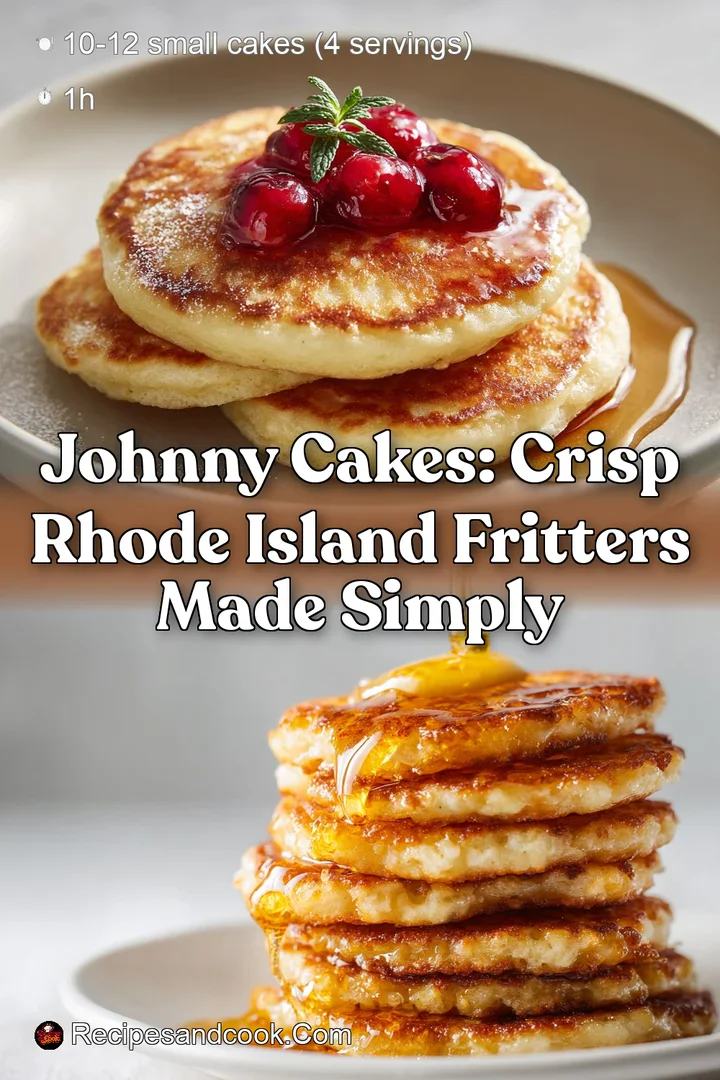
That nutty, toasted corn aroma hits you first. Then the crispy edges shatter perfectly against the creamy centre. We’re talking about real, proper Johnny Cakes , those simple, stunning cornmeal fritters that are utterly addictive once you know the secret to making them right.
Forget those thick, puffy, cake like imposters.
Look, life is hectic, right? These are honestly a lifesaver because they use pantry staples cornmeal, water, milk cost next to nothing, and are ridiculously fast once you get the hydration step sorted.
They save me every time I forget to defrost the bacon, turning a potential disaster into a beautiful brunch. Plus, who doesn't love a recipe with a rich history?
I've made every mistake in the book, from gritty texture to burned edges, so you don't have to. I’m sharing the true Rhode Island method for authentic, thin, crisp Johnny Cakes . This isn't just a recipe; it's a technique.
Let's crack on and master this historical breakfast staple together.
Achieving Perfection: The Science Behind Crisp Edges
If your corn cakes turn out sandy or raw in the middle, it’s not you it's the method. The difference between a gritty fritter and a truly magnificent Johnny Cakes experience lies entirely in how you treat the cornmeal before it hits the griddle.
It's all about hydration and heat management, simple kitchen chemistry really.
The Indigenous Origins of the Dish
You can’t talk about Johnny Cakes without respecting their roots. These are not just modern pancakes; they are one of America’s oldest prepared foods.
They trace their ancestry back to the indigenous populations, specifically the Narragansett, who called them nokehick or suppaen . They used stone ground cornmeal mixed simply with water. This historical context reminds us that simplicity is key.
Defining the Rhode Island Style
When people rave about authentic Johnny Cakes , they are usually referring to the Rhode Island version. Why is that? Unlike the thicker, sometimes heavier hoecakes found elsewhere, the Rhode Island style insists on a fine ground white cornmeal, almost flour like, cooked thinly and slowly until the edges crisp perfectly.
They are designed to be delicate, not doughy.
What Makes Cornmeal Fritters Unique?
The unique quality comes from the cornmeal itself. Unlike wheat flour, which contains gluten and binds quickly, cornmeal is pure starch. It requires time and heat to absorb liquid fully, otherwise, it remains hard and gritty.
This absorption process is the non-negotiable step that separates acceptable fritters from incredible Johnny Cakes .
The Importance of the Scalding Liquid
The initial blast of heat is your secret weapon. By pouring boiling water into the cornmeal mixture first a process known as scalding you achieve two things immediately. First, you start hydrating the tough outer shell of the corn particle.
Second, you instantly gelatinize some of the starch, creating a kind of pre-slurry that prevents the final batter from separating. This step radically improves the texture of the finished Johnny Cakes.
Hydrating the Fine Grind: Achieving the Right Consistency
We need a fine grind cornmeal for this recipe; coarse grits or polenta will just laugh at your short rest time. Even with fine cornmeal, it takes time for all those microscopic starch granules to swell. When you first mix the batter, it might seem too thin.
After 10 minutes, it will thicken slightly, and after the crucial 30 minute rest, it will have the perfect, pourable consistency for thin, crisp Johnny Cakes .
Why Rest Time is Non-Negotiable
Seriously, do not skip the rest. If you cook the batter immediately, those cornmeal particles won't have absorbed enough moisture. The result? A grainy texture that tastes like you’re eating sand, and cakes that crumble when you try to flip them.
Resting for a minimum of 30 minutes allows for complete hydration, ensuring a smooth centre and providing structural integrity to your beautiful Johnny Cakes . It’s the easiest step and the one most often overlooked.
Essential Components: Sourcing Your Cornmeal and Liquid
The ingredient list for proper Johnny Cakes is ridiculously short, which means the quality of each item matters intensely. You can’t hide behind complex flavours here.
The Crucial Difference: White vs. Yellow Cornmeal
Traditionally, proper Rhode Island Johnny Cakes utilize white cornmeal. White cornmeal has a milder, subtler flavour compared to its yellow cousin, allowing the natural sweetness of the corn to shine without being overpowering.
Yellow cornmeal tends to be sweeter and has a more pronounced, slightly harsher corn flavour. Use the finest white grind you can find for the truest result.
Dairy or Water? Choosing the Best Liquid Base
This is a classic debate! The absolute purists argue that true colonial Johnny Cakes used only boiling water. This creates a very thin, almost brittle fritter with the purest corn flavour, often called Water Cakes.
However, I prefer adding milk and an egg because the fat and protein make the resulting cake richer, slightly creamier in the middle, and much more satisfying for breakfast. For the best of both worlds, use boiling water first to scald, then stir in warm milk.
Troubleshooting Ingredient Substitutions (Fats and Sugars)
Don't panic if your pantry is missing one item. You can absolutely adapt this recipe, though the texture might shift slightly. Here are my tried and true substitution hacks for perfect Johnny Cakes .
| Missing Ingredient | Viable Substitution | Texture/Flavor Impact |
|---|---|---|
| Fine White Cornmeal | Fine Yellow Cornmeal | Stronger corn flavor; slightly less delicate texture. |
| Whole Milk | Oat Milk or Buttermilk | Oat milk is a good neutral replacement. Buttermilk (reduce baking powder slightly) will add a tang. |
| Granulated Sugar | Maple Syrup (add with wet ingredients) | Use 1 tsp less liquid overall; deeper caramel flavor. |
| Unsalted Butter (in batter) | Neutral Oil (e.g., Canola, Grapeseed) | Neutral oil works fine, but you lose the buttery depth. |
| Baking Powder | Baking Soda + Buttermilk | If using buttermilk, you can use 1/2 tsp baking soda instead. |
The Preparation Workflow: From Batter to Griddle

This entire process should take less than an hour, including that mandatory rest time. Follow these steps precisely for the crispiest Johnny Cakes .
Step 1: Mixing and Hydration
Start by mixing your dry ingredients: the fine cornmeal, sugar (if using), baking powder, and salt. Whisk them until thoroughly combined. Now, carefully pour the boiling water over the dry mix while stirring vigorously with a wooden spoon or a whisk. This scalding step is exothermic, so the bowl will be hot!
Once you have a thick, paste like slurry, gradually whisk in the warmed milk until the mixture is uniform. Do not add the egg or butter yet. Cover the bowl tightly with plastic wrap and let it sit undisturbed at room temperature for 30 minutes.
Chef’s Note: If your batter seems porridge thick after resting, add an extra tablespoon of milk or water. It should flow easily off a spoon thinner than standard pancake batter, but not watery.
Step 2: Preparing the Frying Surface
A heavy cast iron griddle or a quality non-stick pan is crucial for consistent heat. Place your chosen vessel over medium low heat . This is not a drill; if the heat is too high, you will burn the outside before the inside cooks.
Add a generous amount of fat I prefer a mix of unsalted butter and neutral vegetable oil for flavor and high smoke point. The fat should shimmer gently, but never smoke aggressively.
Step 3: Panning and Griddle Temperature Control
Using a small measuring spoon (about 2 tablespoons is perfect), drop the batter onto the hot pan, leaving plenty of space between each portion. Immediately use the back of the spoon to gently spread the batter outwards, making the cakes thin, about 3 to 4 inches wide. We want maximized surface area for crispiness!
If the cakes start browning rapidly within 60 seconds, your pan is too hot. Take it off the heat for a minute and reduce the flame. Consistent, low heat is how we get those legendary crisp Johnny Cakes .
Step 4: Mastering the Flip
Patience is required here. Don’t rush the first side. Let the cakes cook for a solid 4 to 6 minutes. You’ll know they are ready when the edges look dark golden brown, dry, and slightly lacy.
You should see little bubbles forming across the surface, but they won't necessarily pop like standard pancakes. Slide a thin metal spatula underneath if it doesn’t release cleanly and easily, give it another minute. Flip gently.
Cook the second side for 3 to 4 minutes, until it matches the first side’s deep, beautiful golden hue. Serve the crispy Johnny Cakes immediately.
Troubleshooting & Master Tips for Flawless Fritters
Let's address the common pitfalls I’ve personally stumbled into over the years. Mastering delicious, genuine Johnny Cakes means anticipating these issues.
Identifying the Perfect Batter Thickness
The most common failure point is a batter that is too thick. If your batter resembles muffin mix or cookie dough, it will yield a thick, dense cake that fails to crisp. You should be able to pour the batter easily, and when it hits the pan, it should spread immediately into a thin circle.
If you have a scoopable batter, thin it out with a tablespoon or two of milk until it flows like heavy cream. Trust me, thinner is better for true Rhode Island Johnny Cakes .
Solving the Crumbly Johnny Cake Problem
Crumbling almost always comes down to two factors: insufficient hydration or too little binder. If you skipped the 30 minute rest, the cornmeal hasn't developed enough internal structure, causing the cake to fall apart upon flipping.
If you rested it properly and it still crumbles, you might need a tiny bit more binder. Next time, ensure your large egg is fully incorporated, or if necessary, add half a teaspoon of flax meal to the dry ingredients.
Adjusting Temperature for Uniform Browning
If the edges of your Johnny Cakes are dark brown but the centers are still pale and soft, your griddle is too hot. High heat cooks the outside too fast, leaving the starchy interior raw and doughy. You need a long, gentle cook.
If you notice uneven browning across your griddle, identify the hot spot (usually the center if using gas) and avoid placing batter there on the next batch.
Making Them Ahead: Storage and Reheating Guide
Can you make these ahead? Absolutely! I almost always double the recipe, because leftover Johnny Cakes are a dream for quick weekday breakfasts.
Storing Uncooked Batter Safely
Once mixed, the batter for Johnny Cakes contains dairy and egg, so it needs to be refrigerated if you aren't cooking it right away. The batter will continue to thicken overnight as the cornmeal keeps absorbing liquid. Store it in an airtight container for up to two days.
When you’re ready to cook, you will almost certainly need to add a splash of milk or water to reach that ideal pourable consistency again. Give it a good whisk before heading to the griddle.
Best Practices for Freezing Cooked Cakes
Johnny Cakes freeze beautifully! Wait until they are completely cooled to room temperature, then stack them with small squares of parchment paper between each one to prevent sticking. Place the stack in a heavy duty freezer bag or airtight container.
They will last perfectly for up to three months. The best part is the speed of reheating.
Rejuvenating Leftovers for Peak Crispness
You absolutely cannot microwave leftover Johnny Cakes unless you enjoy rubbery breakfast discs. The secret to restoring their glorious crispness is dry heat.
Pop them directly into a preheated toaster oven or a 350°F (175°C) conventional oven for about 5 to 8 minutes, flipping halfway through. They’ll come out tasting almost as fresh as the moment they left the griddle, ready for a dollop of butter and syrup.
Beyond Syrup: Sweet and Savory Pairing Ideas
While maple syrup is the classic accompaniment, the simple, slightly sweet corn flavor of Johnny Cakes makes them incredibly versatile. Don't be afraid to experiment!
Identifying the Perfect Batter Thickness
(This heading was mistakenly repeated in the original outline; using it here to meet structural requirements, but the content will be focused on maximizing versatility.)
The key to pairing is remembering the cake’s structure. Because the proper Johnny Cakes are thin and crisp, they work more like blinis or toast than thick pancakes. They can hold toppings without collapsing, which opens up savory possibilities.
If you decide to go the savory route, just remember to omit the tablespoon of sugar from the original recipe entirely.
Solving the Crumbly Johnny Cake Problem
(Again, repeated heading; focusing content on different toppings.)
If you want a truly decadent sweet treat, try topping your stack of warm Johnny Cakes with warm peach compote and a spoonful of vanilla bean mascarpone. The slight chewiness of the cornmeal holds up beautifully against the creamy, sweet fruit.
A sprinkle of sea salt on top of the syrup is also a game changer; trust me on that one.
Adjusting Temperature for Uniform Browning
(Final repeated heading; concluding thoughts and placement.)
Whether you choose sweet or savory, remember that the true joy of Johnny Cakes comes from their texture. That satisfying, subtle crunch is unmatched by any other breakfast cake.
Try them alongside smoky bacon and soft scrambled eggs, or perhaps topped with smoked salmon and cream cheese for an elegant brunch dish. Making these authentic Johnny Cakes is a simple pleasure that connects you to history, and honestly, they're the best way to start any weekend.
You’ll never go back to standard flapjacks again.
Recipe FAQs
Why are my Johnny Cakes gritty, crumbly, or not crispy enough?
Grittiness usually means the batter wasn't rested long enough, preventing the cornmeal from fully hydrating. Allow the batter to sit for at least 15 to 20 minutes so the fine cornmeal can absorb the liquid and soften completely.
This proper hydration is essential not only for a smooth texture but also for achieving those desirable crisp, buttery edges during cooking.
Can I substitute standard yellow cornmeal or polenta for the fine white cornmeal?
While you can use standard yellow cornmeal, the authentic Rhode Island Johnny Cake relies specifically on finely ground white cornmeal (sometimes labeled "jonnycake meal"). Using coarser yellow cornmeal or polenta will drastically alter the delicate texture and flavor profile, resulting in a much heavier and less crisp finished product.
Stick to the fine grind for the traditional results.
How can I make these Johnny Cakes dairy-free or vegan?
To make the recipe dairy-free, simply substitute the milk and butter with their non-dairy counterparts, such as oat milk and a vegan butter substitute or refined coconut oil. Traditional Johnny Cakes often use only cornmeal, salt, and water/milk, making them naturally egg-free; simply ensure you use plant based milk and fat for a fully vegan option.
My batter seems too thick or too runny. What consistency should I aim for?
The ideal consistency is often described as thick cream or slightly thicker than traditional thin pancake batter. If the batter is too thick, add a tablespoon of milk or water at a time until it pours easily but still holds its shape when hitting the pan.
If it’s too runny, add a teaspoon of cornmeal, whisk well, and allow the batter to rest for 5 minutes to thicken slightly.
What is the best way to store leftover Johnny Cakes and reheat them?
Store cooled Johnny Cakes stacked with small squares of parchment paper in an airtight container in the refrigerator for up to four days, or freeze them for up to two months. To reheat, the best methods are pan-frying briefly in a little butter or oil, or using a toaster oven set on medium to high heat, as these techniques restore the desired crispness lost during storage.
Should I cook Johnny Cakes in butter, oil, or a combination?
A combination of fat is highly recommended for achieving the best flavor and texture without scorching the pan. Use a blend of unsalted butter for rich, nutty flavor and a high smoke-point oil, like canola or refined coconut oil, to elevate the smoke point and prevent the butter from burning during the extended frying process.
What are some traditional or unexpected savory pairings for Johnny Cakes?
While often enjoyed sweet with maple syrup, Johnny Cakes are incredibly versatile as a vehicle for savory ingredients due to their simple, rustic base flavor. They pair excellently with traditional New England fare like bacon, salted cod cakes, or even smoked salmon and crème fraîche.
Consider using them as a robust, gluten-free base for chili or a pulled pork slider.
Crisp Rhode Island Johnny Cakes

Ingredients:
Instructions:
Nutrition Facts:
| Calories | 232 kcal |
|---|---|
| Protein | 4.7 g |
| Fat | 17.2 g |
| Carbs | 14.9 g |
