Cucumber Tomato Onion Salad: Ultimate Crisp Assembly
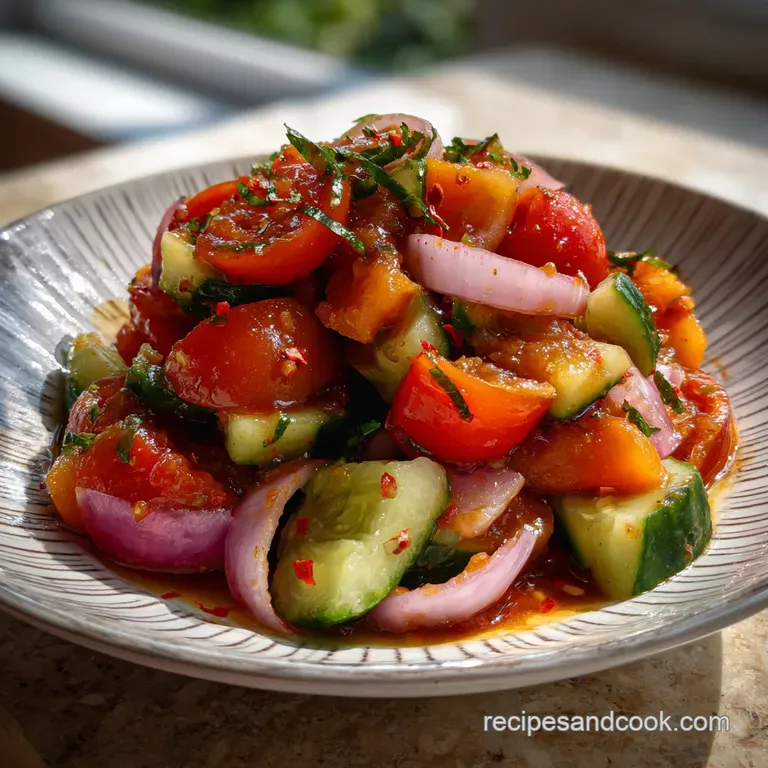
- Effort/Time: 15 minutes (Zero-cook assembly)
- Flavor Hook: Zesty, herbaceous, and incredibly crisp
- Perfect for: Grilled proteins, heavy stews, or a grab-and-go lunch
- The Physics of Crispness: Why This Cold Assembly Works
- The Molecular Breakdown: Ingredient Chemistry Table
- The Alchemy of Fresh Produce: Selecting Your Elements
- Necessary Tools for Precision Assembly
- The 15 Minute Assembly Protocol: Step-by-Step
- Precision Troubleshooting: Solving the "Soggy Salad" Dilemma
- Thermal Mass and Scaling Logistics
- Common Myths About This Classic Side
- Storage, Preservation, and Zero Waste Philosophy
- Creative Flavor Architecture: Variations
- Perfect Protein Pairings and Serving Logic
- Recipe FAQs
- 📝 Recipe Card
We have all been there: you reach for a scoop of vegetables at a BBQ, only to end up with a plate full of pink, watery residue and limp, translucent cucumber slices. It is the ultimate potluck nightmare a salad that has essentially turned into a lukewarm gazpacho because the ratios were off and the salt was applied with zero regard for cellular biology.
I’ll be honest: I spent years making this "the wrong way." I used to toss everything together hours in advance, thinking the flavors would "mingle." Instead, I just created a structural collapse of every ingredient involved.
I learned the hard way that a cucumber tomato onion salad isn’t just a bowl of chopped produce; it’s a delicate balance of osmotic pressure and lipid based coating.
The secret to that elusive "shatter crisp" bite lies in how we manage moisture and surface tension. When you nail the emulsion and respect the water content of the Roma tomatoes, the result is a glossy, vibrant side dish that stays snappy even after sitting out.
Let's look at the engineering required to make this work every single time.
The Physics of Crispness: Why This Cold Assembly Works
- Osmotic Gradient Management: Salt applied to high water vegetables draws moisture out via osmosis; by whisking salt into the lipid heavy dressing first, we slow this process, preserving the vegetable's turgor pressure.
- Emulsion Stability: The citric acid in the lemon juice acts as a temporary emulsifier with the Extra Virgin Olive Oil, creating a viscous coating that clings to the slick cucumber skin instead of pooling at the bottom.
- Sulfur Mitigation: Slicing the red onion into thin slivers increases surface area, allowing the lemon juice to macerate the onion, which mellows the harsh pyruvic acid into a mild sweetness.
- Aromatic Volatility: Crushing the dried oregano between your palms before adding it releases essential oils (carvacrol) that would otherwise remain trapped in the dried leaf structure.
The Molecular Breakdown: Ingredient Chemistry Table
| Ingredient | Chemical/Physical Role (Science) | The Pro Secret (Why This Matters) |
|---|---|---|
| English Cucumbers | Low-seed count prevents excessive internal moisture release | Keeps the salad from becoming a "soup" during the first 30 minutes of sitting. |
| Roma Tomatoes | High flesh-to-seed ratio provides structural integrity | The thicker pericarp (wall) of the Roma stays firm when tossed with acidic dressing. |
| Fresh Lemon Juice | Acid induced maceration of onion cell walls | Softens the "bite" of raw onion without losing the essential crunch. |
| Sea Salt | Draws out umami rich juices for a "natural" vinaigrette | When balanced with oil, it creates a brine that seasons the vegetables from the inside out. |
The Alchemy of Fresh Produce: Selecting Your Elements
Selecting your ingredients for a cucumber tomato onion salad is less about shopping and more about structural scouting. You aren't just looking for color; you are looking for architectural stability.
- 2 large English Cucumbers (approx. 600g): Why this? Thinner skin and fewer seeds mean less prep and more crunch. I prefer the Greenhouse grown variety for their consistent diameter.
- 4 large Roma or Vine Ripened Tomatoes (approx. 500g): Why this? Romas have a low water-to-flesh ratio, vital for structural integrity. Look for heavy-in-the-hand fruit with a deep matte red hue.
- 1 small Red Onion (approx. 100g): These provide the necessary sharp contrast to the cooling cucumber.
- 1/4 cup (10g) Fresh Parsley or Dill: I often lean toward Dill for a brighter, more "Pickled" profile, but Parsley adds an earthy, clean finish.
- 3 tbsp (45ml) Pompeian Extra Virgin Olive Oil: Why this? High polyphenols provide a peppery finish that cuts through the fat.
- 2 tbsp (30ml) Fresh Lemon Juice: Avoid the bottled stuff; the enzymatic activity in fresh lemons is what actually "cooks" the onions.
- 1 clove Garlic, minced: Use a Microplane Classic Zester to turn the garlic into a paste so it distributes evenly without pungent "hot spots."
- 1 tsp (5g) Dried Oregano: This provides the classic Mediterranean backbone.
- 1/2 tsp (3g) Diamond Crystal Kosher Salt: This salt has a hollow grain that dissolves faster into the lemon juice.
- 1/4 tsp (1.5g) Cracked Black Pepper: Freshly cracked provides a floral heat that pre-ground pepper lacks.
Necessary Tools for Precision Assembly
- Victorinox 8 Inch Chef's Knife: A sharp blade is non-negotiable. A dull knife bruises the tomato cells, causing them to leak juice prematurely and ruining the cucumber tomato onion salad.
- Pyrex Glass Mixing Bowl: Non-reactive glass is essential when working with lemon juice to avoid metallic off-flavors.
- OXO Good Grips Salad Spinner: Even if you think the herbs are dry, spin them. Water on the leaves prevents the oil-based dressing from sticking.
- Large Wooden Salad Spoons: Wood is gentler than metal and won't "tear" the delicate tomato skins during the final toss.
The 15 Minute Assembly Protocol: step-by-step
- Halve the English Cucumbers lengthwise.Note: This exposes the core for easy, uniform slicing.
- Slice into 1/4 inch half moons.Note: Consistent thickness ensures every bite has the same crunch-to-dressing ratio.
- Chop the Roma tomatoes into 1 inch chunks.Note: Aim for "bite sized" pieces that won't fall off a fork.
- Sliver the red onion into paper thin semi circles.Note: Thinness is key to allow the acid to penetrate and mellow the onion's bite.
- Whisk the lemon juice, garlic, and salt in your Pyrex bowl.Note: Dissolving the salt in the acid first ensures an even distribution of flavor.
- Slowly stream in the Pompeian EVOO while whisking.Note: This creates a temporary emulsion that provides a velvety mouthfeel.
- Rub the dried oregano between your palms into the dressing.Note: The friction and heat release the volatile oils for maximum aroma.
- Add the cucumbers, tomatoes, and onions to the bowl.Note: Assemble only when the dressing is fully integrated.
- Fold gently with wooden spoons until every surface is glossy.Note: Stop once the vegetables are coated to prevent bruising the tomatoes.
- Garnish with the finely chopped herbs.Note: Adding herbs last prevents them from wilting or clumping in the dressing.
Precision Troubleshooting: Solving the "Soggy Salad" Dilemma
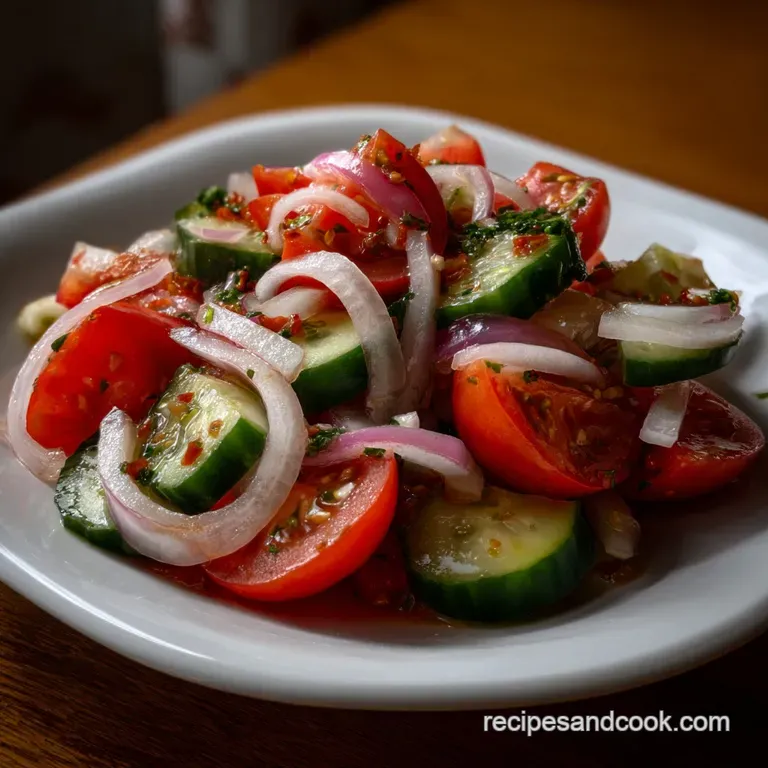
The most common complaint with a cucumber tomato onion salad is the inevitable "soup" that forms at the bottom of the bowl. This is almost always a result of early salting or variety selection.
Why Your Salad is Watery
When salt touches the surface of a cucumber, it initiates a process called exosmosis. The concentration of salt outside the cell is higher than inside, forcing the water out of the cell to find equilibrium. This leaves the cucumber limp and the bowl full of water.
| Problem | Root Cause | The Fix | Pro Protocol |
|---|---|---|---|
| Limp Cucumbers | Pre-salting more than 20 minutes before serving. | Add salt to the dressing, not the vegetables directly. | Salt the salad only 5 minutes before the first bite. |
| Bland Dressing | Excessive water release diluting the acidity. | Use Roma tomatoes and de-seed the cucumbers if they are "waxy" types. | Pat the sliced cucumbers dry with a paper towel before tossing. |
| Harsh Onion Aftertaste | Onions sliced too thick or not "acid cooked." | Slice paper thin and let them sit in the lemon juice for 5 minutes first. | Use a Mandoline for paper thin, translucent onion slivers. |
Thermal Mass and Scaling Logistics
When you are doubling or tripling a cucumber tomato onion salad for a large gathering, the physics of the bowl change.
- Salt Scaling: Do not double the salt linearly. If doubling the veggies, start with 1.5x the salt. You can always add more, but you can't remove it once it starts pulling water out of the cells.
- Pan/Bowl Crowding: Using a bowl that is too small for a double batch will lead to "crushing" the bottom layer of tomatoes under the weight of the cucumbers. Use a wide, shallow vessel rather than a deep one.
- Temperature Control: A larger "thermal mass" of room temperature vegetables will take longer to chill. If doubling, refrigerate the cucumbers and tomatoes before slicing to ensure the final product is serving cold.
- Emulsion Stability: Larger batches of dressing are more likely to break. Whisk the oil and lemon juice vigorously in a separate jar before pouring over the large batch.
Common Myths About This Classic Side
Myth: You must peel the cucumbers to remove bitterness.Truth: Modern English cucumbers are bred to be non-bitter. The skin actually contains most of the fiber and provides the structural "snap" that makes a cucumber tomato onion salad successful.
Keep the skin for texture and nutrients.
Myth: Adding sugar "balances" the salad.Truth: While a pinch of sugar can balance acid, it actually speeds up the breakdown of the tomato walls. If your tomatoes are ripe, their natural 5.4g of sugar per serving is more than enough to counteract the lemon juice.
Myth: The salad tastes better the next day.Truth: Unlike a potato salad or a Broccoli Casserole recipe, this salad degrades over time. The "mingling" of flavors is actually the breakdown of cell walls. This is a "fresh-is-best" dish.
Storage, Preservation, and Zero Waste Philosophy
Storage: This cucumber tomato onion salad is best consumed within 2 hours of assembly. If you must store it, place it in an airtight glass container in the fridge for up to 24 hours.
Note that the cucumbers will lose their "shatter" and become more like a quick pickle.
Reheating: Do not heat. This is a strictly cold service dish. If it has become too watery in the fridge, drain the excess liquid and toss with a fresh teaspoon of EVOO and a pinch of black pepper to revive the gloss.
💡 ZERO WASTE TIP: Don't discard the herb stems (Parsley/Dill). Transform: Finely mince the stems and add them to your dressing base. Science: The stems actually contain more concentrated volatile oils and "crunch" than the leaves, adding a secondary layer of texture and a massive flavor boost to the cucumber tomato onion salad.
Creative Flavor Architecture: Variations
If you want to move beyond the base cucumber tomato onion salad, consider these technical upgrades:
- The Creamy Twist: Add 2 tablespoons of Greek yogurt to the dressing. The proteins in the yogurt create a more stable emulsion that mimics a cucumber tomato onion salad with ranch without the heavy preservatives.
- Mediterranean Upgrade: Toss in 1/4 cup of crumbled high-quality sheep’s milk Feta. The fat in the cheese buffers the acidity of the lemon. For a similar flavor profile, you might enjoy my Tomato Salad recipe.
- Vinegar Substitutions: Swap lemon juice for Red Wine Vinegar. It provides a more aggressive, fermented tang that pairs beautifully with grilled red meats. This is a common variation in many Summer Potluck Recipes.
Perfect Protein Pairings and Serving Logic
The high acidity and hydration of the cucumber tomato onion salad make it the perfect "palate cleanser" for fatty or charred foods.
- Grilled Lamb or Chicken: The lemon juice and oregano mimic traditional souvlaki marinades, creating a seamless flavor bridge.
- Heavy Grains: Serve alongside a warm quinoa or farro bowl. The cold crunch of the onion salad provides a necessary temperature contrast.
- Spicy Elements: If you are serving a spicy main, the high water content of the cucumbers helps coat the tongue and mitigate the capsaicin burn.
When you serve this, make sure it is chilled. The "snap" of a cucumber is a physical sensation caused by the cell walls resisting your teeth; when the vegetable is cold, those walls are firmer, leading to that satisfying shatter we all crave in a perfect cucumber tomato onion salad.
Trust me, once you master the science of the dressing and the timing of the salt, you'll never settle for a soggy salad again. Let's crack on!
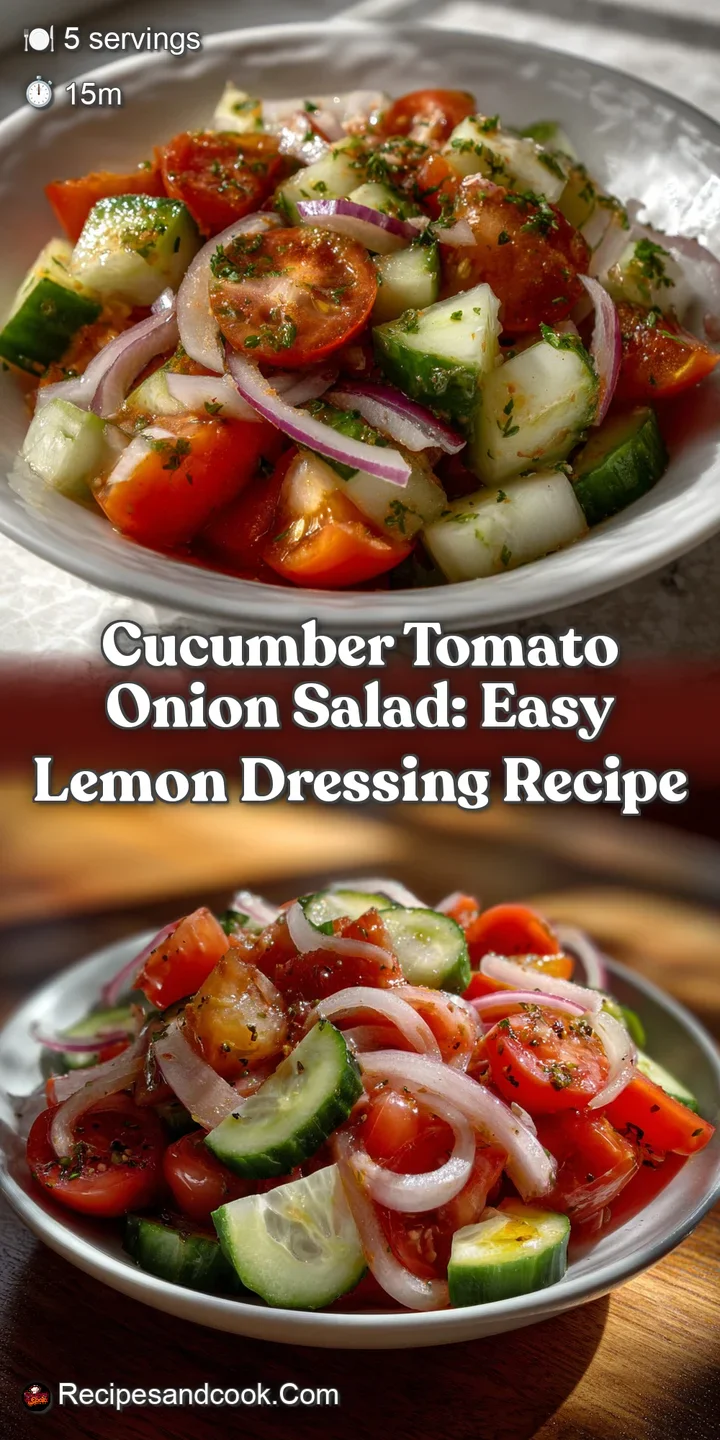
Recipe FAQs
How long does this salad hold up before getting watery?
Dressing immediately prior to serving prevents sogginess. High hydration vegetables release water when cellular structures are exposed to acid over time. The salt draws out moisture (osmosis), necessitating quick consumption post dressing.
- Cut cucumbers into slightly larger chunks
- Salt vegetables separately, then drain excess liquid
- Use only fresh lemon or lime juice for dressing
Can I substitute red wine vinegar for lemon juice?
Lemon juice provides brighter acidity. Red wine vinegar offers a deeper, more phenolic flavor profile, which competes with the fresh herbaceous notes. For crisp refreshment, citrus is generally superior.
Do I need to peel the cucumber?
No, peeling is optional for texture. The skin contains concentrated chlorophyll and fiber, enhancing the salad’s visual appeal and crunch factor. Peeling removes beneficial nutrients located near the epidermis.
What is the best way to prep onions to reduce harshness?
Submerging sliced red onion in ice water works best. This process leaches out the volatile sulfur compounds (lachrymators) responsible for the pungent bite upon contact. Drain thoroughly before adding to the mix.
Is using English cucumbers preferable to standard slicing cucumbers?
English cucumbers offer lower seed content. Standard varieties often have larger, water filled seeds that break down easily, increasing the salad's overall water volume quickly. Both require minimal prep.
Myth: Adding sugar balances the acidity effectively.
Myth: Adding sugar balances the acidity effectively. Reality: Sugar masks acidity rather than balancing it, resulting in a flat, overly sweet flavor profile instead of true integration. Use herbs like mint to counter sharpness naturally.
Can I add feta cheese without ruining the texture?
Add feta last and toss gently. The brine coating on feta inhibits rapid moisture transfer, but heavy agitation will cause crumbles to break down into a mushy texture. Keep the cheese separate until the final plating stage.
Crisp Cucumber Tomato Onion Salad
Ingredients:
Instructions:
Nutrition Facts:
| Calories | 120 kcal |
|---|---|
| Protein | 1.9 g |
| Fat | 8.5 g |
| Carbs | 10.8 g |
| Fiber | 2.1 g |
| Sugar | 5.4 g |
| Sodium | 234 mg |
