Cooking Sirloin Tip Roast: Tender & Juicy
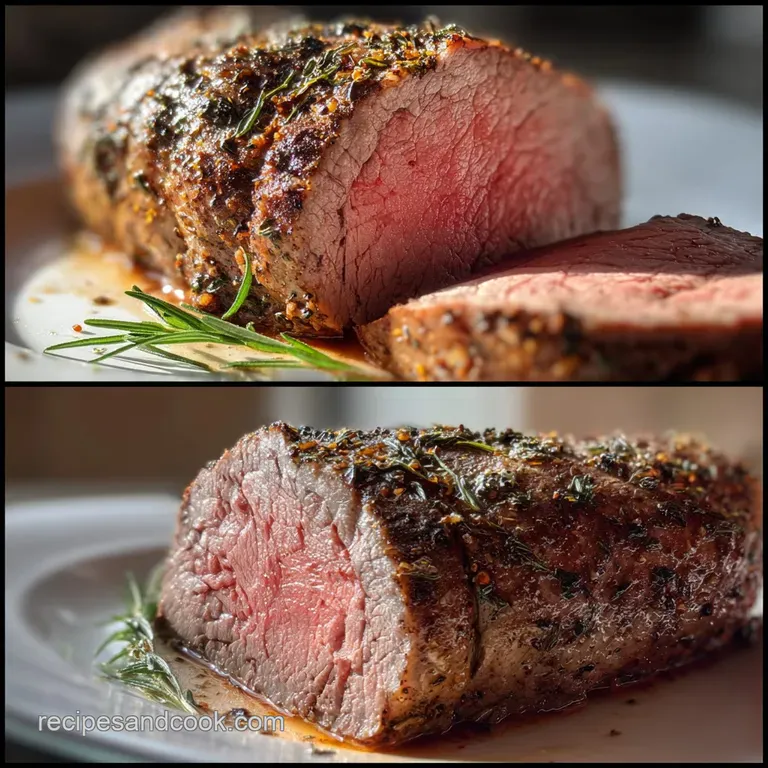
- Time: Active 30 minutes, Passive 1 hours 15 mins, Total 1 hours 45 mins
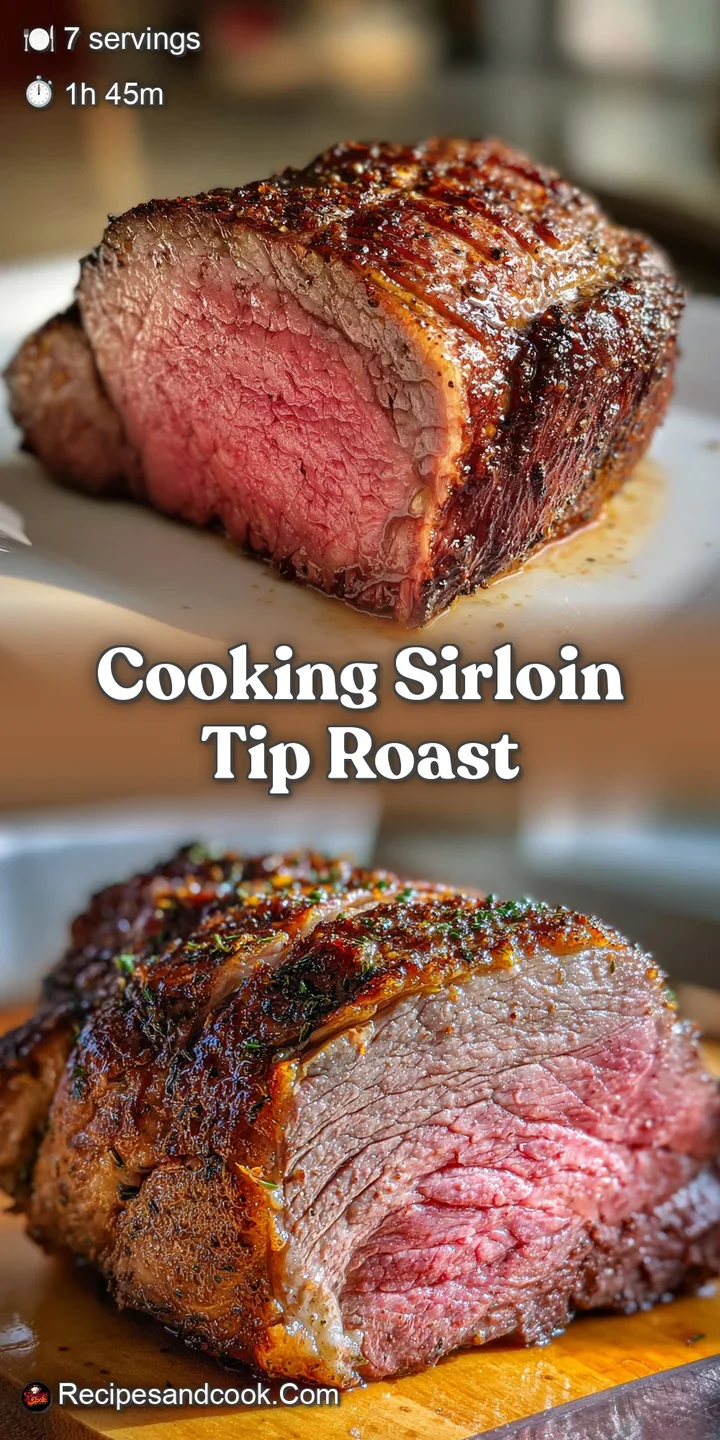
- Flavor/Texture Hook: A shatter crisp herb crust with a velvety, medium rare center.
- Perfect for: Sunday family dinners or affordable meal prep for the week.
- The Timeless Logic Behind Cooking Sirloin Tip Roast
- The Physics of the Crust
- Component Analysis for the Best Results
- Essential Ingredients for a Fragrant Herb Rubbed Roast
- Traditional Tools Required for a Perfect Beef Crust
- Proven Steps for a Perfectly Seared Beef Cut
- Protecting Your Roast From Tough and Dry Results
- Clever Ingredient Swaps for the Budget Conscious Cook
- Saving Scraps and Storing Your Leftover Beef Roast
- Elegant Plating Ideas for Your Family Table
- Kitchen Wisdom and Fact Checking
- High in Sodium
- Recipe FAQs
- 📝 Recipe Card
The Timeless Logic Behind Cooking Sirloin Tip Roast
There is something so deeply comforting about the sound of a heavy pan hitting the stove and the immediate sizzle of beef meeting hot oil. I remember my grandmother’s kitchen always smelling like garlic and rosemary on Sunday afternoons, a scent that meant the whole family was about to sit down together.
Back then, she didn't have fancy equipment, just a solid understanding of how to make a tougher, cheaper cut of meat taste like a luxury.
I’ve definitely made the mistake of treating a tip roast like a ribeye in the past. If you just throw it under high heat and hope for the best, you’ll end up with something closer to a leather boot than a dinner. But through trial and error, I found that the secret lies in the contrast of temperatures.
It’s about building that savory exterior while keeping the inside from drying out.
This recipe is my way of bringing that traditional, nostalgic feeling back to the table without breaking the bank. We’re using smart, humble ingredients like balsamic vinegar and yellow onions to create a flavor profile that feels expensive. You'll find that this approach is quite similar to the classic methods found in our Sirloin Roast Recipe, where patience is the most important ingredient.
The Physics of the Crust
Maillard Reaction: High initial heat triggers a chemical reaction between amino acids and reducing sugars, creating that dark, savory exterior.
Connective Tissue Breakdown: Dropping the oven temperature allows the internal collagen to slowly soften without tightening the muscle fibers into a dry knot.
Acidic Tenderization: The balsamic vinegar in the rub acts as a mild denaturant, breaking down surface proteins for a more tender bite.
| Thickness | Internal Temp | Rest Time | Visual Cue |
|---|---|---|---|
| 2 inches | 130°F (Medium Rare) | 15 minutes | Deep mahogany crust |
| 3 inches | 130°F (Medium Rare) | 20 minutes | Firm but yielding touch |
| 4 inches | 130°F (Medium Rare) | 25 minutes | Rich, aromatic steam |
Understanding these cues is vital because every oven runs a bit differently. While the timer is a guide, the internal temperature and the visual "shatter" of the crust are your true indicators of success. For those who enjoy a different flavor profile, you might find our How to Cook recipe helpful for experimenting with slow roasting techniques.
Component Analysis for the Best Results
| Ingredient | Science Role | Pro Secret |
|---|---|---|
| Balsamic Vinegar | Acid Catalyst | Adds a hidden sweetness that balances the heavy fat. |
| Kosher Salt | Moisture Retention | Draws proteins to the surface to form a tacky glaze. |
| Yellow Onions | Thermal Buffer | Prevents the bottom of the roast from scorching. |
| Beef Bone Broth | Steam Generation | Keeps the oven environment humid to prevent drying. |
Essential Ingredients for a Fragrant Herb Rubbed Roast
- 3.5 lb sirloin tip roast: Trimmed of silver skin. Why this? Leaner cut that benefits from over low heat finishing.
- 3 tbsp extra virgin olive oil: Use a quality oil for better searing.
- 4 cloves garlic: Minced into a paste. Why this? Paste integrates better into the herb rub than chunks.
- 2 tbsp balsamic vinegar: Provides acidity and deep color.
- 1 tbsp kosher salt: Essential for seasoning deep into the fibers.
- 1 tsp cracked black pepper: Large cracks offer small bursts of spice.
- 1 tbsp fresh rosemary: Finely chopped for an earthy aroma.
- 1 tbsp fresh thyme: Stripped from the stem for a subtle floral note.
- 2 large yellow onions: Thickly sliced to act as a roasting rack.
- 1 cup beef bone broth: Low sodium to control the final saltiness.
- 2 tbsp unsalted butter: To finish the pan drippings into a velvety sauce.
If you don't have fresh rosemary on hand, you can substitute 1 teaspoon of dried rosemary, though the flavor will be more concentrated and less "bright." For the balsamic vinegar, a red wine vinegar works in a pinch, though you’ll lose that specific caramelized sweetness that makes this crust so distinct.
Traditional Tools Required for a Perfect Beef Crust
A heavy cast iron skillet or a stainless steel roasting pan is your best friend here. You need something that can hold onto heat and won't buckle under the 450°F blast we start with.
If you use a thin glass pan, you risk it shattering or, at the very least, failing to give you that gorgeous sear on the bottom.
An instant read meat thermometer is the only way to ensure you don't overcook this. Since sirloin tip is so lean, there is a very narrow window between "perfectly pink" and "sadly grey." I also recommend a sharp carving knife; cutting this meat against the grain in thin, delicate slices is what makes it feel truly high end.
Proven Steps for a Perfectly Seared Beef Cut
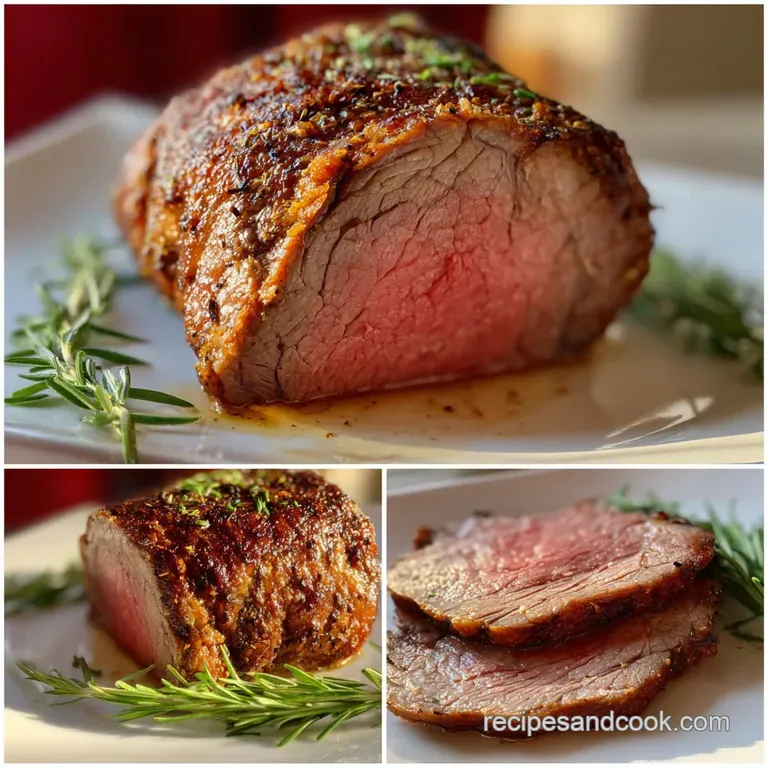
- Tempering the meat. Remove the 3.5 lb sirloin tip roast from the fridge 45 minutes before cooking. Note: This ensures the center isn't ice cold when the outside starts to brown.
- Creating the rub. Mix the olive oil, minced garlic paste, balsamic vinegar, salt, pepper, rosemary, and thyme in a small bowl.
- Applying the flavor. Pat the roast completely dry with paper towels, then massage the herb paste into every nook and cranny.
- Preparing the bed. Scatter the sliced yellow onions across the bottom of your roasting pan and pour in the beef bone broth.
- The initial blast. Place the roast on top of the onions and slide it into an oven preheated to 450°F for 15 minutes until the outside begins to sizzle and brown.
- The slow finish. Lower the oven temperature to 325°F and continue cooking for approximately 1 hour until the internal temperature hits 130°F.
- The crucial rest. Transfer the roast to a wooden board and tent loosely with foil for at least 15 minutes. Note: This allows the juices to redistribute so they don't run out when you slice.
- Deglazing the pan. Place the roasting pan on the stove over medium heat, whisking the onions and broth while adding the 2 tbsp of butter until a glossy sauce forms.
- Slicing against grain. Identify the direction of the muscle fibers and slice perpendicular to them.
- Serving the feast. Arrange the slices on a platter and spoon the velvety onion jus over the top immediately.
Protecting Your Roast From Tough and Dry Results
One of the biggest hurdles when cooking sirloin tip roast is the lack of internal fat. Unlike a ribeye, there is no marbling to save you if you leave it in too long. If the meat feels bouncy and tough, it’s usually because the muscle fibers have tightened up from excessive heat or a lack of resting time.
Why Your Roast Is Grey
This happens when the oven temperature is too low at the start or the meat was wet when it went in. Moisture on the surface creates steam, and steam boils the meat instead of searing it. Always pat that beef dry like your dinner depends on it.
Why Your Roast Is Tough
If you slice with the grain (parallel to the fibers), you're asking your teeth to do the work of breaking down those long strands. By slicing against the grain, you shorten those fibers, making the meat feel much more tender in your mouth.
| Problem | Root Cause | Solution |
|---|---|---|
| Dry texture | Overcooked internal temp | Pull the meat at 130°F; carryover heat does the rest. |
| Burnt onions | Not enough liquid | Add an extra 1/4 cup of broth if the pan looks dry halfway through. |
| Bland exterior | Under seasoning | Be aggressive with the salt; much of it stays on the surface. |
Common Mistakes Checklist
- ✓ Never skip the room temperature "tempering" step (prevents uneven cooking).
- ✓ Pat the meat completely dry before applying the oil rub (ensures a crisp sear).
- ✓ Don't open the oven door during the temperature transition (keeps the heat steady).
- ✓ Use a thermometer rather than relying solely on the clock.
- ✓ Always let the meat rest for 15-20 minutes before carving.
Clever Ingredient Swaps for the Budget Conscious Cook
Cooking shouldn't feel like a rigid set of rules, especially when you're trying to keep the grocery bill down. You can swap many of these components based on what's in your pantry without losing that comforting, traditional essence we're going for.
| Original Ingredient | Substitute | Why It Works |
|---|---|---|
| Fresh Rosemary | Dried Thyme (1 tsp) | Offers a similar woodsy profile but is much cheaper. |
| Beef Bone Broth | Water + 1 tsp Soy Sauce | Provides the liquid and salt without the cost of specialty broth. |
| Balsamic Vinegar | Apple Cider Vinegar + Honey | Mimics the acidity and sweetness of balsamic for pennies. |
If you find yourself with extra beef but no roasting pan, you can even pivot. For example, the flavors here translate beautifully to a Stove Top Meatloaf recipe if you decide to grind the meat instead. The goal is to use what you have to create something that brings people to the table.
Saving Scraps and Storing Your Leftover Beef Roast
Leftover roast is a gift that keeps on giving. Store any remaining beef in an airtight container in the fridge for up to 3 days. When reheating, avoid the microwave if possible; it tends to turn the beef into rubber.
Instead, slice it thin and quickly warm it in a pan with a splash of the leftover jus or some extra broth.
For long term storage, you can freeze the cooked roast for up to 3 months. I like to slice it before freezing so I can grab exactly what I need for a quick sandwich or a beef stew base later on.
Don't toss those onion scraps or the fat left in the pan! The leftover onions can be blended into a soup base, and the beef fat (tallow) can be saved in a jar in the fridge to roast potatoes the next day. It’s a great way to ensure nothing goes to waste while adding incredible flavor to your next meal.
Elegant Plating Ideas for Your Family Table
Presentation is the final touch that makes a budget cut feel like a holiday feast. I love to serve this on a large, warmed wooden board rather than a ceramic plate. It feels more rustic and inviting. Arrange the sliced onions from the pan around the perimeter and nestle the beef in the center.
Garnish with a few whole sprigs of fresh rosemary or thyme to lean into that aromatic experience. If you have a few extra minutes, a sprinkle of flaky sea salt right before serving adds a beautiful sparkle and a final crunch that really rounds out the dish.
It’s these small, thoughtful details that turn a simple recipe into a memory.
| Method | Time | Texture | Best For |
|---|---|---|---|
| Two Temp Oven | 1 hours 15 mins | Crispy crust, pink center | Traditional Sunday Dinner |
| Slow Cooker | 6 hours | Fall apart tender | Set and forget weeknights |
| Stovetop Sear | 45 minutes | Heavy char, firmer bite | Slicing for sandwiches |
Kitchen Wisdom and Fact Checking
One common myth is that you need to sear the meat in a pan on the stove before putting it in the oven to "seal in the juices." In reality, searing doesn't seal anything; it just adds flavor through the Maillard reaction.
By starting our roast at 450°F in the oven, we achieve that same flavor without the mess of oil splattering all over the stovetop.
Another misconception is that the "red juice" on the plate is blood. It’s actually myoglobin, a protein that delivers oxygen to the muscle. Seeing it is a sign that the meat is juicy and perfectly cooked, not that it’s underdone. Embrace the juice it's where the flavor lives! For a completely different texture, you might look into a Chipotle Barbacoa Copycat Recipe, which focuses on breaking down the meat entirely for a shredded, smoky result.
High in Sodium
948 mg mg of sodium per serving (41% of daily value)
The American Heart Association recommends limiting sodium intake to about 2,300mg per day for optimal health.
Easy Tips to Reduce Sodium in Your Roast
-
Reduce Salt-25%
Kosher salt is a significant source of sodium in this recipe. Reduce the amount by half to 1.5 tbsp, or even to 1 tbsp. Taste and adjust after cooking. This alone can significantly reduce the sodium content while still providing flavor. Aim for 25% reduction.
-
Control Your Broth-30%
Even low-sodium broth contributes to the overall sodium. Ensure the broth is truly low-sodium, or substitute with homemade broth with no added salt or simply use water with a touch of balsamic vinegar for added flavor after roasting. This swap could result in up to 30% less sodium from this recipe.
-
Boost Flavor
Enhance the flavor with more fresh rosemary, thyme, cracked black pepper, and garlic. These additions provide depth and complexity without adding any sodium, making your dish more flavorful and naturally delicious.
-
Caramelize Onions-10%
Caramelize the onions slowly to bring out their natural sweetness. This enhances the overall flavor profile, potentially allowing for a further reduction in salt. Take extra time on this step to add a depth of flavor.
-
Unsalted Butter-5%
Ensure you're using unsalted butter as indicated in the recipe. Salted butter contains additional sodium that can easily be avoided. This step alone can potentially remove sodium that you aren't even aware is there.
-
Balsamic Boost-5%
Increase the amount of balsamic vinegar slightly (from 2 tbsp to 3 tbsp). The acidity helps balance the flavors and can reduce the need for as much salt.
Recipe FAQs
How long do you cook a sirloin tip roast for?
It typically takes about 1 hour and 15 minutes total oven time. This includes an initial high heat sear for 15 minutes, followed by a lower temperature cook for about 1 hour, aiming for an internal temperature of 130°F for medium rare.
Remember to factor in a crucial 15-20 minute resting period after cooking!
Should a sirloin tip roast be cooked covered or uncovered?
Cook it uncovered for most of the cooking time. Starting uncovered at a high temperature promotes that essential crust formation. Once you lower the oven temp, keeping it uncovered helps the exterior crisp up nicely, while the liquid in the pan provides moisture to prevent drying.
How do you keep sirloin tip roast from drying out?
Don't overcook it and let it rest. Sirloin tip is lean, so pulling it at an internal temperature of 130°F is key. Resting allows the juices to redistribute throughout the meat, making it more tender and moist. Also, ensure you're using the liquid in the bottom of the pan to baste it as it cooks.
Is sirloin tip roast a good cut of roast?
Yes, it's an excellent budget friendly cut when cooked properly. Its leanness means it benefits greatly from techniques that build flavor and moisture, like the high heat sear followed by a slow roast. It's perfect for a satisfying Sunday dinner, similar to how you'd approach a classic New Year s Eve Dinner Idea with Roast Beef: Low & Slow.
What is the best temperature to cook sirloin tip roast?
Start high, then go low. Begin with a blast at 450°F for about 15 minutes to get a great sear, then immediately reduce the oven temperature to 325°F for the remainder of the cooking time. This dual temperature method ensures a flavorful crust and a tender interior.
How do you tenderize sirloin tip roast?
Marinating and slow cooking are your best allies. A marinade with acidic components like vinegar or lemon juice can help break down the muscle fibers. The low and slow cooking method then allows the connective tissues to break down gradually, resulting in a more tender bite, much like in Vegan Crockpot Recipes: Easy Lentil Stew for Dinner where patience yields tenderness.
Can I substitute sirloin tip roast for other cuts?
Yes, but adjust your cooking method. While sirloin tip is lean, you can substitute it for cuts like chuck roast in slow cooker recipes, but be mindful of the longer cooking time needed for tougher cuts.
Conversely, if a recipe calls for a more tender cut like ribeye, sirloin tip might not achieve the same melt-in-your mouth texture without careful preparation.
Cooking Sirloin Tip Roast
Ingredients:
Instructions:
Nutrition Facts:
| Calories | 388 calories |
|---|---|
| Protein | 51.8 g |
| Fat | 17.4 g |
| Carbs | 4.9 g |
| Fiber | 0.9 g |
| Sugar | 1.6 g |
| Sodium | 948 mg |
