German Chocolate Frosting: the Authentic Coconut Pecan Classic

- Unveiling the History and Magic of Classic German Chocolate Frosting
- Mastering the Custard Base: Flavor Science for a Perfect Consistency
- Essential Ingredients and Smart Swaps for Your German Chocolate Frosting
- The Method: How to Cook and Thicken the Classic Coconut-Pecan Topping
- Troubleshooting Your Custard and Expert Finishing Techniques
- Shelf Life and Preservation: Storing Leftover Coconut-Pecan Frosting
- Creative Pairings Beyond the Cake: Uses for This Rich Topping
- Recipe FAQs
- 📝 Recipe Card
Unveiling the History and Magic of Classic German Chocolate Frosting
Stop everything. If you’ve only ever tasted the canned stuff or, worse, a pale imitation of the iconic topping, you are missing out on one of life’s great pleasures. The moment this incredible German Chocolate Frosting hits the stove, your entire kitchen is transformed.
It's this rich, caramelized perfume a warm, buttery cloud of vanilla and toasted coconut that screams, "This is going to be amazing." The texture, once fully set, is truly decadent; it’s gooey, chewy, and dense, perfect for pairing with the dark, slightly acidic notes of a classic chocolate cake.
Look, I get it. Baking can feel like a marathon. But trust me when I say this particular German Chocolate Frosting recipe is a major lifesaver because the technique is straightforward and the results are consistently superior to anything store-bought.
It relies on pantry staples milk, eggs, sugar, and butter and takes maybe 20 minutes of active cooking time. If you want high impact dessert glory with relatively low effort, this is your ticket.
We are diving deep into how to make the authentic, cooked custard version of this famous topping. Forget basic buttercreams or quick mixes; this is the definitive, glorious, classic German Chocolate Frosting.
We’re going to cover the science, the sticky bits, and all the tips I’ve learned the hard way. Let’s crack on and create something truly spectacular.
Mastering the Custard Base: Flavor Science for a Perfect Consistency
The secret to phenomenal German Chocolate Frosting isn't just the coconut and pecans; it’s the rich, cooked custard base. We’re essentially making a super thick pastry cream that relies on egg yolks and butter for structure, giving it that characteristic chewy, fudgy texture when it cools.
Skipping this cooked step is why so many homemade versions fall flat.
What Makes This Frosting Distinctly American?
Here’s a fun little history fact that trips everyone up. Despite the name, this is not a German recipe; it’s an American one. It gets its moniker from Samuel German, who developed a dark baking chocolate bar for Baker’s Chocolate back in 1852.
The recipe for the cake (and the resulting frosting) only became famous when a Texas homemaker shared it in the 1950s. Every time I make this classic German Chocolate Frosting , I remind myself that sometimes the best traditions come from unexpected places like mid-century America, not Bavaria.
The Texture Payoff: Gooey, Rich, and Studded
We are aiming for that glorious, slightly translucent caramel chewiness that holds its shape beautifully once chilled. You want the frosting to hug the cake rather than slide off. Achieving this means cooking the egg yolks and sugar just enough to emulsify the fat and sugar into the evaporated milk, creating a stable, glossy foundation for the nuts and coconut.
It feels rich, almost fudgy, before you even add the mix-ins.
Why Cooked Custard Beats Basic Buttercream
A standard buttercream relies on powdered sugar and cold butter, resulting in a light, fluffy, but ultimately one-note flavor. This authentic German Chocolate Frosting uses the custard method, cooking the sugar and dairy together.
This caramelizes the sugars and develops deep, complex flavor notes you get richness that only heat and gentle cooking can provide. It's the difference between a quick mix cake and a labor of love.
The Role of Evaporated Milk in Richness
Don't substitute regular milk here! Evaporated milk is crucial because it has about 60% of its water removed. This high concentration of milk solids and fat is essential for achieving the intense richness and the necessary thickening power for the Classic German Chocolate Frosting .
It allows the mixture to reduce quickly and achieve that thick, syrupy body without needing a ton of added starch.
Achieving the Ideal Toasted Pecan Crunch
Nuts are great, but toasted nuts are phenomenal. Before you even chop those pecans, give them a quick toast in a dry pan over medium heat for about five minutes. This draws out their oils, deepens their flavor, and ensures they stay crunchy against the gooey backdrop of the finished frosting.
This step is non-negotiable if you want the very best Homemade German Chocolate Frosting .
Balancing Sweetness with Vanilla and Salt
With all that sugar and sweetened coconut, salt is the unsung hero of this recipe. A simple quarter teaspoon of fine sea salt doesn’t make the frosting salty; it just cuts through the cloying sweetness, highlighting the caramelized butter and nuts instead.
Similarly, good quality vanilla extract (the real stuff, please!) stirred in at the end adds complexity, warming up the entire flavor profile. This balance is key to making this rich topping truly irresistible.
Essential Ingredients and Smart Swaps for Your German Chocolate Frosting
When making any recipe, especially something as technique sensitive as this one, quality ingredients matter. However, life happens, and sometimes you need to pivot. This is the official checklist for the ultimate Best German Chocolate Frosting Recipe , along with my approved substitutions.
Choosing the Right Coconut: Sweetened vs. Unsweetened
You need sweetened, flaked coconut. Unsweetened desiccated coconut will absorb too much moisture and leave the overall topping too dry and less gooey. The sweetness and moisture content of the flakes are factored into the final spreadable consistency of the topping.
Pecan Preparation: Toasting for Maximum Flavor Depth
As mentioned, toast your nuts! Rough chop them afterward. This ensures every piece is distinct and contributes maximum crunch. You can use raw nuts, but honestly, it’s a wasted opportunity for flavor.
Dairy Variations: Selecting the Proper Evaporated Milk
Please use full fat evaporated milk. The fat is integral to the emulsification process with the egg yolks. I’ve been asked about making a German Chocolate Frosting With Sweetened Condensed Milk .
While delicious, that substitute is too sweet and already heavily thickened; it will drastically change the balance and you’ll likely skip the cooking step entirely, which defeats the purpose of the classic cooked custard.
Ingredient Checklist and Required Kitchen Tools
| Ingredient Needed | Smart Swap/Alternative | Detail on the Swap |
|---|---|---|
| Evaporated Milk (Full Fat) | Whole Milk Powder (reconstituted) | Mix powder with water to make a very rich, thick milk. Use 1 cup total. |
| Granulated Sugar | Light Brown Sugar | Adds a deeper molasses note, resulting in a slightly fudgier color. |
| Egg Yolks | Cornstarch Slurry (for thickening) | Use 1 tbsp cornstarch dissolved in 2 tbsp water, added during cooking. Note: texture won't be as rich. This is your No Egg German Chocolate Frosting fix. |
| Unsalted Butter | Salted Butter (adjust salt) | If using salted butter, reduce the added fine sea salt to just a small pinch. |
| Pecans | Walnuts or Almonds | Chop them roughly and ensure they are toasted for depth. |
Chef’s Note: The heavy bottomed saucepan is truly the most essential piece of equipment here. It diffuses heat better than thin metal pans, which means you dramatically lower your risk of scorching the sugar or scrambling the eggs in your Authentic German Chocolate Frosting .
The Method: How to Cook and Thicken the Classic Coconut Pecan Topping
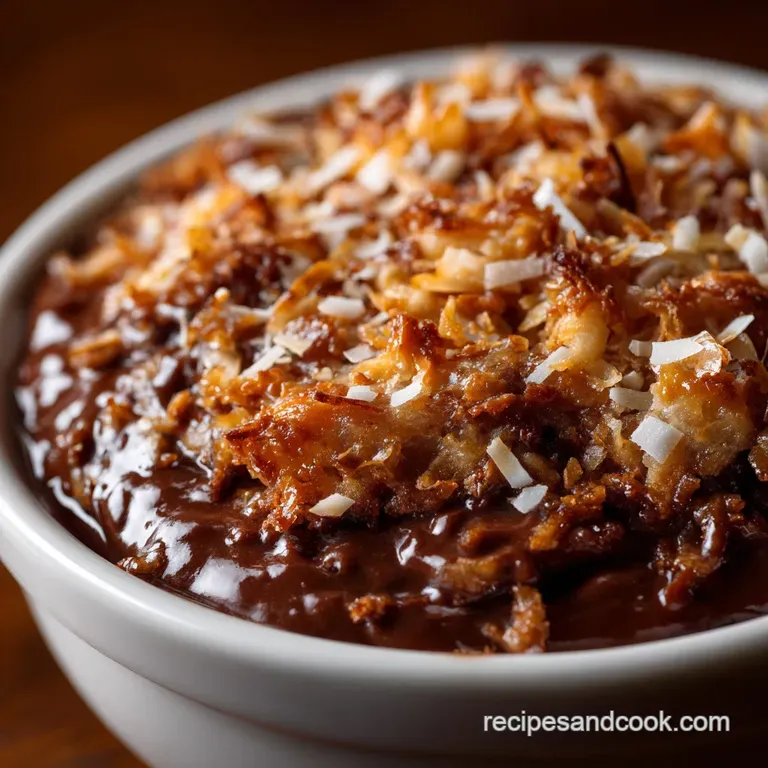
The instructions might seem simple, but the technique of cooking custard is all about patience and constant attention. This stage is where your raw ingredients transform into the rich, gooey base of your homemade German Chocolate Frosting .
Preparing the Custard Base: Gentle Heat is Key
Start by combining the evaporated milk, sugar, and egg yolks in your heavy saucepan. Whisk them until they look completely homogenous slightly pale yellow and frothy. Then toss in your butter and salt. Put the pan over medium low heat, never higher than medium.
We need the butter to melt and the sugar to dissolve before the eggs start setting. Stir constantly with a rubber spatula, making sure to scrape the corners and bottom of the pan to prevent localized heating.
The Critical Thickening Stage (The Nappe Test)
Once the butter is melted, reduce the heat to low. This is the long haul part of making this truly amazing German Chocolate Frosting . Cook for 10 to 15 minutes, stirring the entire time.
You will feel the consistency change; it will become heavier and start leaving a trail on the bottom of the pan as you stir. To perform the "nappe test," dip the back of a spoon into the custard. Lift it out, swipe a line across the back with your finger.
If the line holds clean and the mixture doesn't immediately run back together, you've hit the right temperature (around 180°F 185°F). Remove it immediately and stir in the vanilla.
Folding in the Nut and Coconut Mix-Ins
Don't add the coconut and nuts right away! If you add the mix-ins while the custard is steaming hot, the coconut will absorb too much liquid too fast and could become mushy. Transfer the hot custard to a clean, room temperature bowl and let it cool naturally for 15 minutes, stirring occasionally.
Once it's had its room temp rest, put it in the fridge for 45 minutes to an hour. Once the custard is chilled and firm it should feel thick, almost like peanut butter gently fold in the toasted pecans and sweetened coconut flakes until every strand is coated.
You now have perfect, spreadable, easy German Chocolate Frosting .
Cooling Down: Achieving the Spreadable Consistency
This is where beginners panic. When the custard comes off the stove, it looks too thin! That’s okay. It’s designed to thicken dramatically as the fat solidifies during cooling. If you try to apply the frosting while it is still warm, it will be runny and melt off your cake layers.
Give it the full cooling time in the fridge. That chill time ensures the dense, gooey quality we are looking for.
Troubleshooting Your Custard and Expert Finishing Techniques
Even the pros mess up cooked frostings sometimes. The good news is that most common issues with making German Chocolate Frosting are fixable if you catch them fast.
Preventing Curdling: Temperature Control and Whisking
Curdling happens because the egg yolks cooked too quickly, separating the fat from the liquid. The key is gentle, constant movement. If you see tiny white flecks (scrambled egg!) starting to appear, yank the pan off the heat instantly and vigorously whisk it for 30 seconds to cool it down. Return to a lower heat.
Remember: low heat and constant scraping are essential.
The Fix for Runny Frosting
If you chilled the frosting for an hour and it is still too thin, it means you didn't cook the custard long enough to reach the proper thickening temperature. All is not lost!
Return the mixture to the heavy saucepan over low heat and continue cooking and stirring for another 5 to 8 minutes, watching carefully for the nappe stage.
If the mixture is already cool and you just need a slight boost, try chilling it for another 30 minutes. Resist the urge to add flour; it ruins the signature gloss of the Classic German Chocolate Frosting .
When to Apply the Frosting (Temperature Matters)
Always, always apply the frosting to a completely cooled cake. If the cake is even slightly warm, the fat in the frosting will melt, causing the entire topping to weep and slide. The frosting itself should be spreadable, like cold cream cheese, but not stiff this ensures the perfect spread and adhesion.
Shelf Life and Preservation: Storing Leftover Coconut Pecan Frosting
I love having a little extra topping around, especially for impromptu midnight snacking (don't judge me). But how long does this cooked dairy product last?
Refrigerating vs. Room Temperature Storage
Because this topping contains cooked egg yolks and butter, it is not safe to store at room temperature for more than two hours. Store leftover Easy German Chocolate Frosting in an airtight container in the refrigerator. It will last beautifully for up to 5 days.
It will firm up considerably when cold.
Can You Freeze German Chocolate Topping?
Yes, absolutely! This topping freezes remarkably well because of its high sugar and fat content. Scoop the finished, cooled frosting into a freezer safe bag, pressing out all the air, or into an airtight container. Freeze for up to 3 months. When you are ready to use it, thaw it overnight in the refrigerator.
Reactivating Texture After Chilling
After thawing or even just refrigerating overnight, the German Chocolate Frosting might be stiff and seem dry. Simply let it sit at room temperature for about 30 minutes. Then, stir it vigorously with a wooden spoon or rubber spatula for a minute or two.
The friction from stirring will slightly soften the butter and redistribute the moisture, restoring its gooey, spreadable texture perfectly. This step is a must before application.
Creative Pairings Beyond the Cake: Uses for This Rich Topping
This delicious topping isn't just for a three layer chocolate cake! The rich texture and robust flavor of this Homemade German Chocolate Frosting make it versatile for many other desserts.
I often use small spoonfuls of the chilled frosting as a textural garnish. It works brilliantly piped onto thick, chewy cookies imagine topping my Crumbl Chocolate Chip Cookie: The Ultimate Gooey Copycat Recipe with a dollop of this? Insane.
You can also use this incredible topping as a filling for tarts or pastries. I sometimes spoon it into individual dark chocolate shells before chilling, creating an instant, no-bake tart. It also makes an exceptional topping for rich chocolate pudding.
For an ultra decadent dessert, serve a small bowl of this warmed German Chocolate Frosting as a dip alongside fresh strawberries or pretzels the salty crunch is fantastic.
Honestly, once you have mastered this classic recipe for German Chocolate Frosting , you’ll find excuses to use it everywhere. It's the king of frostings, and now you know exactly how to make it perfectly every single time.
Recipe FAQs
Why is my German Chocolate Frosting too runny and thin?
This cooked frosting requires sufficient time to thicken as it cools; true firmness won't be achieved until it is fully cooled to room temperature. If it remains too thin after cooling for an hour, return it to low heat and cook for an extra 3 5 minutes, stirring constantly until the mixture properly coats the back of a spoon.
Remember that the addition of pecans and coconut will also help bind the final mixture.
The frosting is stiff and dry after cooling. How can I fix the texture?
A stiff texture usually means the custard was cooked slightly too long, causing excessive moisture evaporation. To remedy this, slowly stir in one teaspoon of milk or heavy cream at a time until the desired, gooey consistency returns.
Ensure the mixture is slightly warmed when adding the liquid, as this helps it re-emulsify quickly without becoming greasy.
Can I use unsweetened coconut, or must I use sweetened?
Always use sweetened shredded coconut for this classic recipe, as the unsweetened varieties lack the required moisture and sugar content necessary for the authentic chewy texture. The sugar in the coconut contributes to the final stability and gooey structure of the cooked custard base.
If you prefer a finer texture, pulse the sweetened coconut quickly in a food processor before incorporating it.
What is the best way to store leftover German Chocolate Frosting?
Since this is a cooked custard based on egg yolks and butter, it must be refrigerated promptly. Store the finished frosting in an airtight container for up to 5 days. When ready to use, allow it to sit on the counter for about 30 minutes, as cold frosting is often too firm and difficult to spread smoothly.
Can I freeze the frosting for later use?
Freezing is generally not recommended for this particular frosting because the custard base may separate or become grainy upon thawing due to its high moisture and fat content. If you must freeze it, store it well sealed for up to 2 months and vigorously whisk it after thawing overnight in the refrigerator to attempt to restore its texture.
I have a pecan allergy. What is a suitable substitute for the nuts?
Pecans provide the classic profile, but walnuts or chopped almonds make excellent and delicious substitutes. The key is ensuring that the replacement nuts are toasted before incorporating them into the cooled custard base.
This process enhances their flavor and provides the necessary crunch that contrasts beautifully with the soft frosting.
When should I apply the frosting to the cake layers?
It is crucial that both the cake layers and the frosting are completely cooled before application. Applying warm frosting to a cool cake, or cool frosting to a warm cake, will result in the frosting running off the sides or failing to set correctly.
Once the frosting has reached its gooey, thickened room temperature consistency, it is ready to use.
Classic German Chocolate Frosting Recipe
Ingredients:
Instructions:
Nutrition Facts:
| Calories | 375 kcal |
|---|---|
| Fat | 24 g |
| Fiber | 3 g |
